
장바구니에 상품이 없습니다.
미분류
Hokkaido Drift-Ice Diving: How to Dive Beneath the Sea Ice
15
6월
6월
Cold-Water Diving – Hokkaido Drift Ice
Diving Beneath
The Drift Ice
Of Hokkaido
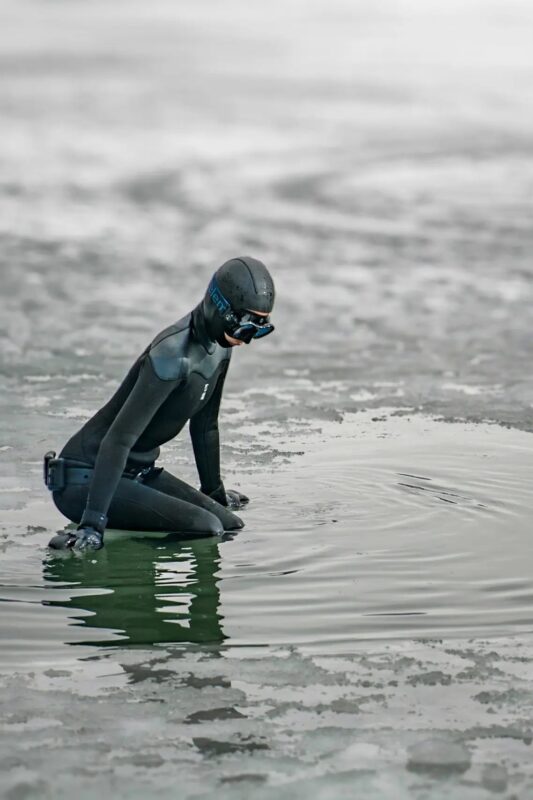
Below the frozen ceiling of the Sea of Okhotsk, sunlight filters through the ice and “sea angels” drift past. Here’s what it takes to dive one of the planet’s most surreal seascapes – and why it starts with cold-water training in Korea.
The Hook
A Ceiling Of Ice.
A Sea Full Of Angels.
Imagine descending into water that sits at minus two degrees Celsius. Above you, instead of open sky, there is a vast white ceiling of drift ice. Sunlight breaks through the cracks in narrow blue shafts. And drifting past your mask – tiny, translucent, flapping wings no bigger than a fingernail – is the clione, the “sea angel.”
This is drift-ice diving in Hokkaido, off the Shiretoko Peninsula – a UNESCO World Heritage coastline where the southernmost seasonal sea ice on Earth gathers each winter. For divers, it is one of the most surreal, photographed, and bucket-listed experiences in the sport. And it is not reserved for an elite few. It is reserved for divers who are prepared.
“The warmest divers in the coldest water aren’t the toughest – they’re the best trained. Comfort underwater is a skill, not a temperature.”
The Problem
Most Divers Never
Leave The Warm Water.
Ask most certified divers where they’ve been underwater, and you’ll hear the same answer: somewhere warm. Boracay. Cebu. Phuket. Twenty-nine-degree water, a 3mm wetsuit, and a guide doing the thinking. There is nothing wrong with that – tropical diving is wonderful. But it builds only one kind of diver.
The problem is that the world’s most extraordinary dive sites are not all tropical. Drift ice in Hokkaido. Kelp forests in cold currents. The wrecks of the North Sea. Korea’s own East Sea in winter, when visibility opens up and the water turns glass-clear. To dive these places, you need a completely different skill set – and a completely different relationship with the cold.
Cold Water Is Not Forgiving
At Shiretoko, dives last under 30 minutes and rarely go deeper than 15 metres, because water below 3°C drains body heat fast. The tour operators there require an Advanced Open Water certification or equivalent and your own cold-water equipment. This is not a beginner’s day trip. A diver who has never managed a dry suit, never controlled buoyancy in heavy thermal gear, and never stayed calm in low temperatures has no business under the ice.
That’s the gap. And it’s exactly the gap that proper training closes.
The Solution
The Dry Suit Is
Your Passport.
There is one skill that separates divers who are limited to warm water from divers who can go anywhere on Earth: the dry suit. A dry suit doesn’t just keep water off your skin – it keeps a layer of warm, insulating air around your body, so the temperature outside stops mattering. Minus two degrees becomes an interesting fact rather than a threat.
But a dry suit is also a new piece of equipment to master. It changes your buoyancy. It changes your ascents and descents. It requires specific procedures that are taught, practiced, and certified. That’s why PADI offers the Dry Suit Diver Specialty – and why we consider it one of the most valuable courses a serious diver can take.
What The PADI Dry Suit Specialty Teaches
The PADI Dry Suit Diver course is open to divers certified at Open Water level (age 10+ in many regions). It combines knowledge development through eLearning, a confined-water or shallow-water session, and two open-water training dives in a dry suit. You learn how to don and seal the suit, manage the air inside it for buoyancy, handle ascents and descents safely, and respond if something goes wrong. By the end, the suit feels like a tool, not a costume.
Pair it with the Advanced Open Water certification – the qualification Hokkaido operators ask for – and you hold the exact credentials that drift-ice diving demands. That combination is your passport to Shiretoko, and to a hundred other cold-water sites the warm-water crowd will never see.

-2°CWater temperature beneath Hokkaido drift ice
~20mTypical under-ice visibility on a clear day
FebPeak drift-ice month at Shiretoko / Rausu
The Experience
What It’s Actually
Like Under The Ice
The ice that drifts to Shiretoko is born thousands of kilometres away, where the Amur River meets the Sea of Okhotsk. It travels south on the current and gathers along the Shiretoko Peninsula, where it lingers longer than anywhere else in Hokkaido – usually from late January, peaking in February, and lasting into March.
You enter through a gap in the floes. The moment you drop below the surface, the world goes quiet and luminous. The underside of the ice is not flat – it’s sculpted into ridges, domes, and chandeliers, glowing turquoise where the sun pushes through. Then you see them: the clione, sea angels, transparent little molluscs that beat two wing-like flaps and hover in the water column. In Japan it’s said that if you make a wish when you see one, it comes true. Whether or not you believe that, watching them is unforgettable.
Dives are short – the cold sees to that – but the intensity makes up for the brevity. This is not a dive you do for bottom time. It’s a dive you do to stand, for twenty minutes, inside one of the strangest and most beautiful rooms on the planet.
“Some dives you measure in metres and minutes. Others you measure in moments you’ll describe for the rest of your life. Drift ice is the second kind.”
Korea & Cold-Water Diving
You Don’t Fly To
Japan To Learn This.
You Learn It Here.
Here’s what many divers don’t realise: Korea is one of the best places on Earth to build cold-water skill before chasing a trophy dive like Hokkaido. You don’t need to gamble your one expensive ice-diving trip on skills you’ve never tested. You can build them at home, in conditions that are honest teachers.
Korea’s East Sea (동해) in winter delivers cold, clear, demanding water – the perfect classroom for dry-suit technique and thermal management. Inland, frozen lakes at places like Hongcheon host genuine ice diving each winter, where divers train to enter and exit through a cut hole in the ice under close supervision. And Seoul’s deep indoor training pools let you log the dry-suit and buoyancy hours year-round, regardless of the weather outside.
In other words, the path to the drift ice of Hokkaido runs straight through Korea. Diving Korean waters first means you arrive at Shiretoko as a diver who is ready – not a diver who is hoping.
For Expats & Visitors In Seoul
NB Divers teaches every course – Open Water through professional level, including the Dry Suit and Advanced specialties – fully in English. Whether you’re an expat living in Seoul or a traveller passing through, you can build real cold-water competence with a PADI Course Director who has trained divers from more than 20 countries. Start your journey here, and the world’s coldest, strangest seas open up to you.

Questions & Answers
Frequently Asked
Questions
What certification do I need for Hokkaido drift-ice diving?
Drift-ice dive operators at Shiretoko typically require a PADI Advanced Open Water certification (or equivalent) plus your own cold-water equipment. Because dives take place in water near -2°C, a Dry Suit Diver specialty is strongly recommended and often essential. NB Divers in Seoul can certify you to both levels before you travel.
When is the best time to dive the drift ice in Hokkaido?
The drift-ice season off the Shiretoko Peninsula runs from late January through March, with February being the peak month. The ice originates near the Amur River and drifts south on the Sea of Okhotsk current, lingering at Shiretoko longer than anywhere else in Hokkaido.
How cold is the water and how long are the dives?
Water beneath the drift ice sits around -2°C to 3°C. Because of the cold, dives are short – usually under 30 minutes – and shallow, rarely exceeding 15 metres. On a clear, sunny day, under-ice visibility can reach around 20 metres, creating a luminous, cathedral-like underwater scene.
What is a clione (sea angel)?
The clione, often called the “sea angel” or “angel of the drift ice,” is a tiny translucent sea snail that lives only in cold polar and sub-polar waters. It swims by beating two wing-like flaps, appearing to flutter like a butterfly. It is the iconic marine animal of Hokkaido’s drift-ice dives, and Japanese tradition says a wish made on seeing one will come true.
Do I need a dry suit, and where do I learn to use one?
Yes – a dry suit is essential for safe, comfortable diving in near-freezing water. The PADI Dry Suit Diver specialty teaches you to don the suit, manage buoyancy using the air layer inside it, and handle ascents and descents safely. NB Divers in Seoul offers full dry-suit training, including practice dives in Korea’s cold East Sea and year-round sessions in deep indoor pools.
Is Korea a good place to learn cold-water and dry-suit diving?
Korea is one of the best places in Asia to build genuine cold-water skill. The East Sea (동해) offers cold, clear winter diving ideal for dry-suit training, inland lakes such as Hongcheon host real ice diving in winter, and Seoul’s deep indoor pools allow year-round practice. Divers who train in Korea arrive at destinations like Hokkaido genuinely prepared rather than just hopeful.
Can tourists and expats get cold-water certified in Korea?
Yes. NB Divers in Seoul offers PADI certification – from Open Water through Advanced, Dry Suit, and professional levels – fully in English. PADI certifications earned in Korea are globally recognised and valid anywhere, including for drift-ice tours in Japan. Courses can usually be arranged around a work schedule or a short trip.
Do dive schools in Korea teach in English?
Not all do, but NB Divers does – fully. All theory, pool sessions, and open-water briefings are conducted in English for international students. Course Director Charlie Jung has taught divers from more than 20 countries, so expats in Seoul and visiting travellers can train to a high standard without a language barrier.
Is drift-ice diving dangerous?
Drift-ice diving carries real risks – extreme cold, an overhead ice environment, and limited exits – which is exactly why operators require proven certification, dry-suit competence, and guided supervision. With proper training, correct equipment, and a qualified guide, it is conducted safely every season. The key is preparation: building cold-water skill and dry-suit comfort before you arrive, ideally through training in Korea.
How do I start training for cold-water diving at NB Divers?
Reach out through our enquiry page and tell us your goal – whether that’s the Hokkaido drift ice, the North Sea, or simply diving Korea’s East Sea in winter. We’ll map a path from your current level through Advanced and Dry Suit certification. Learn right, enjoy forever – diving is our culture, and the cold seas are waiting.
Ready For The Cold?
The drift ice of Hokkaido starts with a dry suit and a decision.
Build your cold-water skill at NB Divers Seoul – in English, at your pace.
← PreviousThinking About Scuba Diving? 10 Things to Know Before You StartNext →The Underwater “Spacewalk”: What Guillaume Néry’s Freediving Teaches Every Diver — and How to Begin in Korea
