
장바구니에 상품이 없습니다.
미분류
Your First Okinawa Dive Trip: Why Being a Beginner Is Not a Problem
10
9월
9월
Okinawa · First Overseas Trip · Beginners
Your First Okinawa Dive Trip:
Why Being a Beginner Is Not a Problem
The worry is always the same — “will I slow everyone down?” With the right team, the answer is no, and the trip is where you grow the most.
the question nobody asks out loud
An Okinawa Dive Trip Is the Right
First Trip Abroad
Your first overseas dive trip should be a short flight to warm, clear water with a team you already trust, and Okinawa is exactly that from Seoul. The reason is that a first trip abroad adds three new things at once — unfamiliar sites, unfamiliar boats and unfamiliar people — and the fewer of those you have to absorb on the same day, the more of the ocean you actually get to see. Okinawa is about two hours from Incheon, the water in spring is already warmer than the East Sea in summer, and when you travel with the instructors you trained with, the “unfamiliar people” part disappears entirely. A beginner who worries about being a burden is usually a beginner who has only ever seen dive travel as something you do alone.
This post follows one of our own divers on her first trip out of Korea: seventy logged dives, every one of them in Korean water, and a very ordinary fear that she would hold the group back. She came home with a different picture of what a dive trip is for.
seventy dives, all of them at home
The Worry Is Real,
and It Is Aimed at the Wrong Thing
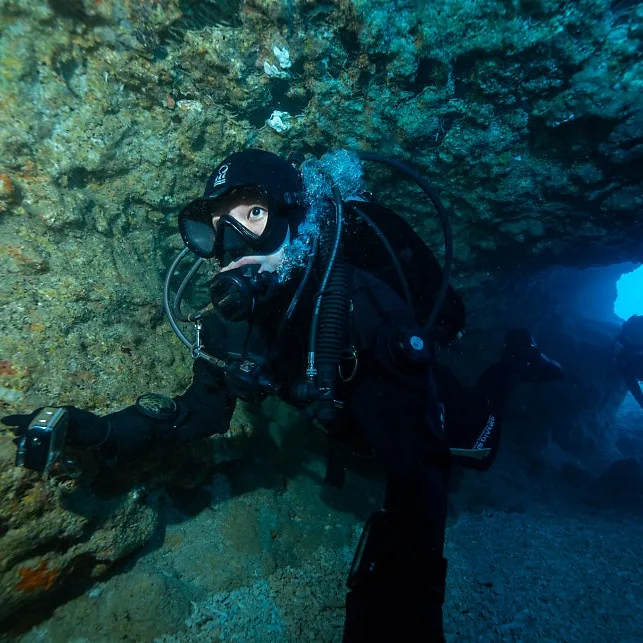
Most beginners are not afraid of the diving; they are afraid of the group. The reason is that a trip abroad feels like a test in front of strangers, and nobody wants to be the person who needs a slower descent or an extra minute at the surface. Our diver put it plainly before she left: “I’m a beginner, won’t I be a nuisance? I’m coming alone, won’t it be awkward?” Those are questions about the people, not about the water.
The answer to a people problem is to travel with people you know. She had spent her seventy dives on the dive Korea coast — the East Sea, Jeju — with the same instructors who were now leading the Okinawa trip, so the first briefing in Japan sounded exactly like the ones she had heard at Gangwon shore entries. The team was the constant; only the water changed. That is the whole trick, and it is why we run our overseas trips as extensions of the weekends we run at home rather than as separate holidays.
Once the people question is settled, the beginner’s question turns out to have an easy answer. She was not the weakest diver in the group; she was the newest, which in a small, patient team is a completely different thing.
what a small team actually does for you
You Grow Faster on a Trip
Than in Any Single Course
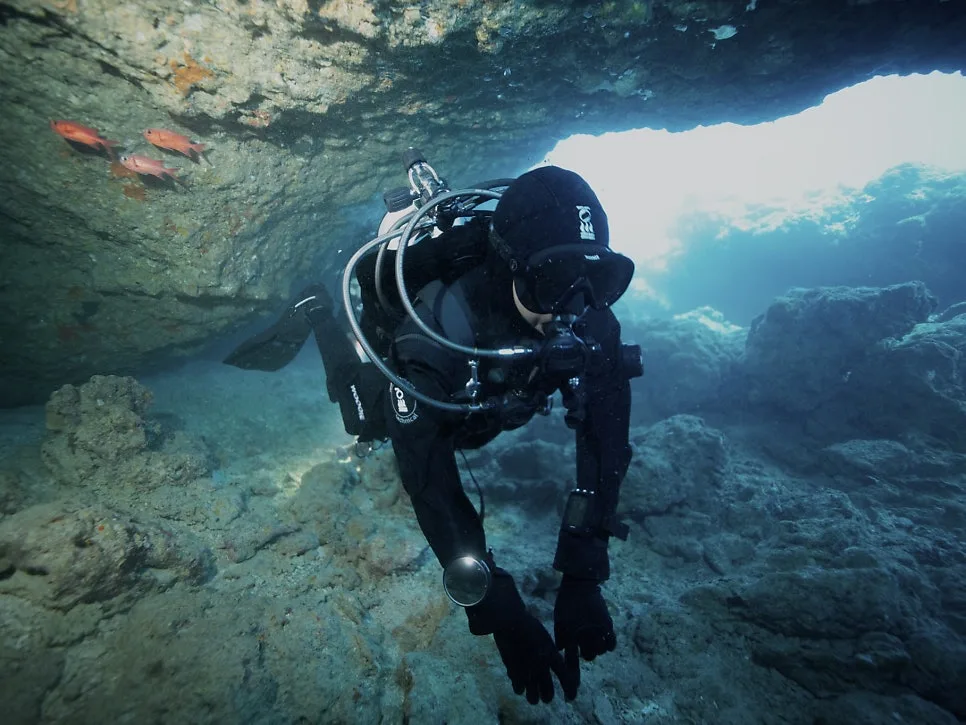
A week of diving with experienced divers teaches more than a week of classes. The reason is simple repetition with feedback: two or three dives a day, each one debriefed by someone who was watching you, in conditions that are just different enough to make old habits visible. On this trip every other diver was a working professional or a divemaster candidate, so a seventy-dive diver was surrounded by people who had made her mistakes years ago and could name them kindly. She came home with better trim, calmer descents and a clearer idea of what her next level up should be.
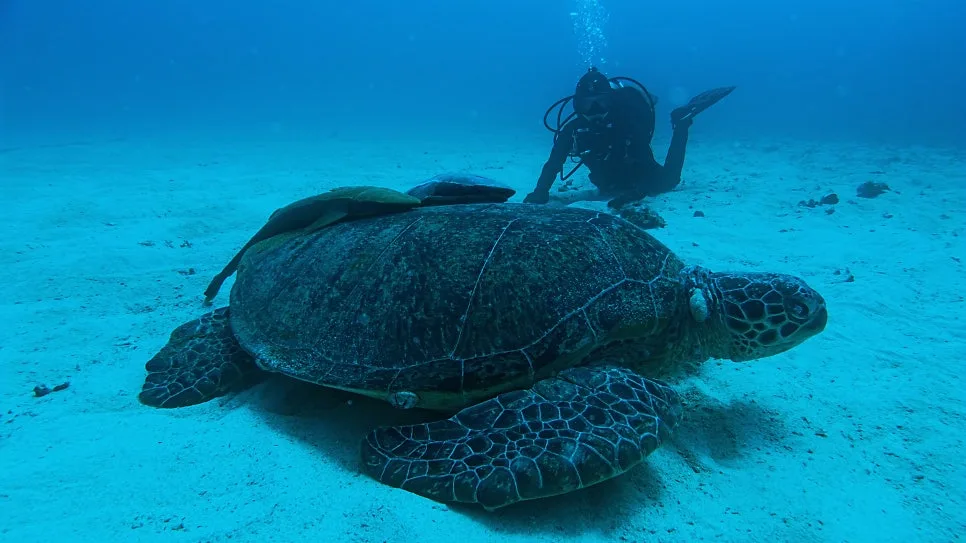
The most memorable dive of the trip shows why the guide matters. The group visited a wreck on the anniversary of the day it was sunk; the ship lies deep, so it is a dive for divers with the right certification, and she went with an instructor beside her the whole way. On the deck a turtle the size of a person appeared, circled the divers, and then decided it did not like them — one instructor from another team was nipped on the shoulder. She still describes that turtle vividly, and she describes it with a laugh, because she was never the one managing the situation. A beginner’s job on a trip is to look; the guide’s job is to think.
This is what “learn it slow, keep it forever” means once you are past your first certification. Charlie’s line on the boat was that the team will give you the answer, and whether you also want to experience the road to the answer is your choice. On a trip, most people choose the road.
the same faces at the harbour
Not for Everyone,
Only for You
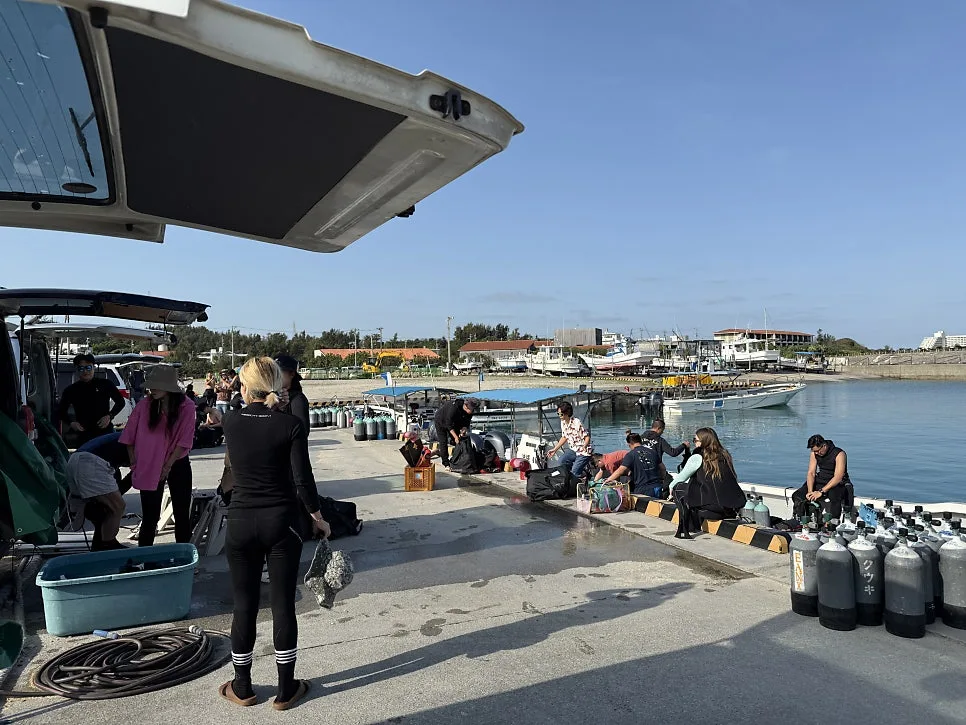
Diving is our culture, and a trip is where that shows most clearly. The reason is that a trip removes the classroom and leaves only the habits: who checks whose zipper, who notices the diver who has gone quiet, who decides the second dive can wait ten minutes. Our groups at home are one to three students per instructor, our staff instructors each carry ten years or more of teaching, and those same people lead the trips — in Okinawa they were joined by local instructors who had trained with us in Seoul, so even the “foreign” guides knew our way of working. The result, in her words, was a tour that was “already proven”: an itinerary built by people who knew the sites, covering the island’s best points in a single week without anyone feeling rushed.
The other thing she noticed was how many women were in the water. Much of our teaching and consulting team is women-led, which on a trip means a solo female diver is never the odd one out and can ask for help without it becoming a moment. Divers on this trip came from several countries; our dive professionals communicate in English, as well as Korean and Japanese, so the briefings, the debriefs and the dinner conversations all happened in a language everyone could follow.
26Years accident-free since 2000
5,910Divers certified & counting
976Dive pros trained
We are a PADI 5-Star Career Development Centre with our own centre in Songpa, Seoul, and more than ten thousand dive experiences, trips and courses have passed through it since 2000. That history is why a first-timer can join a trip and simply dive.
the one packing decision that mattered
Pack for the Water,
Not for the Brochure
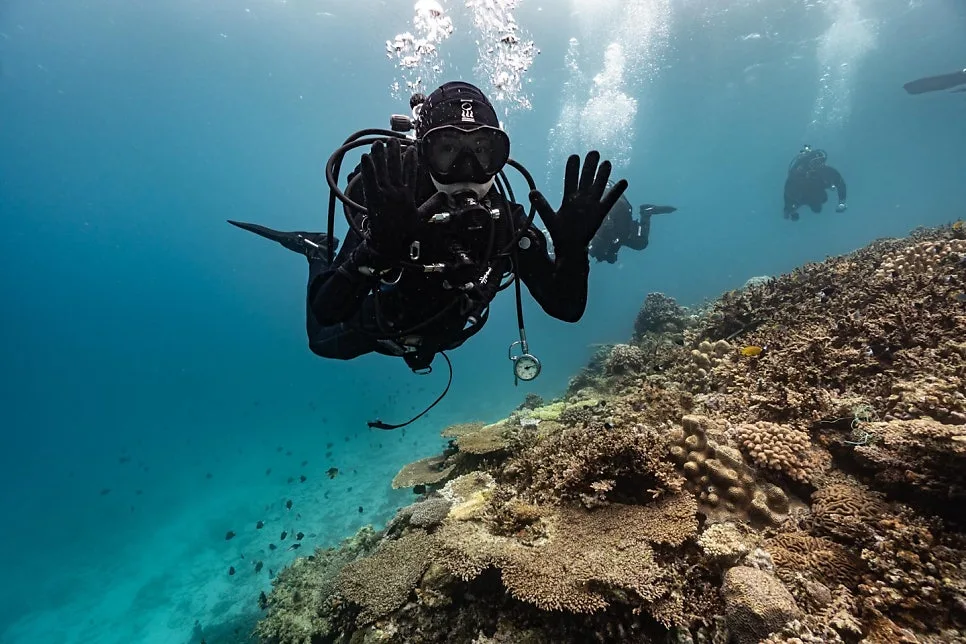
The best piece of advice she took on the trip was about her suit. The reason is that early April in Okinawa is warmer than Korea but still around twenty-one or twenty-two degrees in the water, and a diver who feels the cold will spend the second and third dives of the day thinking about temperature instead of the reef. Before departure the team sent the forecast and the water temperature and recommended a drysuit with a specific undersuit; she packed a thicker layer just in case, and never needed it. Between dives she stepped out of the suit into a windproof jacket and stayed warm while the wetsuit divers shivered.
This is the difference a team that knows you makes before you even board the plane. Nobody guessed at her comfort; they had dived with her through a Korean winter and knew how she ran. If you are choosing your own layers, the undersuits we fit at the centre are from Fourth Element, and training gear is available to rent, drysuit included, if you would rather borrow than buy for a first trip.
Her own summary was shorter than ours: the drysuit was simply a blessing. Warm divers see more, and seeing more is why you went.
from the East Sea to the next horizon
The Trip Changes
What You Think Diving Is
A first trip abroad does not just add dives to a logbook; it changes what the logbook is for. The reason is that seventy dives in familiar water build competence, but a week of new sites with the same team builds appetite — she came home wanting more of the sea, not more certifications. Her next question was not “which course?” but “when is the next trip?”, and the answer was the summer weekend in Fukuoka, with the same faces on the same boat.
The path there is deliberately short. Dive with us in the pool, come to one East Sea weekend, and by the second one you will already know the people you would travel with; the calendar of overseas weeks and Korean weekends is on our dive trips page. Trip costs are shown the way our courses are — what is included, what is optional, and how a shared guide’s time is divided among the divers who join — and the details are on the pricing page rather than in a post that will be read for years.
Her message to anyone reading this was the one she wished someone had sent her: “I’m a beginner, won’t I be a nuisance? Worry: no.” You felt like part of the team on the day you met them. The trip is where you find that out.
Tell Us Where You Are, and We Will Tell You When You Are Ready
Whether you have never dived, have a fresh Open Water card, or have seventy Korean dives and no stamp in your passport, tell us honestly where you are and we will tell you honestly whether the next step is a pool session, an East Sea weekend or a seat on the next Okinawa trip. A consultation is free, needs no registration to ask, and comes with no pressure and no upselling.
good to know
Okinawa Dive Trip for Beginners — Common Questions
Can I join an Okinawa dive trip as a beginner?
Yes, with an Open Water certification and a few recent dives. Our trips are led by the instructors you trained with, the groups are small, and sites are chosen to suit the least experienced diver in the water each day. The deeper sites, such as the wreck, are reserved for divers who hold the certification they require.
How many dives should I have before my first overseas trip?
There is no fixed number. What matters is that your last dives were recent and comfortable. Many divers join their first trip shortly after Open Water; others, like the diver in this post, wait until they have dozens of Korean dives. If it has been a while, a pool refresher before the trip is an easy fix.
Will I slow the group down?
No. Our trips are built around the pace of the newest diver, and the experienced divers on board are usually instructors or divemaster candidates who enjoy diving with beginners. A slower descent or an extra surface minute is normal, not a nuisance.
Is it awkward to come alone?
Most of our trip divers come alone. Because you will have dived with the team in Seoul or on the East Sea before the trip, you already know people when you land. Much of our teaching team is women-led, so solo female divers are common on our trips and never the exception.
What is the water temperature in Okinawa, and what suit should I bring?
In early April the water is around 21–22 °C; in summer it is much warmer. For spring trips we usually recommend a drysuit with a light undersuit for divers who feel the cold, and a thick wetsuit for those who run warm. We send the forecast and a suit recommendation before every trip. Training gear is available to rent, drysuit included.
Who guides the dives in Okinawa?
Our own staff instructors lead the trip, working with a local centre whose instructors trained with us in Seoul. Briefings and debriefs are in English, Korean and Japanese as needed.
How long is the trip and how many dives are included?
Trips are typically four to five days with two or three dives on each diving day, covering several of the island’s main areas. Exact dates, dive counts and inclusions are listed for each trip on the dive trips page.
I am an expat in Seoul. Can I join in English?
Yes. Divers from several countries joined this trip, and our dive professionals communicate in English, as well as Korean and Japanese. The pre-trip briefing, the daily dive plans and the logistics are all handled in English for you.
What does the trip cost?
Each trip lists what is included — dives, guiding, tanks and weights, transfers on the island — and what is optional, such as flights and accommodation upgrades. Current figures are on our pricing page, and course fees follow our usual rule: stop partway and you are billed only for what you did, the rest refunded.
I have never dived. Where do I start?
With a trial dive or the Open Water course, both on our start diving page. Other first-visit questions — swimming ability, medical forms, what to bring — are answered on the FAQ page, and a consultation costs nothing and needs no registration.
