
장바구니에 상품이 없습니다.
미분류
Drysuit Fit, Layering and Care: The Habits That Make Cold-Water Diving Comfortable
08
9월
9월
Drysuit Care · Fit · Layering
Drysuit Fit, Layering and Care:
The Habits That Keep Cold Water Comfortable
A drysuit is a system, not a thicker wetsuit. Comfort comes from the routine around it, repeated until your hands know it.
the suit is only half of the system
Warm Divers Are Made
on the Shore, Not in the Water
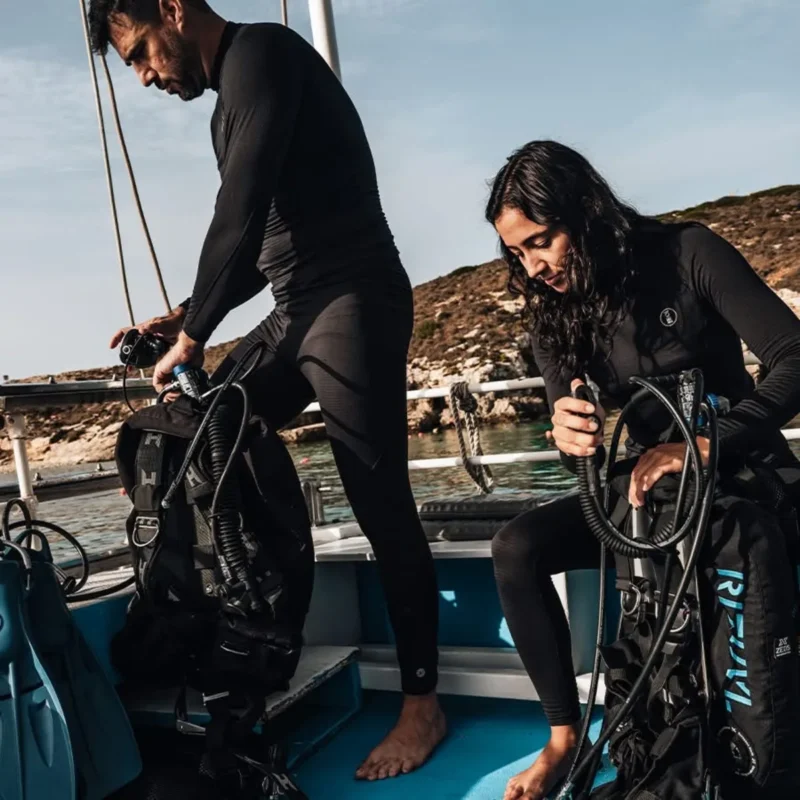
Good drysuit care begins before you get anywhere near the water, and it decides most of how the dive will feel. The reason is that a drysuit does not keep you warm by itself: it keeps water off your skin and traps a layer of air, while the garments underneath provide almost all of the insulation. That means a folded neck seal, a half-closed zipper or an undersuit bunched at the wrist does more damage to a cold-water dive than the water temperature ever will. So the divers who look effortless at a February shore entry are not tougher than you; they have a sequence, and they run it the same way every time.
That sequence has four parts — fit, layering, putting the suit on, and looking after it afterwards — and each one is a habit you can learn. This post walks through all four in the order a dive day actually happens.
reach, squat, breathe
Fit Is a Range of Motion,
Not a Size on a Label
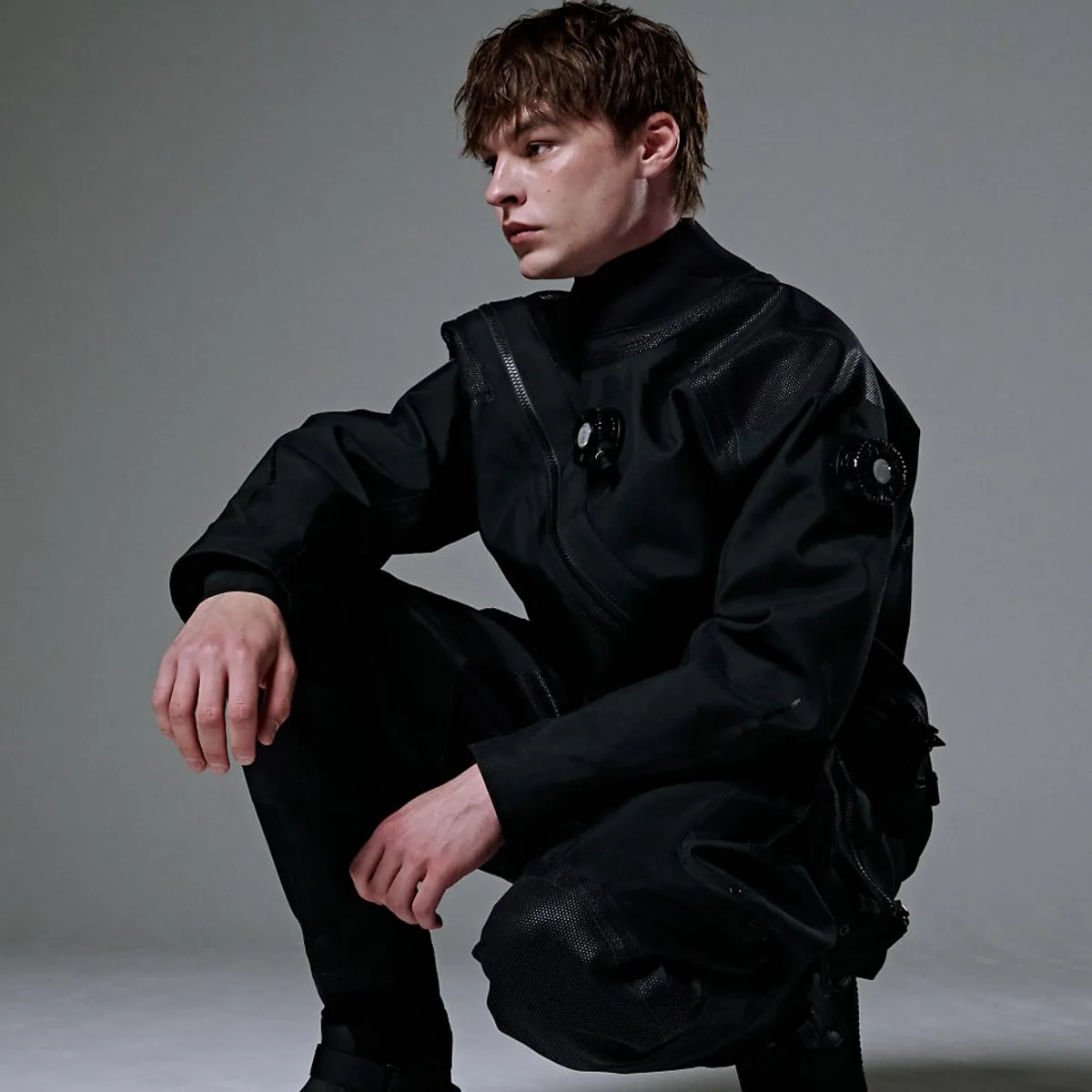
A drysuit fits when you can move in it, not when the label matches your clothing size. The reason is that a suit which pulls across the shoulders, crotch or knees will restrict you exactly when you need to reach a valve or climb a ladder, while a suit with large loose folds traps air in the wrong places and makes stable trim harder. The test is simple: reach both valves, hold your arms overhead, squat all the way down and take a full breath, all without the fabric fighting you. A suit that passes that test will feel unremarkable in the water, which is precisely the point.
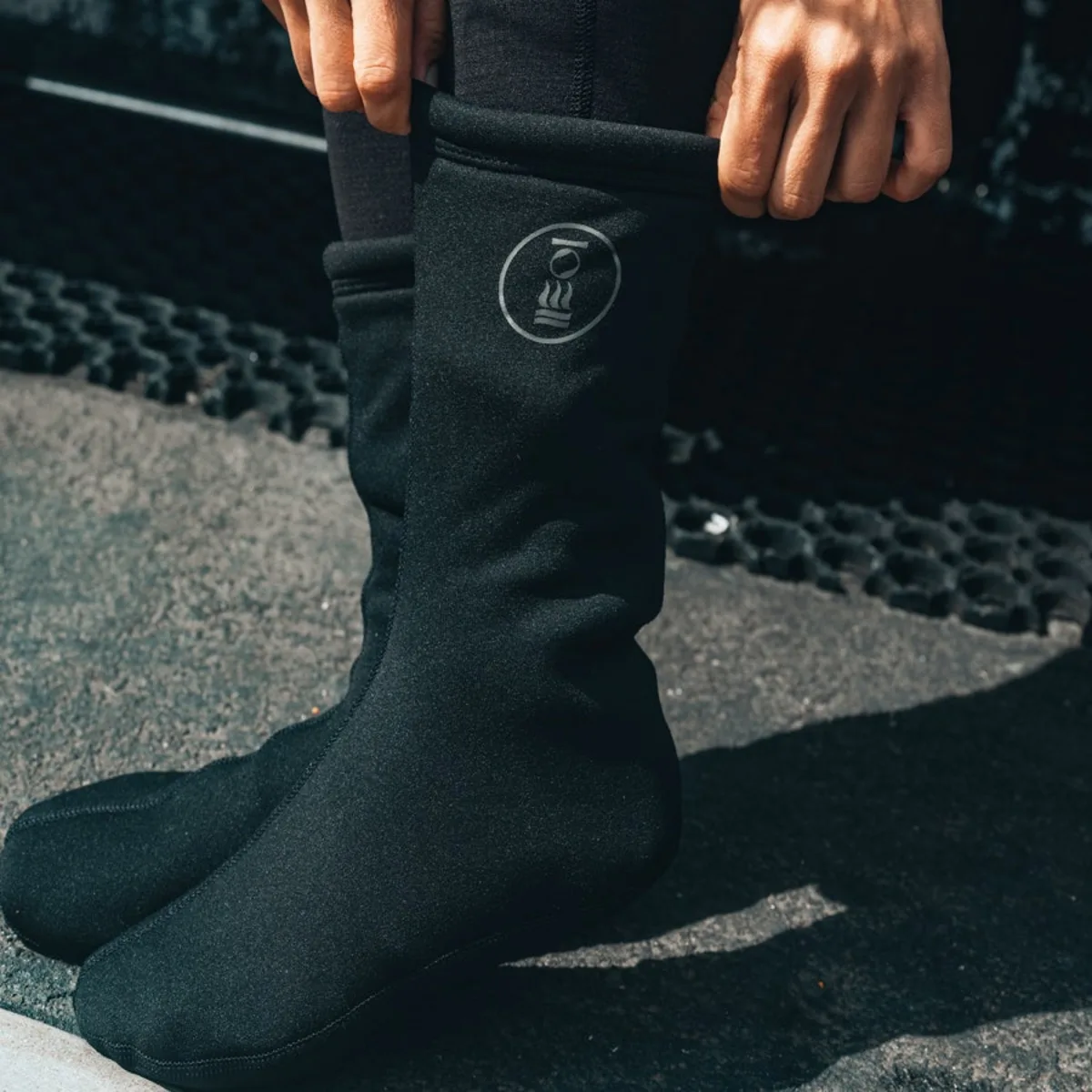
Seals are where fit becomes personal, and where most cold dives are quietly decided. A neck seal should be snug without causing headache, numbness or a sense of restricted breathing; wrist seals should lie flat against bare skin, never over a watch, a bracelet or a bunched sleeve. Long hair goes up before the suit goes on, because a single strand under a seal is enough to let a steady trickle of cold water in for the whole dive. Boots matter too: they should fit with the socks you will actually wear, not the thin ones you tried them on with.
The practical consequence is that fit is checked with your real undergarments, in the suit you will actually dive. A drysuit that fitted in a shop over a T-shirt can be a different suit over a winter undersuit, which is one reason a proper fitting session is worth more than a photograph of a size chart.
what is actually keeping you warm
Layer for the Dive,
Not for the Car Park
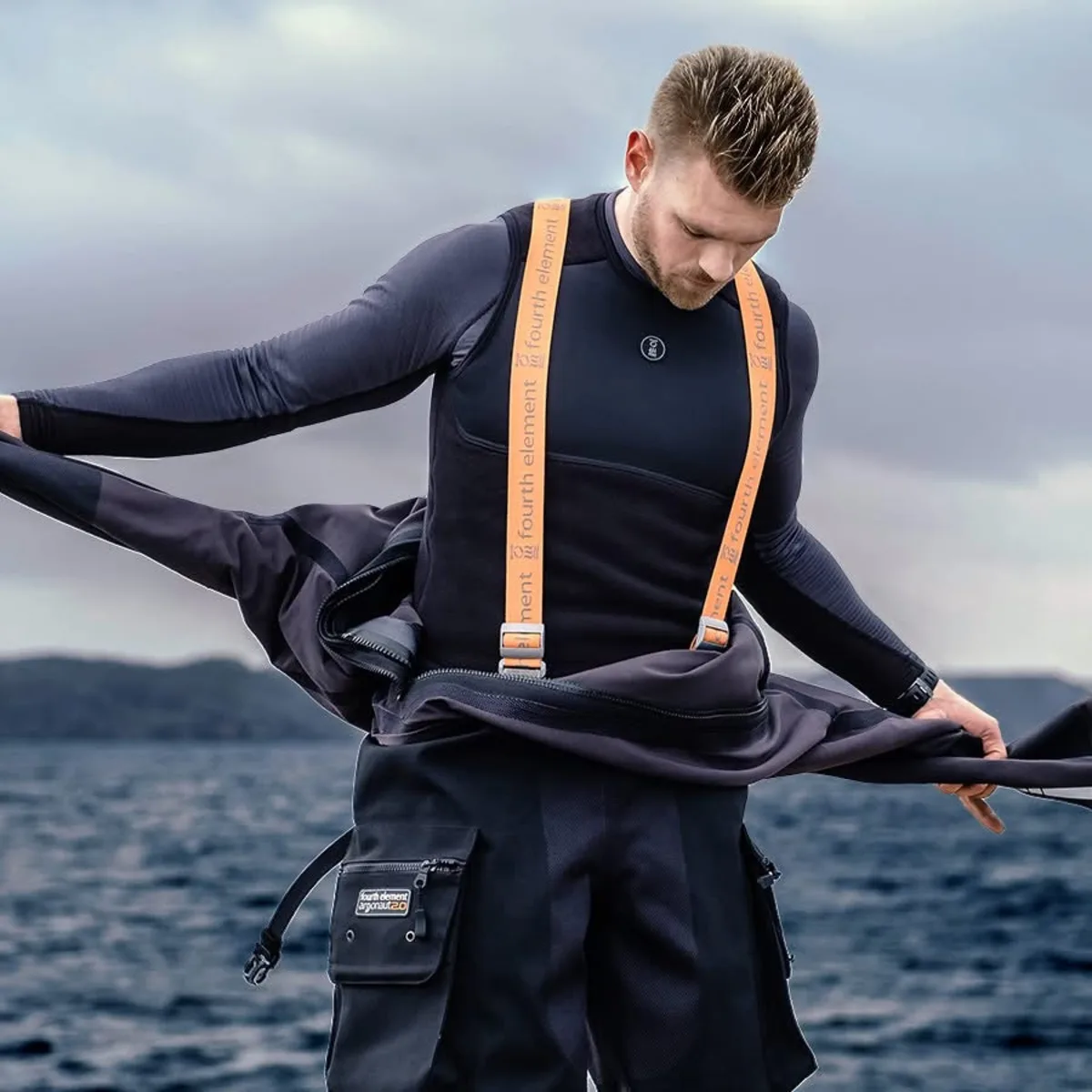
Your undergarments do the warming, so they deserve more thought than the suit itself. The reason is that a drysuit only traps air; the layers underneath decide how much of that air is held still against your body and how much moisture is carried away from your skin. Start with a base layer that wicks perspiration, add an insulating undersuit sized to the water temperature and the length of the dive, and skip anything cotton, which holds sweat and turns cold within minutes. Layer for the water you will be in, not for how you feel walking to the entry point.
Thicker is not automatically warmer, and this surprises most new drysuit divers. A bulky undersuit restricts movement, needs more air to avoid squeeze and adds buoyancy you then have to carry in lead, so the warmest configuration is often the one that fits closely and breathes well. Divers who run cold do better adding a thin layer under a well-fitted undersuit than swapping to something heavier, and the choice depends on your own metabolism as much as the thermometer. The undersuits and base layers we fit at the centre come from Fourth Element, which we run in Korea because the layering system is the part of the drysuit most people get wrong.
Once the suit is on, arrange those layers before you do anything else. A twisted sleeve or a fold of undersuit pushed up behind the knee is a small annoyance at the surface and a genuine distraction forty minutes into a cold dive, so smooth everything flat while you still can.
the ten minutes that decide the dive
Put It On Slowly,
and Check the Zipper Twice
Most drysuit problems are created on land, in a hurry. The reason is that every part of the suit that keeps water out — seals, zipper, valves — is also the part most easily damaged by being rushed, stepped on or dragged through gravel. Give yourself a clean spot and more time than you think you need, inspect the shell, seams and boots for damage before you step in, and make sure the zipper is fully open so you are not forcing your body through a gap. A suit put on calmly is a suit that is far more likely to stay dry.
Seals are guided, never yanked. Open a wrist seal with your fingers, ease it past the hand and let it lie flat; stretch the neck seal gently, lower it into place, then run a finger all the way round to find folds, hair, hood fabric or undersuit caught underneath. Then connect the inflation hose and give the suit a short test inflation, which is the cheapest way there is to discover a disconnected hose or a stuck valve while you are still standing on the shore.
The zipper gets its own check, and then a second one from your buddy. It is a waterproof closure rather than a clothing zipper, so it needs to be clean, aligned and shut end to end, and on a back-entry suit you physically cannot confirm that yourself. Asking your buddy to close it and then look along the whole length is not politeness; it is part of the dive plan, and it is why the buddy check on a drysuit dive takes a little longer than the one you learned in the pool.
air is for control, not for comfort
Learn It Slow,
Keep It Forever
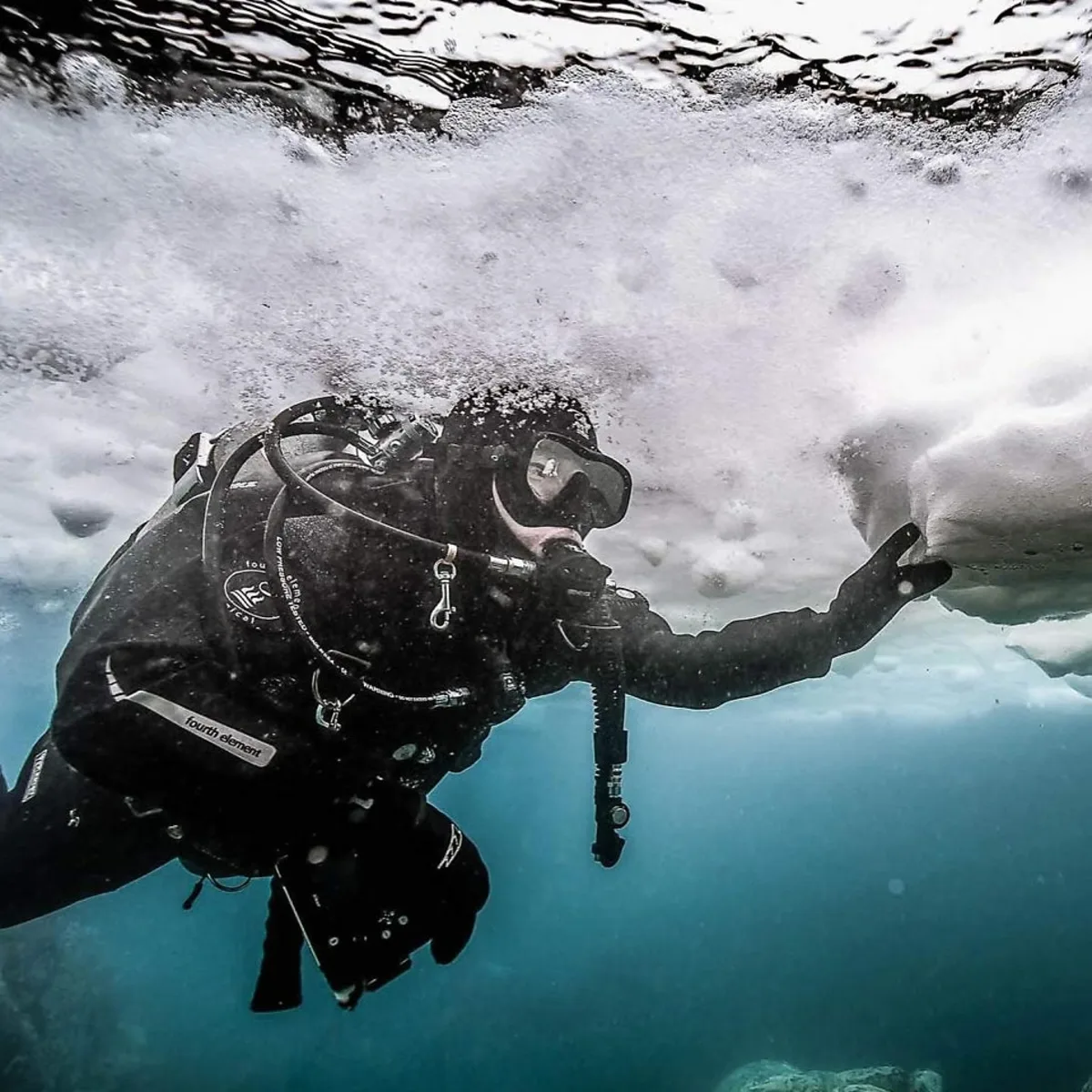
In the water, the suit is a second buoyancy device and it has to be managed like one. The reason is that the air you add on descent to prevent squeeze expands again on the way up, and if it migrates into your legs before you have vented it, the suit will try to take you to the surface feet first. So you add air in small amounts, only enough to stay mobile and warm, you keep the exhaust valve as the highest point of your body when you ascend, and you use the BCD for the bulk of your buoyancy rather than asking the suit to do everything. If air does get into your feet, the answer is a calm roll into a position that brings the valve high and bends the knees, not frantic kicking, and that answer only becomes automatic through repetition in controlled water.
This is why we teach drysuit skills slowly. Cold water does not reward rushed habits, and the difference between a diver who enjoys a winter dive and one who gives up on cold water for good is usually a handful of practice dives where nobody was in a hurry. Diving is our culture rather than a product we sell, our groups are one to three people so the pace follows you, and “not for everyone, only for you” means we would rather add a pool session than send you to the East Sea with a suit you do not yet trust.
26Years accident-free since 2000
5,910Divers certified & counting
976Dive pros trained
For divers who are not Korean, the practical detail matters: our dive professionals communicate in English, as well as Korean and Japanese, so the fitting, the valve briefing and the buddy check all happen in a language you can ask questions in. We are a PADI 5-Star Career Development Centre with our own centre in Songpa, Seoul, our staff instructors each carry ten years or more of teaching, and much of our teaching and consulting team is women-led. Training gear is available to rent, drysuit included.
where the suit earns its lifespan
Rinse, Dry, Store —
the Unglamorous Half of Drysuit Care
Drysuit care after the dive is what turns an expensive suit into a long-lived one. The reason is that salt, sand, silt, sunscreen and boat grime all work on the same three parts — seals, zipper, valves — and they do it slowly enough that the damage only shows up as a leak on a cold morning months later. Rinse the outside with fresh water after every dive day, paying particular attention to the zipper, boots, valves and seals, and rinse the inside as well if you leaked, sweated heavily or had a wet entry. Ten minutes at the tap is the cheapest service the suit will ever get.
Drying is about shade and patience, not heat. Hang the suit in a ventilated, shaded place and turn it inside out only once the exterior has drained, because direct sun and hot cars degrade latex seals, adhesives and waterproof coatings faster than any amount of diving. The zipper should be clean and completely dry before storage, and it only ever gets the wax or lubricant its manufacturer approves; household oils and silicone sprays attract grit and interfere with the closure.
Seals want the gentlest handling of all. Keep latex away from petroleum products, solvents and sharp fingernails, treat dry or sticky seals only with a product made for that material, and inspect the edges before each trip, because a small nick grows quickly once the seal is stretched over a hand. For storage, use a broad hanger that supports the shoulders, keep the suit cool, dry and away from ozone, heat and chemicals, and follow the maker’s advice on folding if your zipper should not be bent sharply.
Finally, let a professional look at the suit periodically. Seals wear, valves need servicing and small leaks are cheap to fix before they become a flooded dive, so unexplained dampness, a stiff zipper, bubbling at a seam or a valve that keeps misbehaving are reasons to have the suit assessed rather than to guess. Care, in the end, is mostly the discipline of not putting that off.
the routine is the skill
A Drysuit Gives You Back
the Months Other Divers Lose
The reward for all of this routine is a calendar with no closed season on it. The reason is that Korean water drops below the point where a wetsuit is pleasant for most of the year, and the divers who keep logging dives in November and March are not enduring the cold; they have simply removed it from the decision. Winter on the dive Korea coast brings some of the year’s calmest, clearest water, and the weekends we run on our dive trips calendar do not stop when the summer crowds go home.
None of it needs to be learned alone. The PADI Dry Suit Diver specialty on our level up page covers fit, layering, valve handling and the feet-up recovery in a pool before you take any of it to the sea, and how a course is priced — an instructor’s day divided by the one to three people sharing it, with only the portion you complete billed if you stop partway — is laid out on our pricing page.
Inspect, layer, seal, check, dive with small additions of air, rinse, dry, store. Repeat that often enough and putting on a drysuit stops being equipment management and becomes the quiet, clear focus that cold-water diving was always offering.
Bring Your Suit, or Borrow One of Ours
Tell us what you dive in now, how cold you tend to run and where you want to be diving this winter, and we will tell you honestly whether a drysuit course, a fitting session or a couple of practice dives is the right next step. A consultation is free, needs no registration to ask, and comes with no pressure and no upselling.
good to know
Drysuit Care and Fit — Common Questions
How should a drysuit fit?
You should be able to reach both valves, raise your arms overhead, squat fully and take a deep breath without the suit pulling at the shoulders, crotch or knees, and without large loose folds of material. Seals should be snug but never painful, and the fit should be checked over the undersuit you will actually wear, not a T-shirt.
What do I wear under a drysuit?
A wicking base layer next to the skin, then an insulating undersuit chosen for the water temperature, dive length and how warm or cold you personally run. Avoid cotton entirely. Thicker is not automatically warmer — a close-fitting, breathable layer usually beats a bulky one that restricts movement and needs more air.
Why does my neck seal let water in?
Almost always because something is caught under it: a fold in the seal itself, a strand of hair, the edge of the hood or a bit of undersuit. Run a finger all the way round after the seal is in place. If the seal is clean and still leaks, it is either too large for your neck or has stretched with age and needs replacing.
Should I control buoyancy with the drysuit or the BCD?
For most recreational divers, both: enough air in the suit to prevent squeeze and stay warm, and the BCD for overall buoyancy. Using only the suit works in some configurations with a lot of practice, but it raises the consequence of air migrating into the legs, so we teach the balanced approach first.
What do I do if air goes into my feet?
Stay calm, do not kick frantically, and roll into a position that brings the exhaust valve to the highest point, bending your knees if it helps, then vent. This is a learned reflex, which is why it is practised repeatedly in a pool during the drysuit course before you rely on it in open water.
How do I rinse and dry a drysuit after diving?
Rinse the outside with fresh water after every dive day, focusing on the zipper, seals, valves and boots, and the inside too if it got wet. Hang it in shade with good airflow, turning it inside out once the outside has drained. Keep it out of direct sun and hot cars, and make sure the zipper is completely dry before storing.
How should I store a drysuit between seasons?
Completely dry, on a broad hanger that supports the shoulders, in a cool, dry place away from sunlight, heat, ozone sources and chemicals such as fuel or solvents. Follow the manufacturer’s guidance on whether your zipper may be folded, and have the seals and valves inspected before the first cold-water dive of the year.
Do I need a drysuit to dive in Korea?
Not in high summer, when a wetsuit is comfortable at the surface. For the rest of the year a drysuit is what turns the Korean coast into a year-round option, and it is the single piece of equipment that adds the most diving days. Training gear is available to rent, drysuit included, so you can learn in one before deciding whether to buy.
I live in Seoul and do not speak Korean. Can I learn drysuit diving in English?
Yes. Our dive professionals communicate in English, as well as Korean and Japanese, so the fitting, theory, pool session and open-water dives all run in English. If you are searching in Korean, the topic is usually written as “드라이슈트 착용 관리 방법” (how to wear and care for a drysuit) — the same routine described on this page.
Where do I start if I have never dived at all?
With a trial dive or the Open Water course, both described on our start diving page; the drysuit specialty comes after that. The other questions people ask before their first visit are answered on our FAQ page, and a consultation costs nothing and needs no registration.
