
장바구니에 상품이 없습니다.
미분류
First Time Diving in Korea: A Tropical Instructor’s Verdict
17
7월
7월
Diver Stories · The East Sea
Her First Time
Diving In Korea
An SSI instructor with 1,500 tropical dives came home expecting cold, murky water and awkward strangers. She found none of it.
the sea you never bothered to visit
The Ocean Everyone
Has An Opinion About
Ask around a dive shop about Korean water and you will hear the same three lines before anyone asks whether you have actually been. It is freezing. There are no fish. You cannot see anything. The people repeating it are rarely the people who have dived here — and that is the strange part. Korea has some of the most opinionated non-divers of any sea on earth.
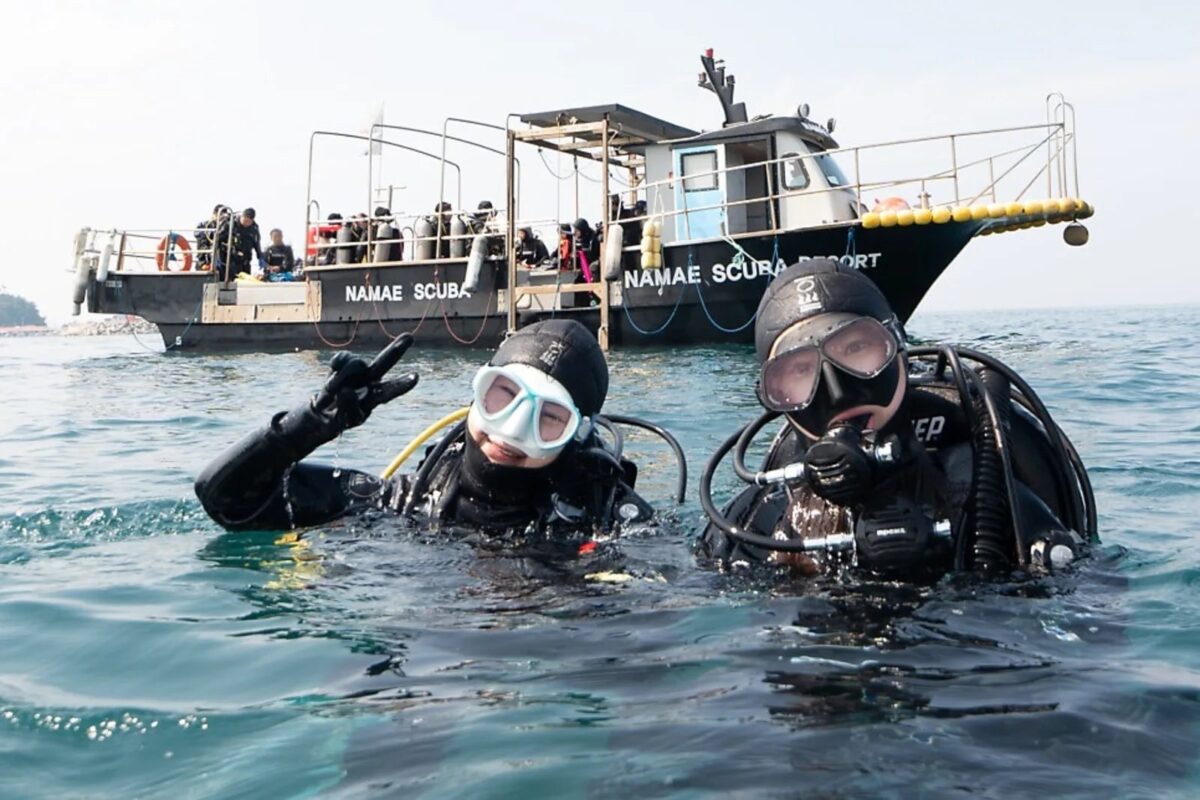
On a Saturday in late June, we drove from Seoul to Gangwon-do and back in a single day. In the group was Lee Hyo-jin — Audrey — an SSI instructor who has never once dived her own country’s water. She came because she wants to bring her foreign diver friends here one day, and she thought she should probably see it herself first.
This is what she expected, and what actually happened.
1,500 dives, none of them here
Two Worries Before Her
First Time Diving In Korea
Audrey did not arrive as a beginner. She ran a global consulting firm and worked as an interpreter and a Korean, Chinese and English announcer before turning her life over to the ocean in Thailand. She was a resident instructor at Phoenix Divers on Koh Tao, a founding member and trip leader on Similan National Park liveaboards, and she has logged more than 1,500 dives.

All of that experience was in warm water, which is exactly why she was nervous. “I have no experience of diving in Korea at all, and I only ever worked in tropical seas — so I was worried about the environment and the temperature.” The East Sea runs more than ten degrees colder than the water she had built a career in.
The second worry had nothing to do with the ocean. “I have plenty of diver friends overseas, but no Korean diver friends. I wondered whether it would feel awkward.” Anyone who has joined a group trip alone knows the feeling: the water is the easy part, the van ride is not.
the pool before the sea
The Preparation That
Decided The Dive
She could have booked a dive centre on her own and hoped for the best. Instead she asked for help and took a dry suit course first — in a pool, before the trip, on the theory that being cold is a solvable problem if you solve it in advance.
This is the part we would underline for anyone considering their first time diving in Korea. The suit is not a detail. It is the difference between a dive you endure and a dive you enjoy, and it is worth learning properly rather than borrowing on the day.
“The dry suit class was in the pool, and it was taught as carefully and step by step as an open water course. I’m at home in the water, but changing suits was new and genuinely fun.” An experienced instructor being taught like a beginner, without a hint of embarrassment about it — that is what a professional looks like.
- Learn the suit in a pool first — not on a boat in Gangwon-do at 8am
- Match the suit to the water, not to the season on the calendar
- Rent before you buy — while you train with NB Divers, gear is available to rent
- Go with people who know the site, especially the first time
under the surface at yangyang
What The East Sea
Actually Looked Like
June in the East Sea means sargassum. Whole forests of it, swaying in the current, catching the light coming down through the surface. It is not the postcard blue of the Andaman — it is something else entirely, and it does not exist in the warm water Audrey spent eight years in.
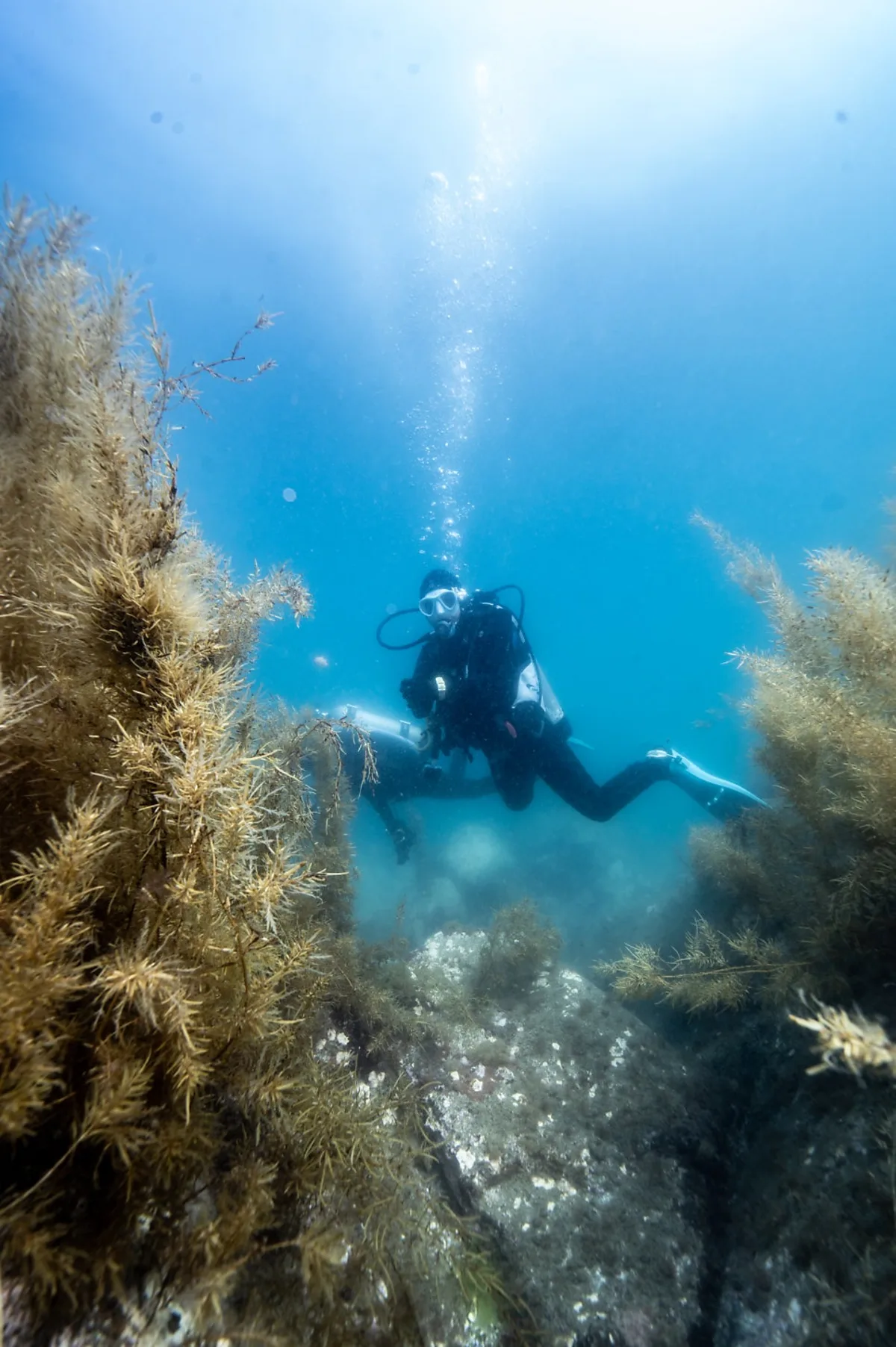
The cold she had been bracing for never arrived. “I was worried the East Sea would be more than ten degrees colder than Thailand. But because I’d practised enough in the dry suit at the pool, I wasn’t shivering at all — I was warm, and relaxed enough to enjoy it.”
That sentence is the whole argument. Korean water is not too cold to enjoy. It is too cold to enjoy badly prepared. Those are very different problems, and only one of them is the ocean’s fault.
the part that wasn’t about water
Strangers At Breakfast,
Buddies By Lunch
The second worry dissolved faster than the first. “It was a small group, and Charlie introduced each person to me himself, so it all happened inside a network I could trust, with a good atmosphere.” Nobody was wildly out of their depth relative to anyone else, and the group happened to be made up of specialists from completely different fields, so the conversation went everywhere.
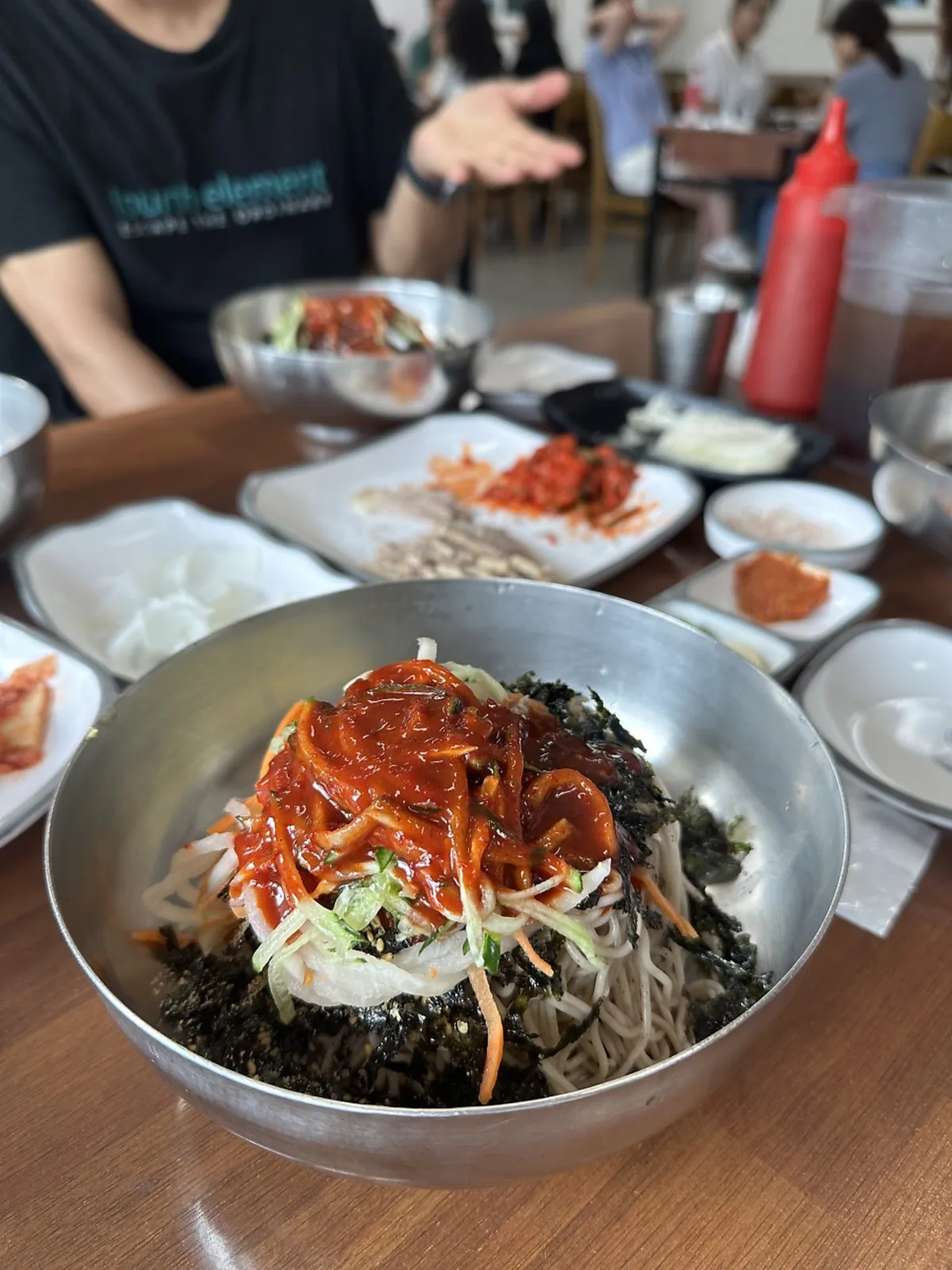
Then everyone went and ate somewhere good, which is not a small thing. “We took photos for each other and built proper memories.” Small groups are slower and less profitable to run. They are also the only way a stranger becomes a buddy in one day.
What surprised her most came at the end. Watching how busy the East Sea gets on a weekend, she realised Korean diving is not a quiet backwater at all — it is an industry that has grown up while she was away. “I had a preconception about Korean water, built entirely from tropical experience. This trip broke it.”
Her ambition now is one we share. Too often Korean divers abroad stay in a Korean-speaking huddle, and foreign divers here stay in theirs, separated by nothing more than language. Audrey wants to build the room where those two groups actually meet. Diving is the common ground; someone just has to open the door.
the nb divers way
Learn Right,
Enjoy Forever
For twenty-six years NB Divers has been introducing people to the beauty of Korea’s sea, in small groups, one properly-taught diver at a time. Diving is our culture — not a weekend product. We are not for everyone, only for you: the diver who would rather be taught the suit in a pool than be cold in Gangwon-do and blame the country for it.
26Years introducing Korea’s sea
5,890+Divers certified & counting
1:3Instructor-to-student ratio

If you are an expat in Seoul, the language gap is the one thing you should not have to plan around. Our dive professionals communicate in English, as well as Korean and Japanese, so you can ask about water temperature, suits and sites in plain English before you commit to a thing. Never dived before? Start here. Already certified and curious about Korea’s own coast? Come and see it. Ready to go further? We will help you level up properly.
See It Before You Judge It
Tell us your certification level and we’ll plan your first time diving in Korea properly — the right suit, a small group, and a sea that will surprise you.
good to know
Questions About Your First Time Diving In Korea
Is Korean water really too cold to dive?
No — it is only too cold if you dive it in the wrong suit. Our seas run cooler than the tropics and cool further at depth, but in a properly fitted dry suit that you have practised in, divers report being warm and relaxed rather than shivering. The temperature is a preparation question, not a reason to stay out.
What will I actually see in the East Sea?
In early summer, sargassum forests swaying in the current with light coming down through them, rocky reefs, artificial reef structures, white sand and shoals of native Korean fish. It looks nothing like tropical water — that is the point. These forests simply do not grow in warm seas.
Do I need a dry suit for my first time diving in Korea?
For most of the year, a dry suit is the comfortable choice on Korea’s East and South coasts. You do not have to buy one. We rent almost every piece of scuba equipment, so you can dive the right suit long before you decide to own it.
I’ve never worn a dry suit. Do I need training first?
Yes, and it is worth doing in a pool before the trip. A dry suit changes how you manage buoyancy and air, so we teach it step by step in confined water first — the same way we would teach an open water course. Even instructors with a thousand-plus tropical dives take the course before their first cold-water day here.
Can I do an East Sea trip from Seoul in one day?
Yes. Seoul to the Gangwon-do coast and back is a comfortable day trip, which is how this one ran — dive, eat somewhere good locally, and be home the same evening. Our centre is in Songpa-gu, Seoul, a short trip from Jamsil station.
I’m an expat and I don’t speak Korean. Can I join?
Yes. Our dive professionals communicate in English, as well as Korean and Japanese, so briefings, training and the conversation on the boat all work for you. Bridging the gap between Korean and international divers is something we actively want more of, not something we tolerate.
I’d be joining alone. Will it be awkward?
This is the most common worry and the fastest to disappear. We keep groups small and introduce every diver by name, so you are diving inside a network rather than with a crowd of strangers. Most people arrive alone and leave with buddies’ phone numbers.
How experienced do I need to be for an East Sea trip?
Tell us your certification and logged dives and we will place you on the right trip. We keep experience levels within a group reasonably close, so nobody is holding back and nobody is out of their depth. If you are not certified yet, we start you at the beginning instead.
Is Korean diving worth it if I already dive in Asia every year?
That is exactly the diver this story is about. An instructor with 1,500 tropical dives assumed home water had nothing to offer, and changed her mind in one day. Korea is not a lesser version of the tropics — it is a different sea with its own character, and it is a two-hour drive rather than a flight.
How do I book a trip or a dry suit course?
Message us on live chat or email mail@nbdivers.com with your certification level and the dates you have in mind. We will tell you honestly what you need first — and what you do not.
← PreviousThe Diver Essentials Course: Three Days to Complete Freedom UnderwaterNext →East Sea Water Temperature Is Warmer Than You Think
