
장바구니에 상품이 없습니다.
미분류
East Sea Water Temperature Is Warmer Than You Think
18
7월
7월
Dive Korea · East Sea
East Sea Water Temperature Is
Warmer Than You Think
A freediving and mermaid instructor braced herself for a cold, murky Korean sea. She surfaced from her first East Sea scuba dive with a very different story.
the diver everybody warned
Everyone Had A Story
About The Cold
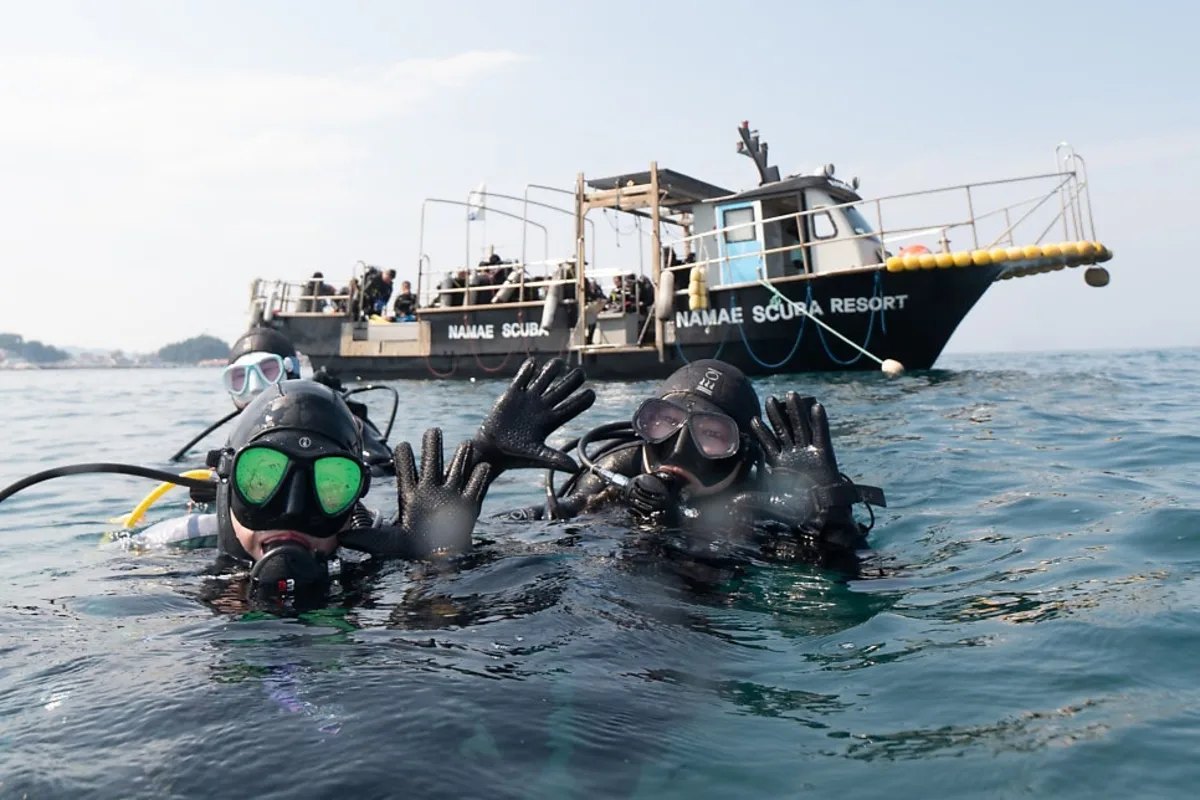
Rena Park teaches freediving and mermaid diving. She has competed and placed in national mermaid competitions, and she finishes her working day in a pool the way most people finish theirs on a sofa. Underwater is where she is comfortable. On scuba, though, she is still a Rescue Diver — two years in, and honest about how far she has to go.
She had freedived Korea’s East Sea many times. She had never scuba dived it. And before her first trip with us, everyone she knew had an opinion about it. The East Sea water temperature is like this. The visibility is like that. You’ll be cold. You won’t see anything. The stories piled up, and none of them agreed with each other.
“I wanted to know who was right,” she said. So she decided to stop listening and go find out — to compare the East Sea she knew on one breath with the East Sea everyone else described.
what she was actually worried about
Two Fears, One Shrug
Her two real concerns were temperature and visibility. She had never breathed compressed air in this sea, and a first dive in unfamiliar conditions deserves a little nervousness. Everything else, she treated lightly. The news was full of reports of sharks appearing as seas warm; her plan, if she met one, was to shake its hand. Statistically she is not wrong — the number of people bitten by sharks is vanishingly small.
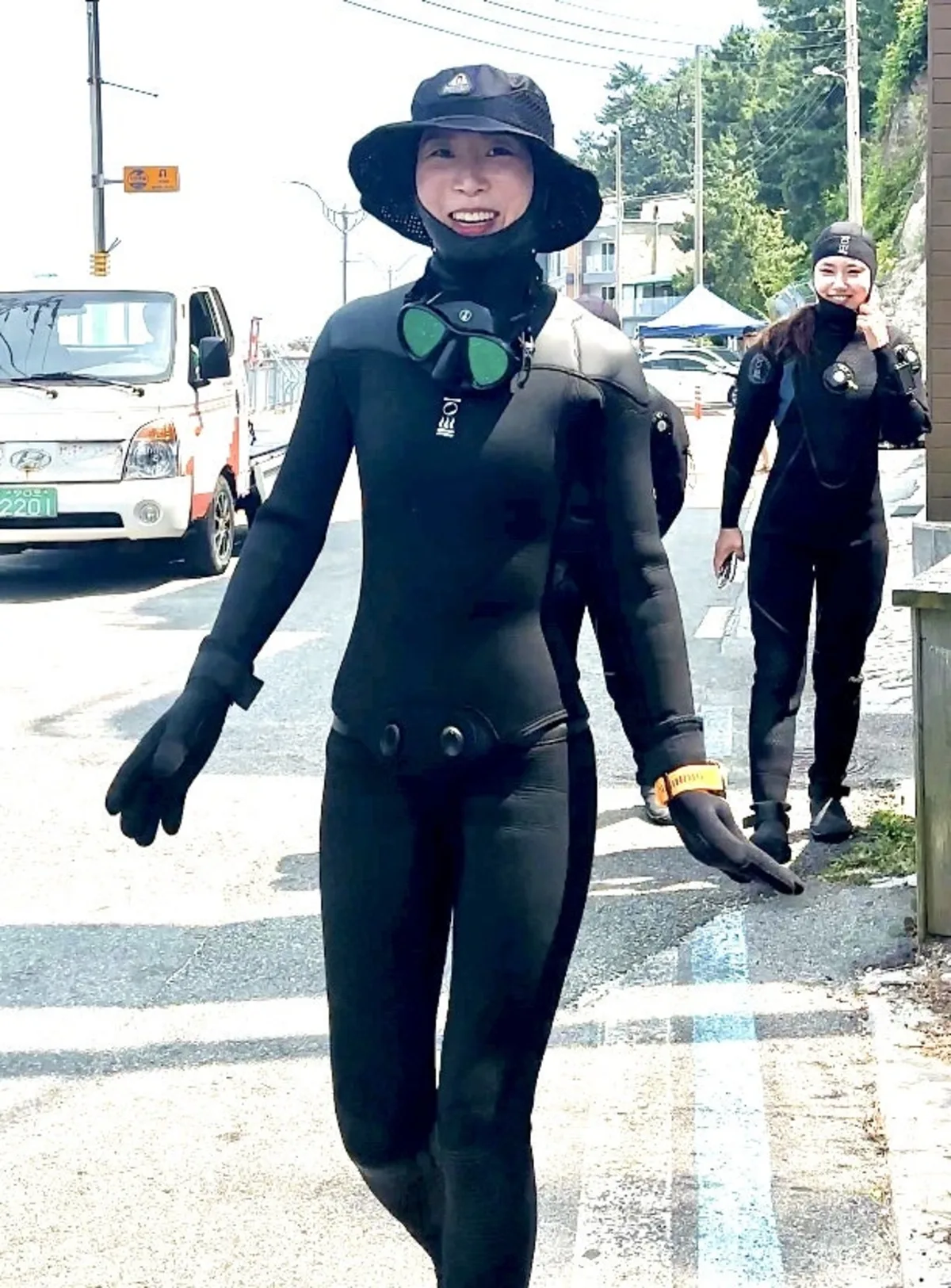
So she prepared instead of worrying. She tried a 6mm Fourth Element RF2 suit in the pool to feel how it moved and how it held heat. She had trained for her Rescue course in Jeju the previous winter, in water around 20°C, and reasoned that if she could handle that, she could handle a little shivering here. Visibility she left alone entirely — she had seen this sea before. What she felt instead, quietly, was excitement about which creatures would turn up.
That is the difference between a nervous diver and a prepared one. A prepared diver does not need the sea to be predictable. She just needs to have done the work beforehand.
the number that ended the argument
22°C, And Not
A Single Shiver
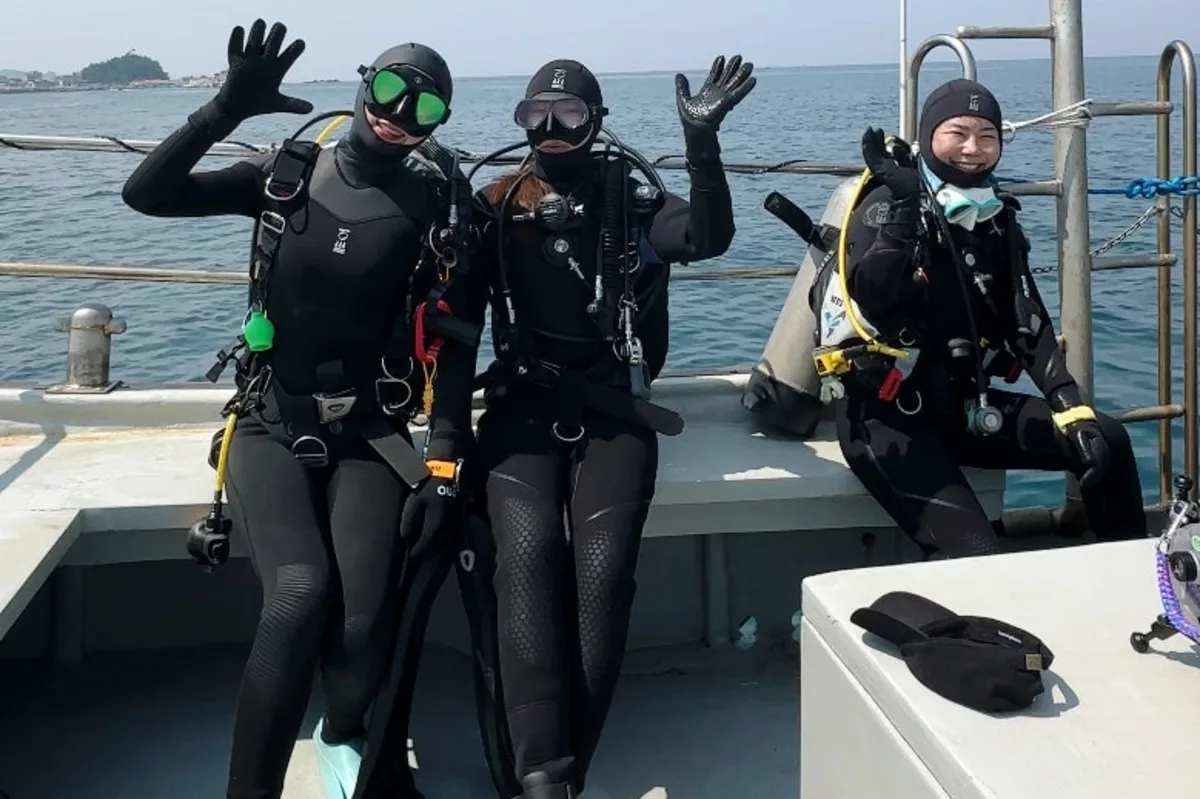
Here is what the East Sea water temperature actually did on her trip: it sat at an average of around 22°C, and she was never once cold. The waves, she said with a straight face, were about minus half a metre — a sea so flat it was almost embarrassing. Visibility came in better than she had feared, good enough to bring home photographs she was proud of.
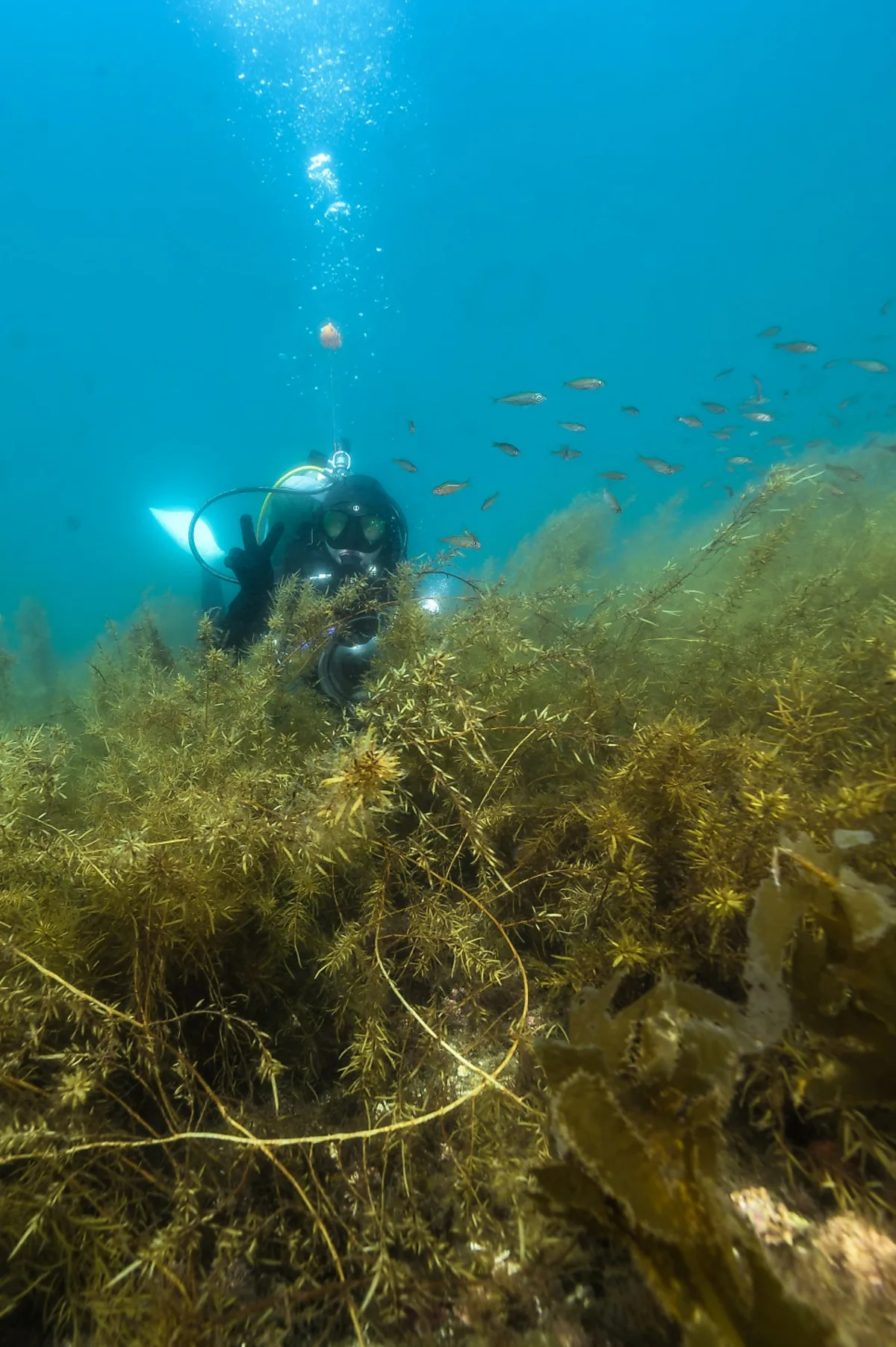
Then she found what she had come for. The sargassum forest: tall seaweed swaying in the current, and a diver drifting through it, brushing the fronds, grooming the forest like a cat. She turned around and her buddies were exactly where they should be. That is the part she remembers — not that the water was warm, but that she never had to think about anything except the sea in front of her.
Warm water cannot grow a sargassum forest. This is not a consolation prize for divers who cannot afford a flight south. It is a landscape you can only see here.
why the trip felt easy
The Sea Is Half Of It.
The People Are The Rest.
“Where I go matters less than who I meet there,” Rena said. On this trip she was paired with buddies she had never met before — strangers at the car park, a team by the first descent. She described it as comfortable and steady from beginning to end.
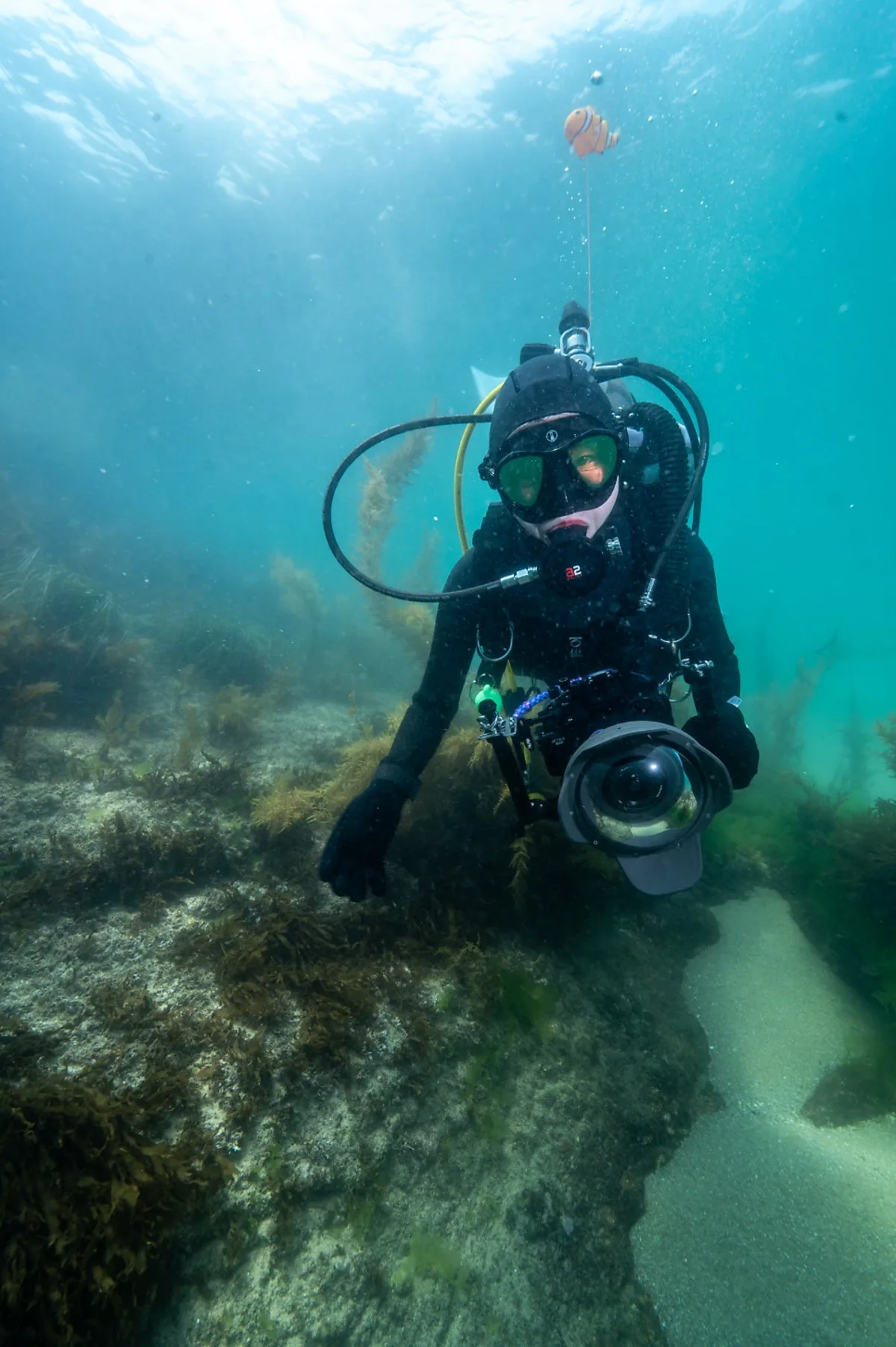
There is no mystery to why. The group stayed tight the way the briefing asked. The dive leader kept the plan honest and the pace unhurried. Professional divers sat in the water behind her, which is what let her spend her attention on the seaweed instead of on her own position. Nothing went wrong — and nothing going wrong is not luck. It is the shape of a dive that was planned properly before anyone got wet.
That is what a small group buys you. Not comfort for its own sake, but the freedom to look around.
what she took home
The Rumour Was
Half Wrong
Rena has now dived all three of Korea’s seas, on scuba and on a single breath. Her verdict on the reputation Korean water carries — cold, dangerous, frightening — is that the rumour is about half right, and the wrong half is the one everybody repeats.
What she found instead, and what any diver here finds once, was this:
- Sargassum forests and seaweed-covered artificial reefs you will not see in a warm sea
- White sand beaches with schools of native fish flashing silver in the light
- The particular joy of recognising a fish you know by name — she has nearly lost a buddy to that distraction
- An East Sea water temperature in early summer that asks far less of you than the stories suggest
Korea’s sea is not a lesser version of somewhere tropical. It has its own character, and it is worth diving on its own terms. She is already planning the next one.
And her advice, after all of it, was about the suit rather than the sea: wear one matched to the water you are actually in. Keep your body warm and you can enjoy any ocean on this planet.
the nb divers way
Learn Right,
Enjoy Forever
For twenty-six years NB Divers has taught divers in small groups, close enough to see, because diving is our culture rather than a product we move. We are not for everyone, only for you: the diver who would rather test a rumour in the water than repeat it on land.
26Years training divers in Seoul
5,890+Divers certified & counting
1:3Instructor-to-student ratio
Our dive professionals communicate in English, as well as Korean and Japanese — so if you are an expat in Seoul who has been told the local sea is not worth it, you can ask every question in plain English and then go check for yourself. While you train with us, gear is available to rent, so you can try the right suit for the water. Start where the sea starts on our Dive Korea page, or level up properly when you want to go further.
Go And See For Yourself
Stop asking which rumour about Korea’s sea is true. Tell us when you’re free, and we’ll put you in the right suit, in a small group, in the East Sea — and you can decide with your own eyes.
good to know
Questions About East Sea Water Temperature And Diving Korea
What is the East Sea water temperature for diving in summer?
On this early-summer trip the East Sea water temperature averaged around 22°C, and our diver — who expected to be cold — never shivered once. Conditions vary by site, depth and day, and a thermocline can drop the temperature sharply mid-dive, so we always confirm the current numbers before a trip.
Is Korea’s East Sea really as cold as people say?
Half right at most. Winter is genuinely cold and calls for a drysuit, but early summer sits far warmer than the rumours suggest. The reputation is mostly built on second-hand stories rather than a dive computer log.
What suit should I wear in the East Sea?
Match the suit to the water, not the season on the calendar. In warm months a 5–7mm wetsuit is comfortable for most divers; in colder water a drysuit is the sensible choice. Keep your body warm and you can enjoy any sea. If you are unsure, ask us before you buy — and rent first.
How is the visibility in the East Sea?
Better than its reputation, often good enough for underwater photography. It varies with weather, swell and site, which is exactly why we choose the site on the day rather than promising a number in advance.
What will I actually see diving in Korea?
Sargassum forests swaying in the current, seaweed-covered artificial reefs, white sand, and schools of native fish flashing silver. Warm tropical water cannot grow this landscape — it is particular to here.
Are there sharks in the East Sea?
Sightings are occasionally reported as seas warm, but the number of people ever bitten by a shark is vanishingly small. Our briefings cover what to do in any encounter, and our dive leaders stay with the group throughout.
I’m a freediver — can I dive the East Sea on scuba?
Yes, and the sea will look different to you. Rena is a freediving and mermaid instructor and a Rescue Diver on scuba, and she came back describing a version of the East Sea she had never met on a single breath. If you hold a scuba certification you can join a trip; if you do not yet, we will train you.
I’m an expat in Seoul. Can I join an East Sea trip in English?
Yes. Our dive professionals communicate in English, as well as Korean and Japanese, so briefings, gear fitting and every question along the way happen without a language gap.
Do I need my own gear for an East Sea trip?
No. We rent almost every piece of scuba equipment, drysuits included. Try a suit in the real water before you ever consider owning one.
How do I book a dive trip to Korea’s East Sea?
Message us through live chat or email mail@nbdivers.com with your certification level and free dates. Our centre is in Songpa-gu, Seoul, a short trip from Jamsil station, and we run small-group trips to the East Sea coast through the season.
← PreviousFirst Time Diving in Korea: A Tropical Instructor’s VerdictNext →Advanced Open Water Diver: The Start of New Exploration
