
장바구니에 상품이 없습니다.
미분류
Advanced Open Water Diver: The Start of New Exploration
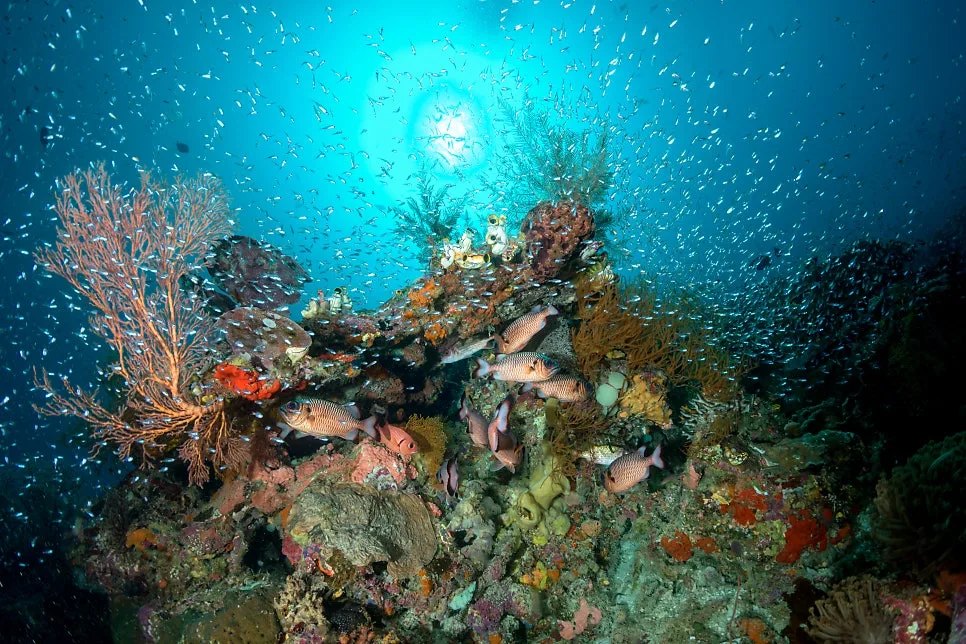
23
7월
7월
Level Up · Advanced Open Water
Advanced Open Water Diver:
The Start Of New Exploration
The best site on the trip was a little too deep, and your certification stopped at the surface of it. This is the course that opens the door.
the diver left on the boat
The One Point Everybody Came For,
And You Can’t Go
There is a particular kind of quiet on a dive boat. It happens when the group rolls backward off the tubes toward the site everyone flew in to see — and one diver stays behind, because the site sits deeper than an Open Water certification allows. You watch the bubbles disappear. You scroll the same photos everyone else is about to take for real.
It is a story we hear again and again from divers who join us after a trip abroad. The wall, the wreck, the wall of fish they had saved on their phone for a year — all of it a few metres below the line they were trained to.
Open Water certification caps your depth at eighteen metres, and that is exactly the right place to start. But the famous sites — the ones that make people book flights — usually begin just underneath it. The question is not whether eighteen metres is enough. It is whether you want to keep watching other people’s dives.
where the good stuff hides
Eighteen Metres Is A
Ceiling, Not A Limit
Look at where a reef’s character lives. The shallow top is bright and pretty, and it is genuinely worth diving. But the schooling that darkens the water, the wrecks resting on the sand, the drop-offs where big things cruise past — those tend to sit below eighteen metres. Not far below. Just far enough that an Open Water card asks you to turn around.

This is not about chasing depth for its own sake. Going deeper without training is how divers get hurt. It is about earning the range, the planning skills and the composure to visit those sites safely — and to come back up with the discipline intact. Depth you have not been trained for is a hazard. Depth you have been trained for is a doorway.
what the course actually is
What The Advanced Open Water
Diver Course Is
The PADI Advanced Open Water Diver course is built to give you experience across different kinds of diving under supervision, rather than a single skill drilled in isolation. If you hold an Open Water certification and you are twelve or older, you can start. It is the natural next step, not a distant one.
The structure is simple. A short block of theory through eLearning — roughly six to eight hours, covering thirteen popular specialty areas — and then five dives in open water. Two of those five are fixed for everyone. The other three you choose. You surface having done five real adventures, not five exercises.

That is the design philosophy in one line: broaden before you specialise. You try a range of diving, discover what genuinely pulls you, and leave with a clear sense of which specialty you want to chase properly next.
the two that are non-negotiable
Deep And Navigation
Two of the five dives are required, and they are required for a reason. The Deep dive takes you toward thirty metres and teaches you to plan gas with your buddy, watch your no-decompression limits, read how pressure changes your body and your air consumption, and notice how colour drains away as you descend. It is the difference between visiting depth and understanding it.
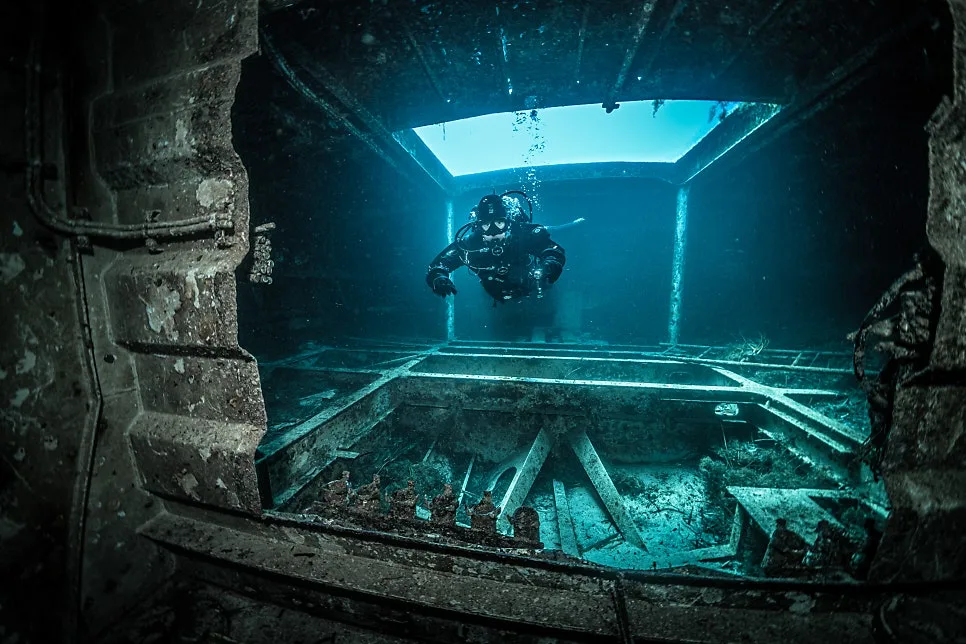
The Navigation dive teaches you to find your way with a compass and with natural landmarks — holding buoyancy while you count kick cycles, swimming straight lines and square patterns, and coming back to where you started. Divers underestimate how much confidence this one skill returns. When you always know where you are, you stop worrying and start looking.
three dives you choose
Then You Build The Rest
Your Way
The other three dives are yours to pick from a long list — wreck, night, drift, fish identification, search and recovery, digital underwater imaging, and many more. For divers training with us in Korea, we usually recommend three that pay off immediately in local water: Dry Suit, Peak Performance Buoyancy, and Digital Underwater Imaging.

There is a reason for each. Dry Suit unlocks Korea’s cooler months, so your diving does not stop when the water drops. Peak Performance Buoyancy is the single skill that makes every future dive better — less air used, less damage to the reef, more time to simply watch. Digital Underwater Imaging is how you finally bring home the photos you used to only save from other people.
By the end, the Advanced Open Water Diver certification gives you:
- Access to dive sites down to thirty metres — the wrecks, walls and schooling most trips are built around
- Real navigation skills, so you dive relaxed instead of following someone’s fins and hoping
- A taste of several specialties, so you know exactly what to train next
- Better buoyancy and air consumption, which quietly improves every dive for the rest of your life
the nb divers way
Learn Right,
Enjoy Forever
We have spent 26 years teaching divers in small groups, close enough to actually see each person, because diving is our culture and not a product we push through as fast as possible. We are not for everyone, only for you: the diver who wants the range extended properly, once, so it lasts a lifetime.
26Years training divers in Seoul
5,874Divers certified & counting
1:3Instructor-to-student ratio
Our dive professionals communicate in English, as well as Korean and Japanese — so if you are an expat in Seoul, you can ask every question about depth, planning and gas without a language gap standing between you and safety. While you train with us, gear is available to rent, drysuit included, so you can try the right equipment for a deeper dive. When you are ready, level up properly with us, or see where it leads on our Dive Korea page.
Stop Watching Other People’s Dives
Tell us your certification level and when you’re free. We’ll put you in a small group, take you past eighteen metres the right way, and give you back the sites you’ve been missing.
good to know
Questions About The Advanced Open Water Diver Course
What is the PADI Advanced Open Water Diver course?
It is the recreational course that follows Open Water. You complete short eLearning theory plus five supervised dives — two required (Deep and Navigation) and three you choose — and finish certified to dive to thirty metres with a broader set of skills.
Do I need to be an experienced diver to take it?
No. If you hold a PADI Open Water Diver certification and are twelve or older, you can start the Advanced Open Water Diver course. It is designed as the next step, so a modest number of logged dives is enough — the course itself builds the experience.
How deep can I dive after the course?
The Advanced Open Water Diver certification extends your recommended depth limit to thirty metres, up from the eighteen metres of Open Water. That range covers the great majority of the world’s famous wrecks, walls and schooling sites.
How long does the Advanced Open Water Diver course take?
The eLearning theory runs about six to eight hours and is done at home before you arrive. The five open-water dives are usually completed over two days. We keep groups small, so the pace stays comfortable rather than rushed.
Which two dives are required?
Deep and Navigation. The Deep dive teaches gas planning, no-decompression limits and how depth affects your body and air. The Navigation dive teaches compass and natural navigation so you always know where you are — the skill that makes diving feel calm.
Which three elective dives should I choose?
You can pick from a long list — wreck, night, drift, fish identification, imaging and more. For divers in Korea we often recommend Dry Suit, Peak Performance Buoyancy and Digital Underwater Imaging, because each one pays off immediately in local water. We’ll help you choose based on the diving you actually want to do.
Can I take the Advanced Open Water Diver course in Korea?
Yes. We run the course in Korean waters year-round, and the Dry Suit elective in particular makes Korea’s cooler seasons genuinely enjoyable. Training here means you build skills in the same conditions you’ll keep diving in.
I’m an expat in Seoul. Can I do the course in English?
Yes. Our dive professionals communicate in English, as well as Korean and Japanese, so the theory, the dive briefings and every safety question along the way happen clearly, without anything lost in translation.
Do I need to own gear for the course?
No. We rent almost every piece of scuba equipment, drysuit included. It is the ideal time to try different setups in real water before you decide what, if anything, to buy.
How do I sign up for the Advanced Open Water Diver course?
Message us through live chat or email mail@nbdivers.com with your certification level and available dates. Our centre is in Songpa-gu, Seoul, a short trip from Jamsil station, and we’ll plan your five dives around the diving you most want to do.
← PreviousEast Sea Water Temperature Is Warmer Than You ThinkNext →Scuba Diving for Busy Moms: A Diver Mom’s Story
