
장바구니에 상품이 없습니다.
미분류
The Diver Essentials Course: Three Days to Complete Freedom Underwater
16
7월
7월
Diving Skills · Diver Essentials
The Diver Essentials Course:
Three Days To Complete Freedom
You have the certification. What you want now is to stop thinking about your body underwater and start looking at the ocean.
the week before your first tour
Excited About The Dive.
Quietly Worried About Yourself
A diver who earned her Open Water card last spring wrote to us before her first tour: “I’m going on my first real dive trip. But I can’t control my buoyancy and my fin kicks are a mess. Is there one class that fixes all of it?”
She is not unusual. Almost every newly certified diver arrives at the same doorway with the same set of quiet worries, and almost none of them say it out loud on the boat.
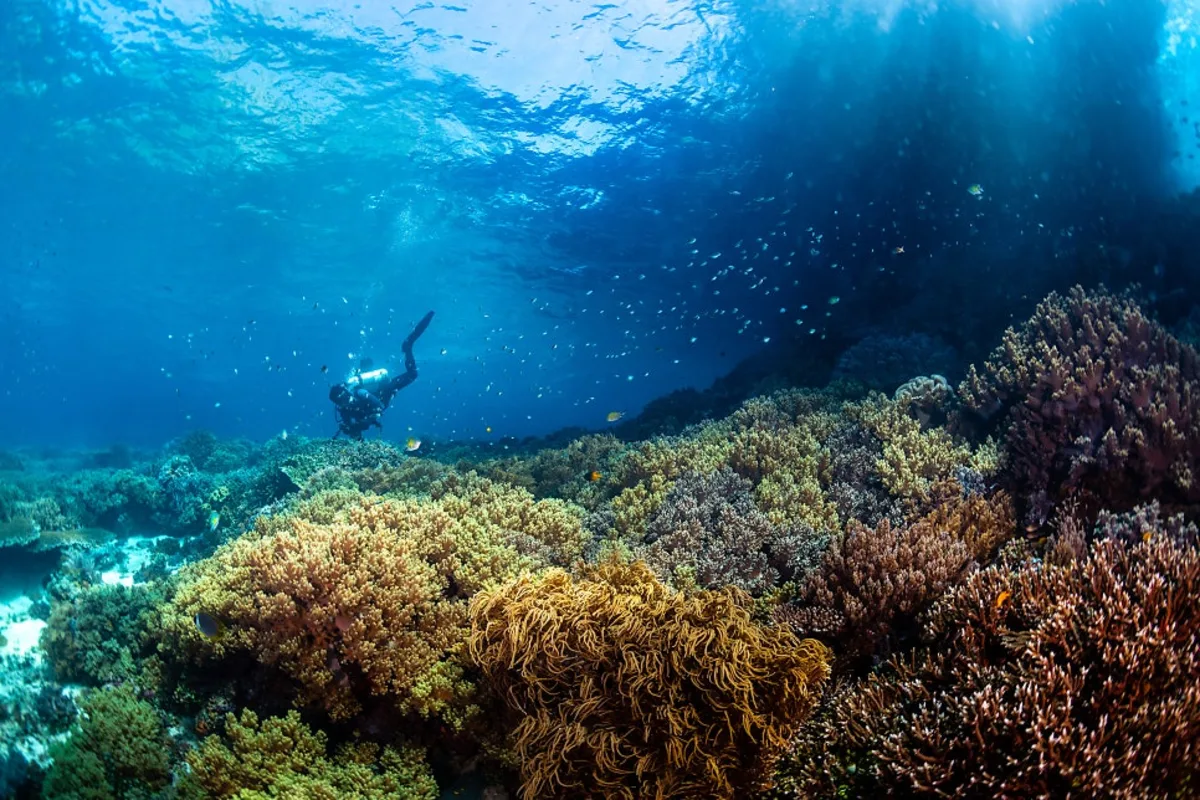
Here is what we actually hear, almost word for word, from divers in their first season:
- “My buoyancy is unreliable — I’m scared of an uncontrolled ascent.”
- “My fin kicks stir up silt, so I’ll have to swim at the back of the group.”
- “I burn through my air. Everyone else’s dive gets cut short because of me.”
- “In a team dive, I’m afraid I’ll lose my buddy.”
Notice what all four have in common. Not one of them is about the ocean. They are all about the diver — and a diver who is monitoring herself cannot see what she came to see.
the diver watching the gauge
Certification Teaches You
To Dive. Practice Makes It Yours
An Open Water course gives you everything you need to dive safely. What it cannot give you, in four days, is fluency — the point where buoyancy, posture, balance and kicking stop being tasks you perform and become the way your body simply behaves in water.
Fluency is not a talent. It is training time, structured properly, with someone watching who knows exactly what to correct. Without it, a diver stays busy managing herself, dive after dive, and slowly concludes that this is just how diving feels. It isn’t.
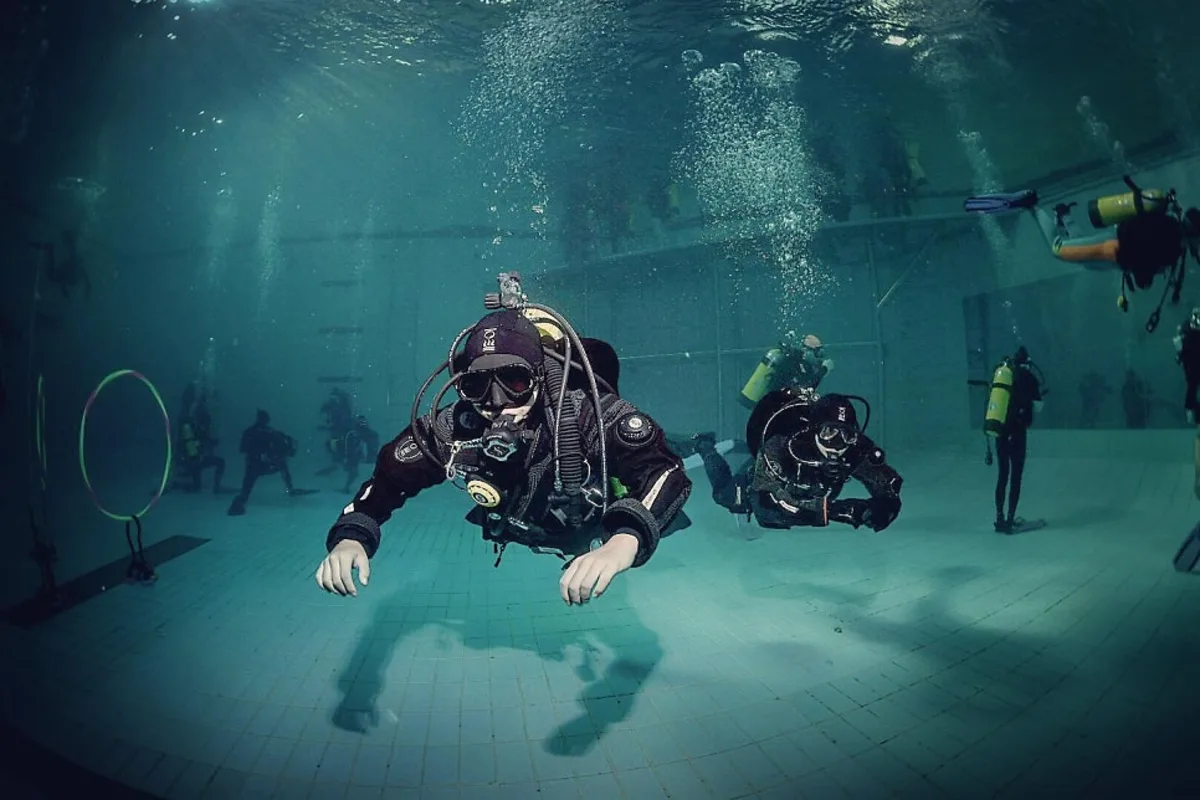
If it has been more than six months since your last dive, start with PADI ReActivate instead. Rebuild the baseline first, then come back and build fluency on top of it.
four themes, three days
Inside The Diver Essentials Course
The NB Divers Diver Essentials course is not a review class. It is built for divers who intend to take this seriously — and it trains four things, in order: buoyancy, posture, balance and fin kicks. Get those four right and you can drop into any dive site in the world without holding anyone up.
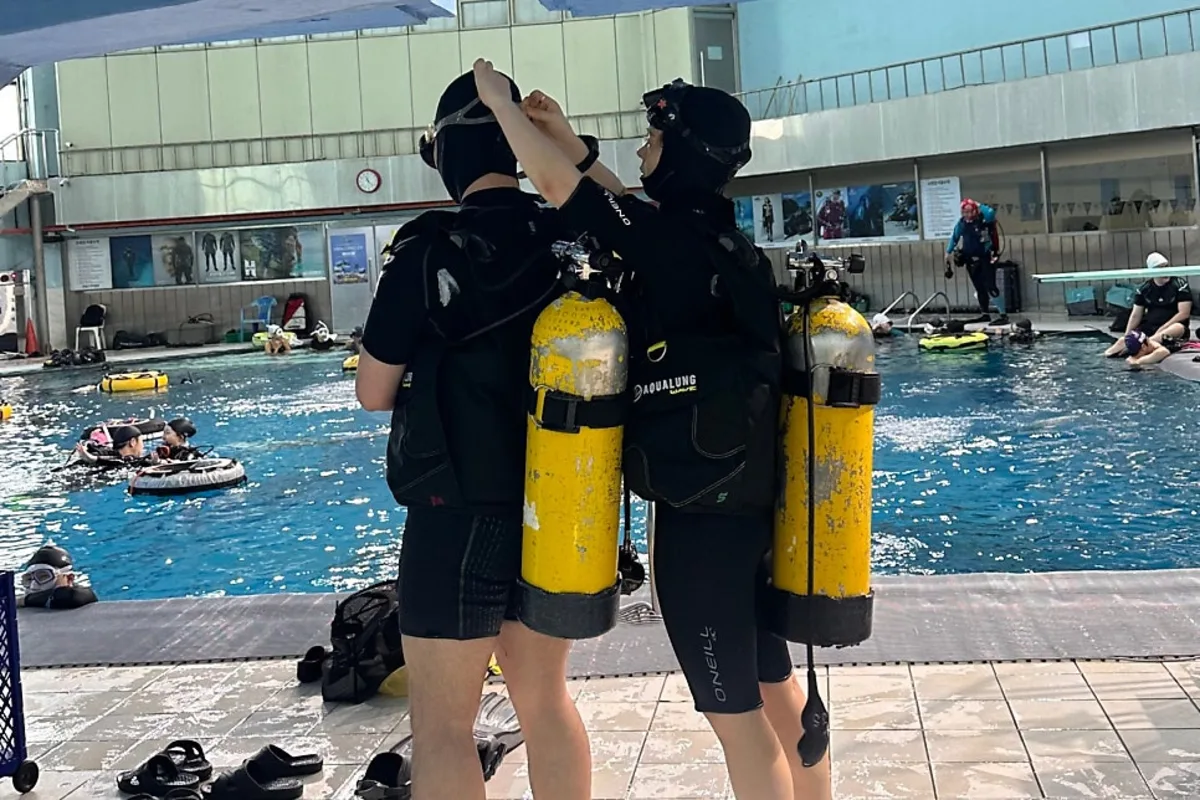
It runs over three days, roughly three pool hours per day, opening with about an hour of theory. Every session is filmed. After each skill you sit down and watch yourself, because being told your trim is off teaches far less than seeing it.
The course is not timed — it is competency-based. Three days is the shape of it, not the limit. We stay with each skill until it is genuinely yours.
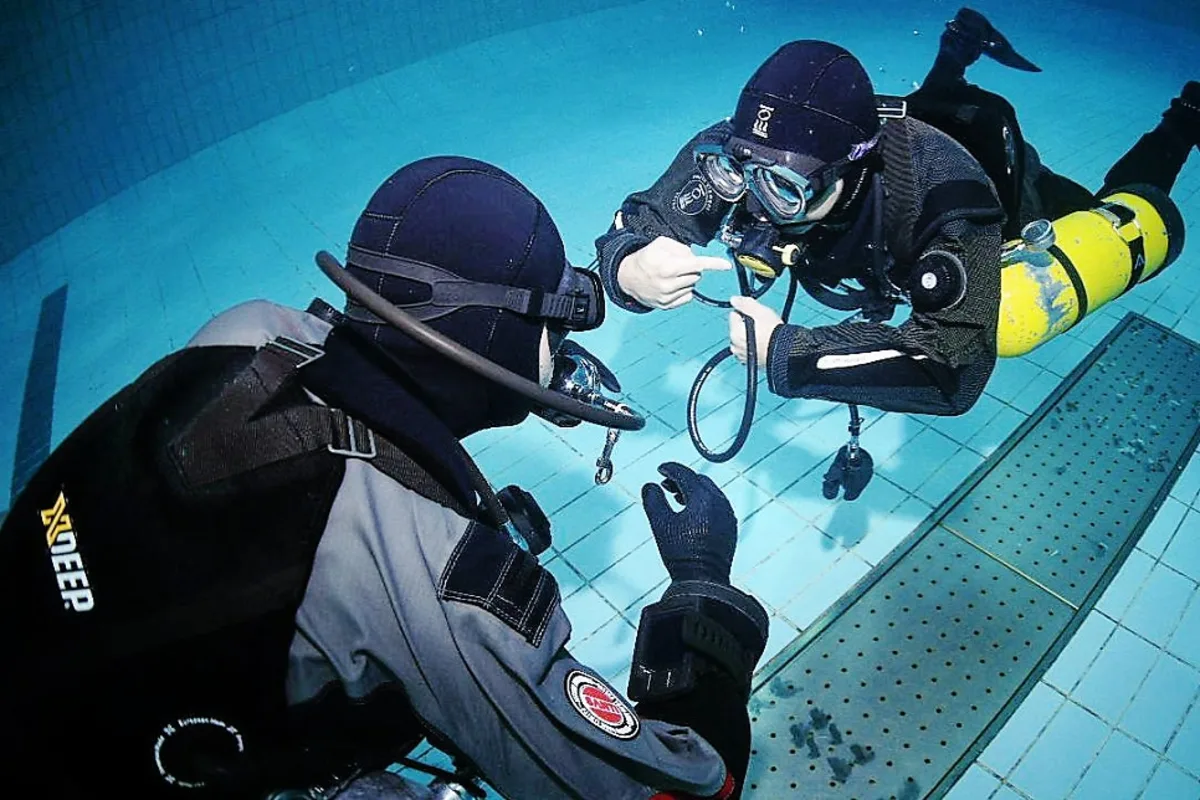
What the three days cover:
- Theory (1 hour). Buoyancy, trim and balance, and the mechanics of each fin kick, with video.
- Gear fitting. BCD and weights adjusted to the suit you actually wear, so nothing shifts mid-dive.
- Team diving procedures. Kitting up with your buddy and running a proper pre-dive safety check (BWRAF).
- A realistic descent. Five controlled stages, stopping in the water column without ever touching the bottom — the skill that protects coral.
- Buoyancy, trim and balance. Correct weight for your suit, and weight repositioned until you hang level without effort.
- Four fin kicks. Frog, modified flutter, backward, and helicopter turn — one for each situation you will meet.
- Core skill review, in trim at 3m. Regulator recovery and exchange, S-drill, mask clearing, mask removal and replacement.
- DSMB deployment. Sending up a delayed surface marker buoy cleanly, from depth.
Read that list again and note the last detail: the skills are practised while holding trim. Anyone can clear a mask kneeling on the pool floor. Clearing it while hovering, level and motionless, is what a real dive asks of you — and that is the version we train.
Training gear is available to rent throughout your course, so nothing gets in the way of showing up. Pool entry is paid separately, and full details sit on our pricing page.
the nb divers way
Learn Right,
Enjoy Forever
NB Divers has spent twenty-six years building divers slowly and in small groups, because diving is our culture — not a certificate we hand over. We are not for everyone, only for you: the diver who would rather fix her trim over three days in a pool than spend every tour apologising for her air consumption.
26Years training divers in Seoul
5,900+Divers certified & counting
1:3Instructor-to-student ratio
Our dive professionals communicate in English, as well as Korean and Japanese. If you are an expat in Seoul who learned to dive somewhere warm and clear, you can ask every question in plain English — including the awkward ones about how Korean water will compare.
where the three days pay off
Korean Water Is Honest.
Train For It And It Gives Back
Korea’s coast is cooler and less forgiving than the tropical sites where many divers first certify. Visibility varies. You will often wear a thicker suit, sometimes a drysuit, and that changes your buoyancy completely. Divers who arrive with sloppy trim notice it here immediately.
Which is exactly why this is the best possible place to become fluent. A diver trained in Korea’s East Sea is a diver who can drop into anything, anywhere, and simply enjoy it. Once the four fundamentals are automatic, the next certification stops being a hurdle and starts being an appetite — and we will help you level up properly when you want it.
Stop Managing Yourself. Start Diving.
Three days, one pool, and an instructor who will not move on until each skill is genuinely yours. Tell us when you certified and what worries you most underwater — we will tell you exactly what your Diver Essentials course looks like.
good to know
Questions About The Diver Essentials Course
What is the Diver Essentials course, exactly?
It is an NB Divers training programme for certified divers who want to dive well, not just legally. Over three days it trains four fundamentals — buoyancy, posture, balance and fin kicks — alongside gear fitting, team diving procedures, controlled descents, a core skill review performed in trim, and DSMB deployment. It is not a certification retest and it does not replace your existing card.
I just got my Open Water card. Is this too advanced for me?
No — newly certified divers are the people this course was designed around. You already know the skills; what you are missing is repetition with feedback. Coming to Essentials early means you never build the bad habits that take years to unlearn.
How long is it, and does it really only take three days?
The course runs a minimum of three days, roughly three pool hours each, with about an hour of theory on the first day. It is competency-based rather than time-based: three days is the normal shape of it, but we continue working with you until every skill is performed comfortably and correctly.
I haven’t dived in over a year. Should I book this or ReActivate?
If it has been six months or more, we recommend PADI ReActivate first. It restores the basics from your Open Water course. Essentials then builds fluency on top of that foundation. Message us and we will tell you honestly which one you need.
Which fin kicks will I learn?
Four: the frog kick, the modified flutter kick, the backward kick, and the helicopter turn. Each solves a different problem — moving without stirring silt, manoeuvring in tight space, reversing without using your hands, and turning on the spot. Together they are what allow you to dive over a reef without touching it.
Do I need my own equipment?
No. Training gear is available to rent for the duration of your course, collected from and returned to our Seoul shop on the day or the day before. Pool entry is not included. If you do own gear, bring it — fitting your own rig properly is one of the most valuable parts of the course.
Can I take the course in English?
Yes. Our dive professionals communicate in English, as well as Korean and Japanese. Expat divers living in Seoul make up a meaningful part of our student body, and theory, briefings and video debriefs can all be delivered in English.
Why is the video debrief such a big deal?
Because almost no diver believes their trim is off until they see it. Underwater you have no external view of yourself, so your sense of your own body is unreliable. Watching the footage after each session collapses weeks of guesswork into a few minutes of recognition.
Will this help my air consumption?
Almost always, yes — though indirectly. High air consumption is usually a symptom rather than a cause: poor trim means you fight the water, over-weighting means you finkick to stay level, and both burn gas. Divers routinely find their bottom time extends after Essentials without ever consciously trying to breathe less.
How do I book, and how are the three days scheduled?
Book the first day at a time that suits you, then arrange the remaining two days directly with your instructor after that first session — it keeps the schedule flexible around your work. Message us on live chat or through Start Diving and we will set it up.
← PreviousHow to Choose a Scuba Diving Suit in KoreaNext →First Time Diving in Korea: A Tropical Instructor’s Verdict
