
장바구니에 상품이 없습니다.
미분류
Garmin Descent X50i: The Dive Computer That Brings You Home
04
6월
6월
Dive Computer Review · Garmin
The Dive Computer
That Brings You Home
A PADI Course Director’s honest review of the Garmin Descent X50i – tested over three months in Korea’s coldest, most demanding waters.
Enquire NowLive Chat
The Reality of the Open Ocean
Scuba Diving Is Safe – Until the Sea Reminds You It Is Not
Scuba diving is one of the most rewarding experiences a person can have. But it takes place in an environment that does not forgive carelessness. The ocean is vast, and even on a perfectly planned dive, things can go wrong faster than most people imagine:
- An unexpected drop in your air supply
- Decompression sickness
- Injury from marine life
- Sudden equipment failure
- Becoming separated from your buddy or team
- Drifting away from the boat at the surface
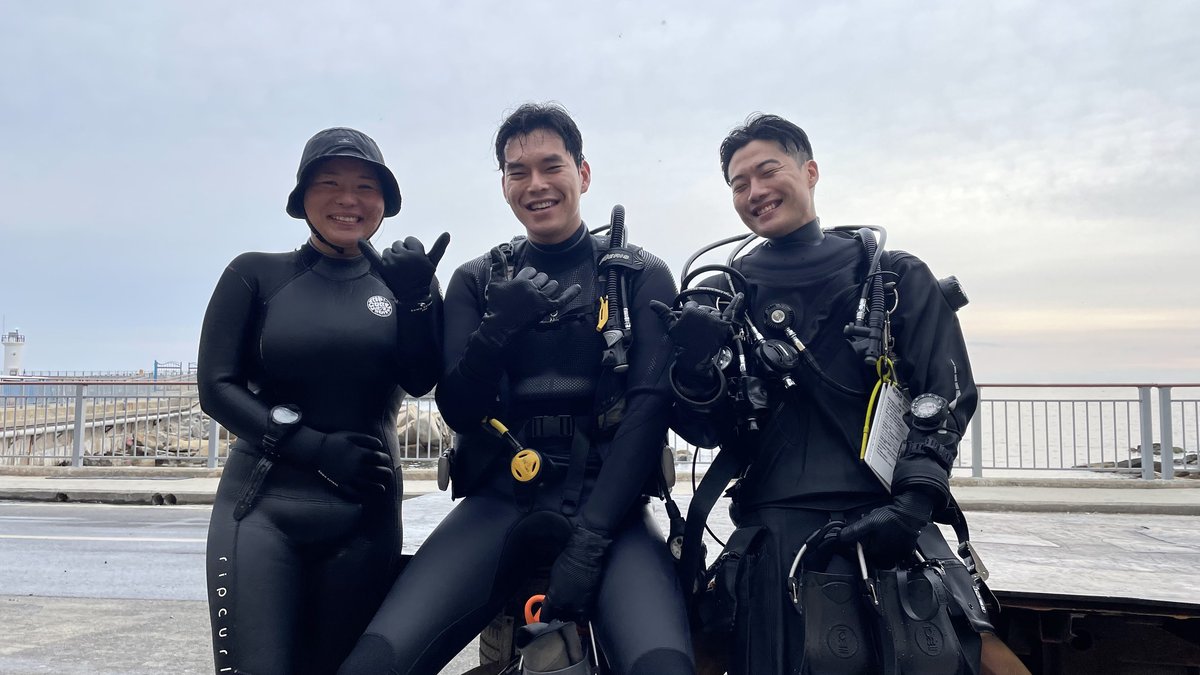
At NB Divers, we talk about safety constantly – not to frighten people, but because the goal of every dive is simple: everyone goes home. That belief is not theoretical for me. It comes from a day I will never forget.
A Day I Will Never Forget
Adrift in the East Sea
I have been diving for over 30 years, and in that time I have seen and lived through more than a few emergencies. The most frightening happened about ten years ago in the East Sea.
I surfaced after a dive, looked around for the boat – and it was gone. There was nothing but open water in every direction. We were drifting, with no way to signal where we were. The coast guard searched, and eventually found us. We were lucky.
“What if, that day, no one had found us?”
I still feel a chill when I think about it. Because someone did find us, I can tell that story today with a smile. But ever since, I have been far more serious about the tools that keep divers connected, located, and rescuable. That is the lens through which I tested the device in this review.
Why I Reviewed This Device
The Garmin Descent X50i, Tested in Real Korean Conditions
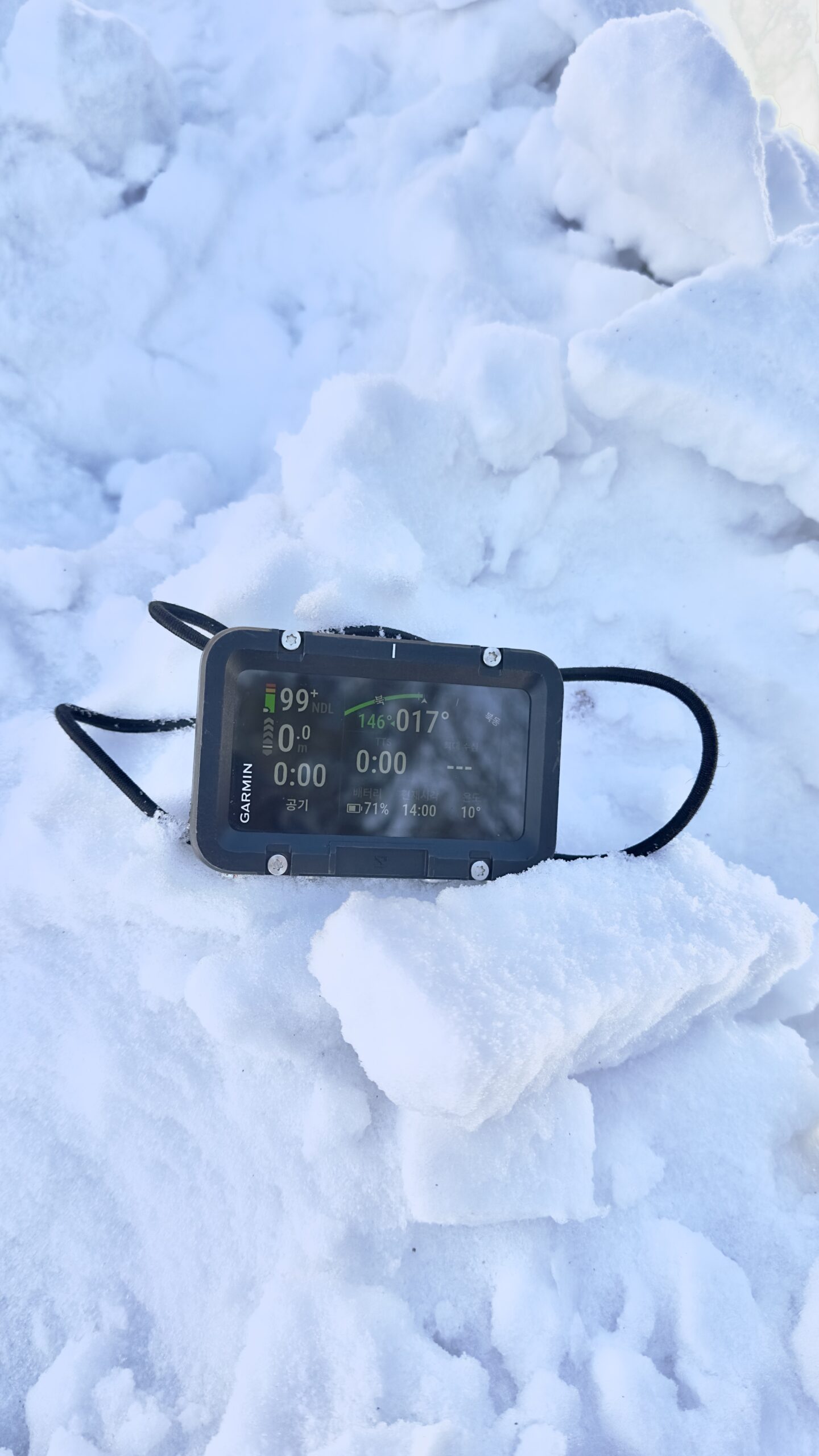
Today I want to review a piece of equipment that sits at the heart of diver safety: the dive computer. Specifically, Garmin’s newest large-format model, the Descent X50i. This is not a spec sheet copied from a brochure. My fellow instructors and I used it for three months across a wide range of sites and conditions – from warm recreational dives to ice diving in sub-zero temperatures.
As I tested it, three questions kept coming back to me, each tied directly to that day in the East Sea:
- What if you could send a clear message to your team underwater?
- What if you could see your buddy’s air and position in real time?
- What if you could call for rescue by satellite, without surfacing?
The Descent X50i answers all three. Here is how.
How It Makes Diving Safer
Four Features That Actually Matter Underwater
01 · Communication
Talk to Your Team – Underwater
Most divers communicate with hand signals, lights, or by writing on a wet-note. None of that works once your buddy drifts out of sight. Using SubWave sonar technology, the Descent X50i lets paired divers send text-style messages to each other underwater.
- Send preset messages such as “Are you OK?”, “Come to me”, and “Safely end dive” across a range of up to roughly 30 metres
- Communicate critical intent – low on air, ready to ascend – before a small problem becomes an emergency

02 · Awareness
See Your Buddy’s Air and Position in Real Time
The buddy system matters because divers help each other in an emergency. Traditionally that meant constantly asking and answering “how much air?” with hand signals. You no longer have to.
- When paired with Descent T2 transceivers, the X50i monitors the tank pressure, depth, and distance of up to eight divers, up to around 10 metres away
- If a buddy is running low, you can plan a safe, calm ascent in advance – a real advantage in the low-visibility water we often dive in Korea
03 · Rescue
Call for Help by Satellite
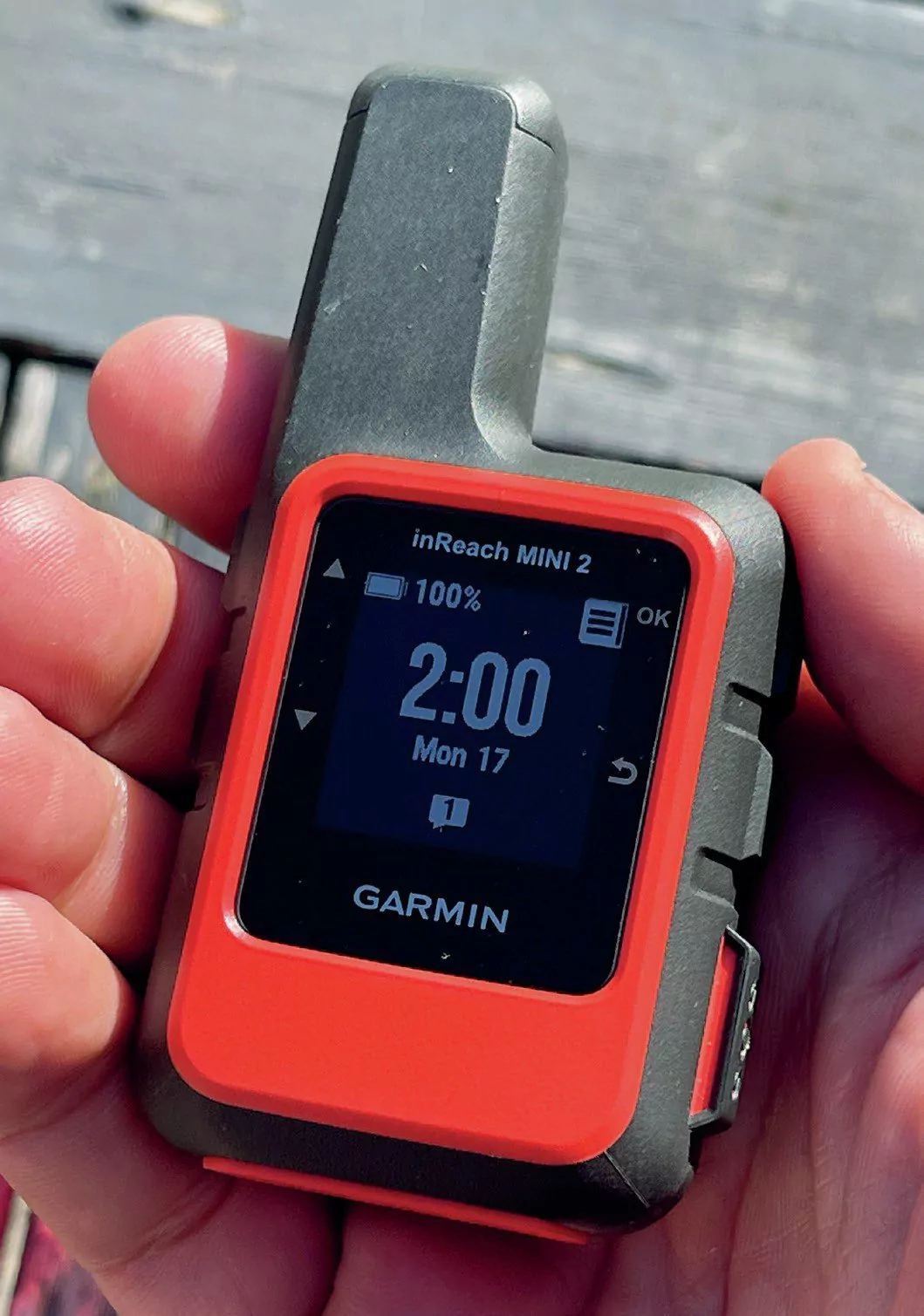
Caught in a current, or disoriented on a night dive, fast rescue is everything – exactly the situation I was in years ago. Paired with a Garmin inReach satellite communicator, the Descent X50i can trigger an interactive SOS over the global Iridium network, connecting you to the Garmin Response Center.
- Two-way satellite messaging and SOS from remote water far beyond mobile coverage
- Help can be summoned without losing precious time – raising the odds that every diver makes it home
04 · Capability
Built for Serious Diving
Beyond safety, the Descent X50i is simply a powerful, premium tool – Garmin’s largest dive computer to date.
- 3-inch colour touchscreen that stays readable in bright sun, with intuitive controls and no squinting at tiny figures
- Built-in backup dive light with multiple modes – useful for night and wreck dives, and as a position marker in poor visibility
- Air integration via the T2 transmitter for precise, predictable gas planning
- 20 ATM (200 m) rating, leakproof metal buttons, and a sapphire lens built to survive demanding conditions
- DiveView maps with bathymetric contours and 4,000+ dive sites worldwide
- Modes for recreational, multi-gas technical, and CCR diving – it grows with you from your first certification onward
“The best equipment in the world cannot replace good training. But in the right hands, it makes safe diving even safer.”
This is exactly why we built NB Divers around one idea: Learn it slow, keep it forever. A dive computer like the Descent X50i is remarkable – but it is most powerful when paired with a diver who has been trained to think, plan, and stay calm. Tools support skill. They never replace it. If you want to dive with confidence in Korea and around the world, that foundation is where it begins. Explore how we teach it on our Start Diving and Dive Korea pages.
Questions Divers Ask
Garmin Descent X50i – FAQ
What is the Garmin Descent X50i?
The Garmin Descent X50i is Garmin’s largest premium dive computer, with a 3-inch colour touchscreen, a 20 ATM (200 m) depth rating, air integration, and SubWave sonar for underwater communication and buddy monitoring. It supports recreational, technical multi-gas, and CCR diving.
Can you really send messages underwater with it?
Yes. Using SubWave sonar, paired Descent X50i units can exchange preset text messages such as “Are you OK?”, “Come to me”, and “Safely end dive” at a range of up to about 30 metres – even when you cannot see your buddy.
Does it have satellite SOS?
The X50i does not have a satellite radio on its own, but when paired with a Garmin inReach satellite communicator it can trigger an interactive SOS over the Iridium network, connecting you with the Garmin Response Center from remote dive sites with no mobile coverage.
Does it work for cold-water and ice diving in Korea?
In our testing it did. Our instructor team used the Descent X50i for three months across Korean conditions, including ice diving at roughly −15°C air and 1°C water, where it continued to perform reliably.
Is it suitable for beginner divers?
It is. The large touchscreen and intuitive interface make it easy to read and operate, while its technical and CCR modes mean it will keep up as your training advances – so you will not outgrow it. The most important factor for any beginner, though, is quality instruction. Start your training with NB Divers and learn to dive the right way from day one.
Dive With Confidence
Great Gear Begins With Great Training
At NB Divers, we help you build the skills that make every dive – and every piece of equipment – safer and more rewarding. Talk to our team about courses, gear, and your next step in the water.
← PreviousNB Divers Seoul: 26 Years, Zero Accidents | PADI Career Development CenterNext →Do You Really Need a DSMB? Every Diver’s Essential Safety Guide
