
장바구니에 상품이 없습니다.
미분류
Scuba Diving Buoyancy Control: The Skill Behind Every Good Diver
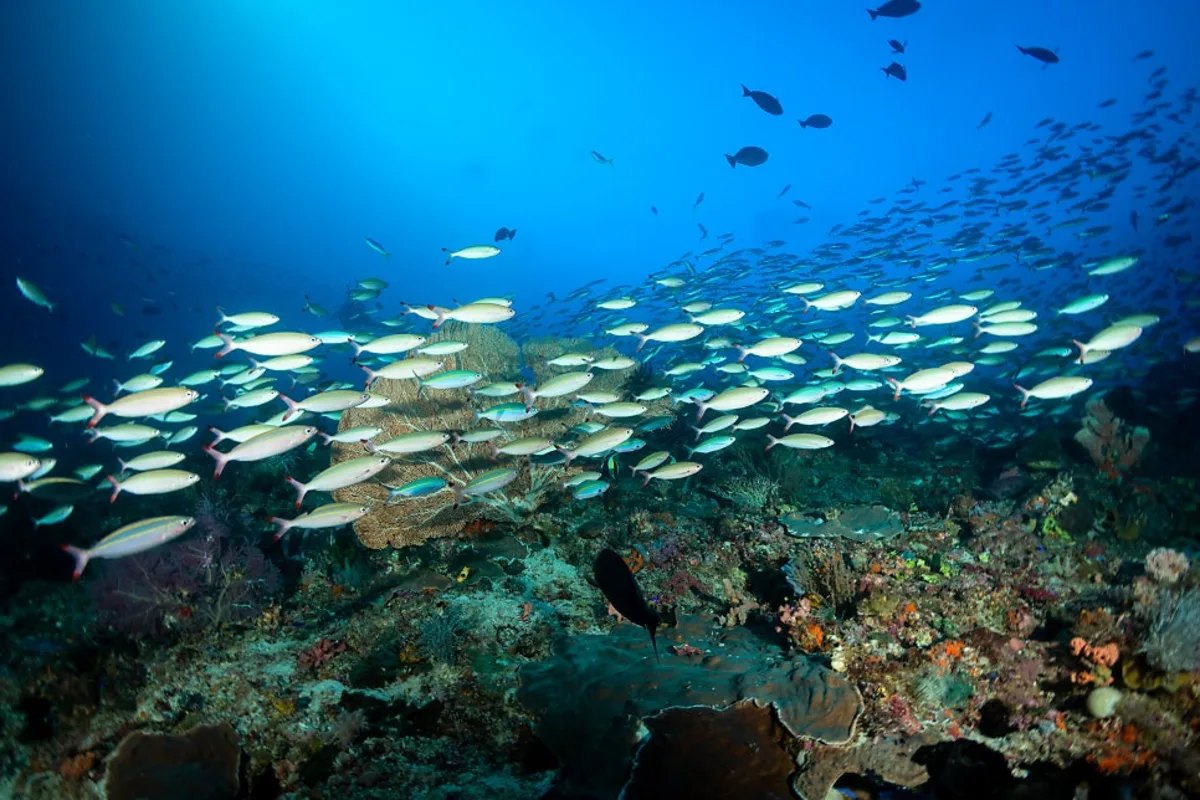
26
7월
7월
Diving Skills · Peak Performance Buoyancy
Good Divers Aren’t Stronger.
They Have Buoyancy Control
The diver who glides without kicking, hovers without thinking, and surfaces with air to spare isn’t gifted. They simply learned the one skill that quietly decides every dive.
the diver watching the gauge
When The Dive Becomes A
Fight Against The Water
One story we hear more often than any other goes like this: “I finished my Open Water course and went on a tour. I never did my safety stop — my tank was already empty, so I surfaced breathing off my instructor’s spare regulator.” The diver did nothing reckless. They were simply working twice as hard as everyone around them, and their air paid the price.
The signs are familiar to anyone who has been there. You drop in and drift straight to the bottom, certain you’re about to snap a piece of coral. You bob up and down through the whole dive, one hand never leaving the inflator. And when you surface and check your gauge against your buddy’s, you’ve burned through far more air than they have. Different symptoms, one root cause — buoyancy.
None of it means you’re a bad diver. It means the most important skill in scuba diving is also the most perishable, because it lives in dozens of tiny adjustments that only settle in with proper practice.
when the balance is off
Getting It Wrong Costs
More Than A Clumsy Dive
Buoyancy is the balance that lets a diver hang in the water — neither floating up nor sinking — and move freely without effort. When that balance is off, the problems stack up fast, and some of them are safety issues, not just comfort ones.
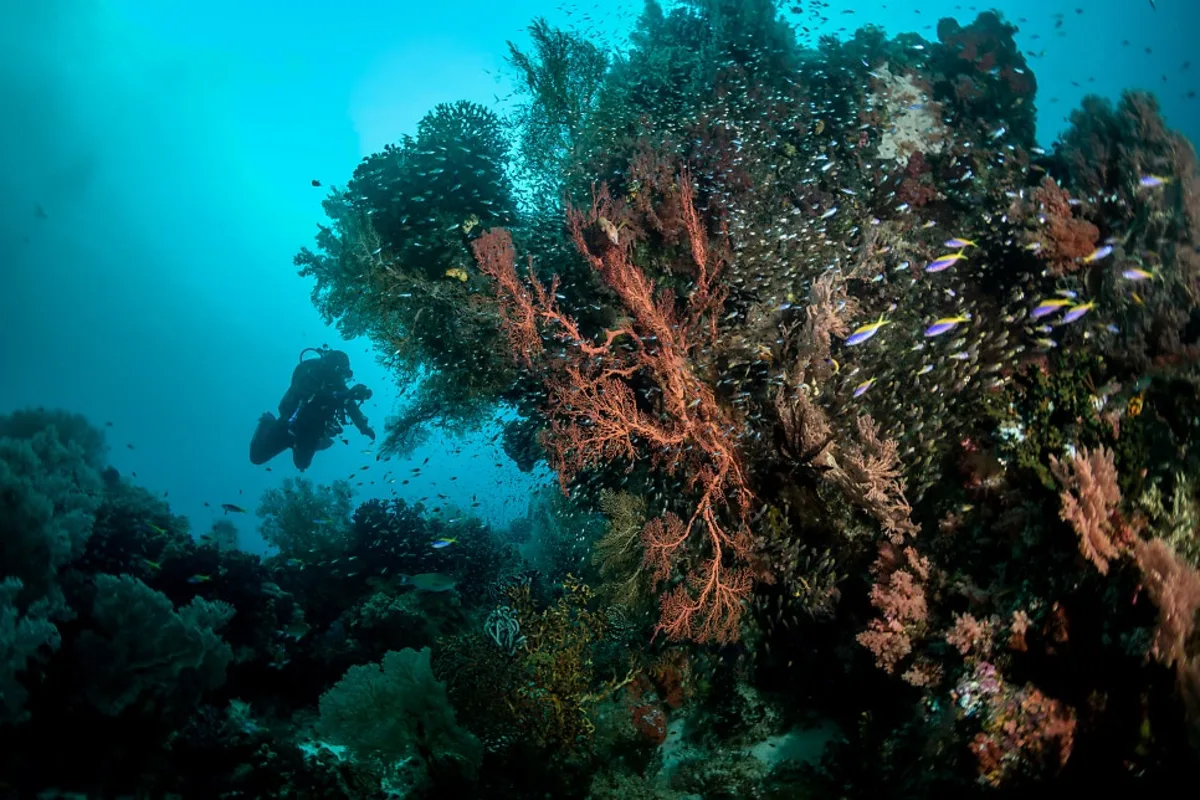
Carry too much weight and you can’t ascend on your breath alone, so you ride the inflator button up and down and burn energy and air doing it. Carry too little and you can’t descend at all; in a drysuit you may fail to add enough air and feel the suit squeeze against you, or shoot toward the surface before you’ve finished your safety stop. And every time you crash into the bottom or brush a reef, something fragile pays for it. Good buoyancy protects you, your dive, and the ocean at the same time.
trim, weight, breath
What Scuba Diving Buoyancy Control
Actually Is
Ask a room of experienced divers what “diving well” means and most will land on the same answer: controlling your buoyancy. The divers who slide through the water using almost no energy, who ascend and descend exactly when they want and hover motionless to watch a shy creature without startling it — they aren’t doing anything you can’t learn. Scuba diving buoyancy control is a set of small, trainable habits: setting the right amount of weight, distributing it for a level trim, and using slow, steady breathing to fine-tune your depth instead of the inflator.

The PADI Peak Performance Buoyancy specialty exists to build exactly this. It takes the buoyancy you first met in your Open Water course and sharpens it, so you can take your diving to the next level. The structure is simple: online theory you can work through at your own pace, then confined-water sessions in the pool, then evaluation in open water. In the pool you drill the fundamentals — fixing your weight, streamlining every hose and gauge, descending slowly under control, holding a hover for a full minute, and swimming relaxed without touching the bottom or breaking the surface. Only when those feel natural do you carry them into the sea.
the nb divers way
Learn It Slow,
Keep It Forever
Buoyancy can’t be rushed, and it can’t be crammed into a crowded group where the instructor never sees your trim. That is why we teach in small groups of one to three divers — close enough to catch the half-kilo of weight in the wrong pocket, the tucked chin, the held breath. We have done it this way for 26 years because diving is our culture, not a product to push through. We are not for everyone, only for you: the diver who wants skill that actually lasts.
26Years training divers in Seoul
5,874Divers certified & counting
1:3Maximum instructor-to-student ratio

We run the open-water part in the East Sea, and if you want to see what else is possible once you can hold a hover, our diving in Korea page maps it out. Our dive professionals communicate in English, as well as Korean and Japanese, so an expat in Seoul can ask every question about weighting and trim without a language gap. While you train, gear is available to rent, drysuit included — the cost of a course simply reflects an instructor’s day divided among a small group, and if you stop partway you are billed only for what you did, with the rest refunded, as our course pricing explains. Once buoyancy is second nature, the fun dives and dive trips open up in a way they never could before.
Stop Fighting The Water. Start Flying In It.
Tell us where your diving is now and what you want it to feel like. We’ll walk you through Peak Performance Buoyancy step by step — no pressure, no upselling, just a clear plan to make control second nature.
good to know
Questions About Scuba Diving Buoyancy Control
Why is buoyancy control so important in scuba diving?
Because almost every common diving problem traces back to it. Poor buoyancy makes you burn air faster, tires you out, risks an uncontrolled ascent before your safety stop, and damages fragile marine life when you crash into the bottom. Good buoyancy makes a dive safe, relaxed and efficient all at once.
Why do I use so much more air than other divers?
High air consumption is usually a buoyancy problem in disguise. If you’re over-weighted or out of trim, you constantly adjust the inflator and kick to hold your depth, and all that effort breathes down your tank. Fix your weighting and trim and your air lasts dramatically longer.
What is the PADI Peak Performance Buoyancy specialty?
It’s a short PADI specialty course dedicated to refining the buoyancy skills you first learned in Open Water. It combines online theory, confined-water practice in the pool, and open-water evaluation, covering correct weighting, trim, streamlining, controlled descents and hovering.
Do I need to be an advanced diver to take it?
No. You only need to be a certified PADI Open Water Diver (or the entry-level equivalent), and the minimum age is ten. It’s one of the best next steps precisely because it improves every dive that follows, at any level.
How long does the course take?
The online theory takes roughly two to three hours at your own pace, and the practical portion — confined water followed by open water — typically runs across two days. We keep groups small, so the pace can flex to how quickly the skills settle for you.
Is buoyancy training different in a drysuit?
Yes. A drysuit adds a second air space you manage alongside your BCD, and getting it wrong can cause a squeeze or a fast ascent. That’s exactly why practising buoyancy under guidance matters in Korea, where many divers use a drysuit for much of the year. Rental gear, drysuit included, is available while you train.
Can bad buoyancy really damage the ocean?
Yes. A diver who can’t hold their depth kicks up silt, crashes into the bottom and breaks coral that took decades to grow. Divers with solid buoyancy hover clear of everything, observe marine life without disturbing it, and leave the reef exactly as they found it.
I’m an expat in Seoul. Can you teach this in English?
Yes. Our dive professionals communicate in English, as well as Korean and Japanese, so every briefing on weighting, trim and breathing technique is clear, with nothing lost in translation.
Why learn buoyancy in a small group instead of a big class?
Buoyancy is invisible from across a crowded group. In our groups of one to three, the instructor can see the small things — a held breath, a chin tucked too far, a weight in the wrong pocket — and correct them on the spot, which is how the skill actually sticks.
← PreviousHow to Choose a Scuba Diving Mask (20-Year Instructor Guide)Next →Dive Center vs Dive Club: Where Should You Start Scuba Diving?
