
장바구니에 상품이 없습니다.
미분류
How to Choose a Scuba Diving Mask (20-Year Instructor Guide)
25
7월
7월
Gear Guide · Your First Mask
How To Choose A Scuba Diving Mask
A green lens for a green sea sounds wrong. It isn’t. Here is what twenty years of teaching in Korean water taught us about picking the one piece of gear you look through on every single dive.
too many masks, one face
The First Piece Of Gear Everyone Buys,
And The One They Overthink
It usually happens on the way home from a first course. You decide you want your own mask — something that fits, something that is yours. Then you open a shop page and the wall of options starts. Single lens, dual lens, frameless, black skirt, clear skirt, mirrored, tinted, low-volume. Everyone you ask recommends something different, and every recommendation sounds equally confident.
So the question stops being “which mask is best” and becomes “which mask is best for me” — and that is a much better question. A scuba diving mask is the one piece of equipment you look through for the entire dive. Get it right and you forget it is there. Get it wrong and you spend the dive clearing water instead of watching the ocean.
The good news: you only need to check four things. Fit, lens type, lens tint, and nose pocket. Nail those and the wall of options quietly narrows to a short list.
the test that costs nothing
A Leaking Mask Is Almost Never
A Broken Mask
Most divers blame the mask when water seeps in. Nearly always the real cause is a mismatch between the skirt and the shape of your face. Which means the most important test is one you can do in any shop, in ten seconds, before you look at a single spec.
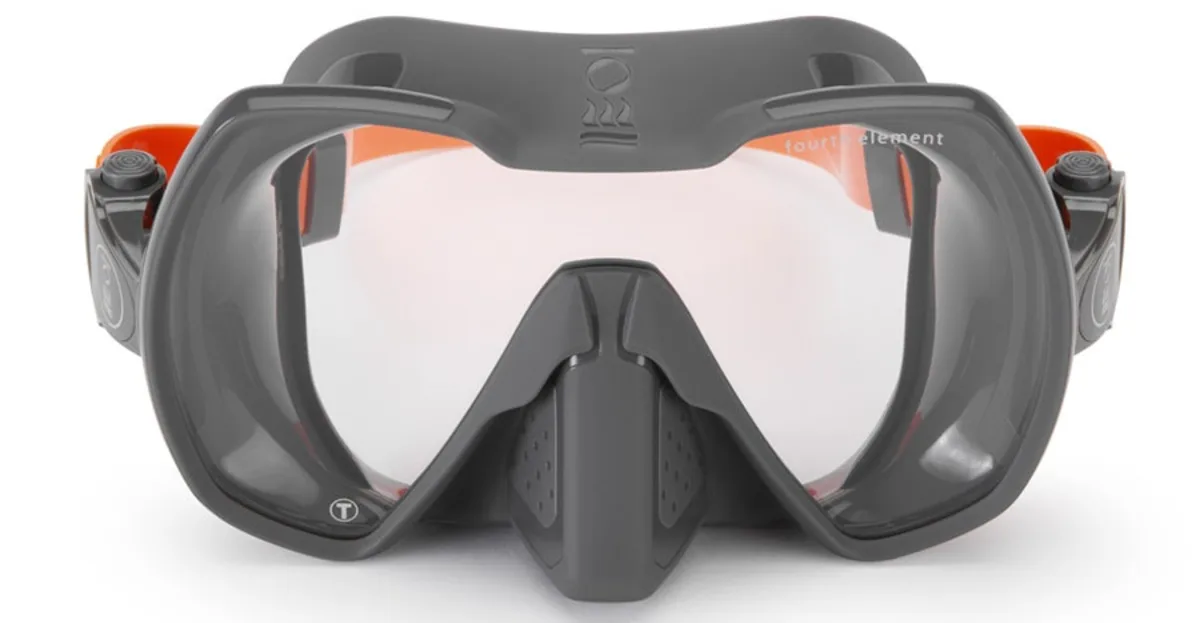
Hold the mask to your face without looping the strap behind your head. Inhale gently through your nose and let go. If it stays put on its own suction — and holds when you tip your chin toward your chest — the skirt matches your face. If it slips or you feel air sneaking in at the edges, that model is not for you, no matter how good it looks. The strap only holds the mask in place; it is the skirt that seals it.
single, dual, framed, frameless
Lens Type Is A Trade Between
View And Seal
Once a mask fits, the lens layout decides how it feels underwater. A single-lens mask puts one uninterrupted pane in front of you, giving the widest, most open field of view. A dual-lens mask splits into two panes with the frame passing over the bridge of your nose, which lets it sit closer and often seals more securely on narrower faces.
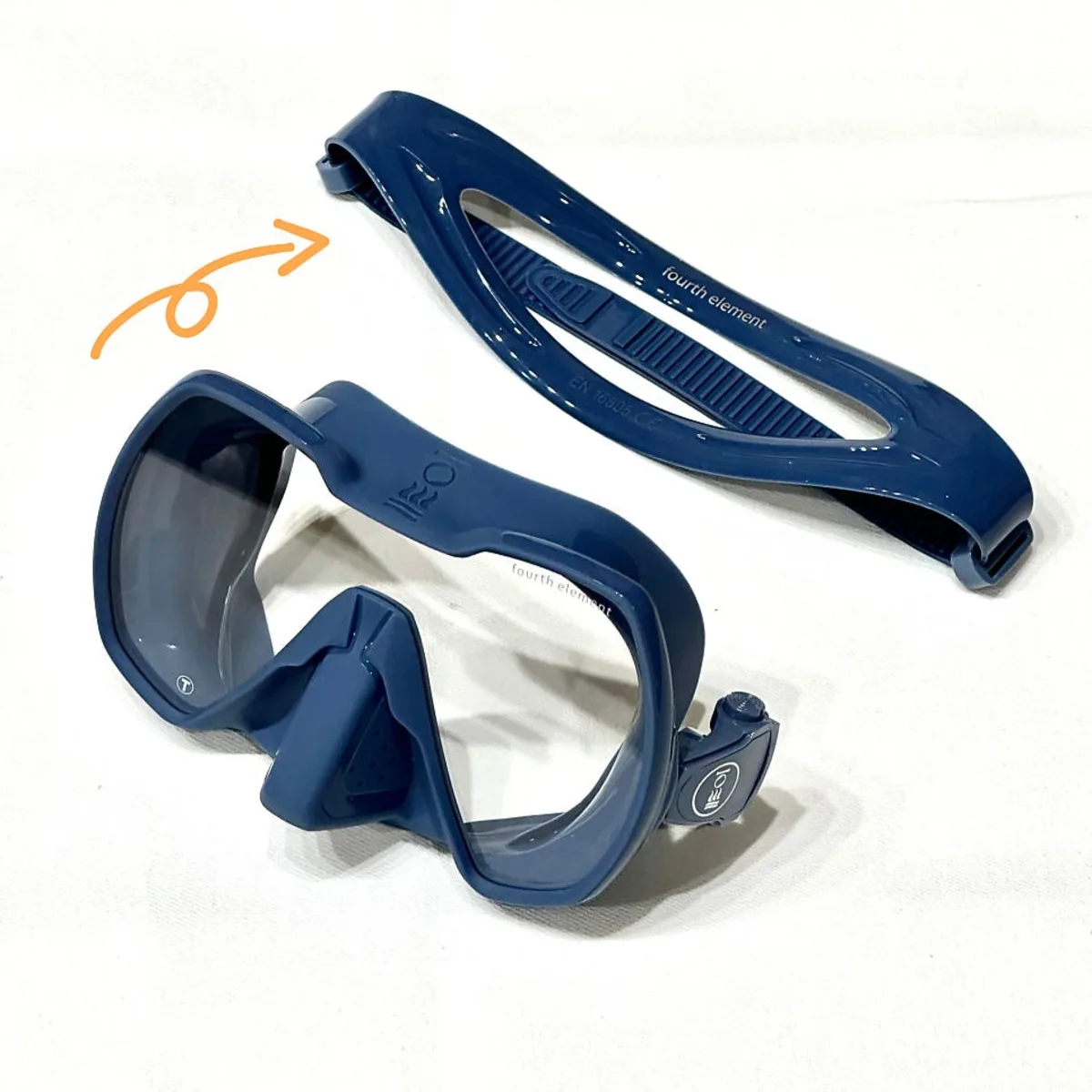
Then there is the frame. Framed masks are built around a rigid skeleton; frameless masks bond the lens straight to the skirt, so they fold flatter, weigh less, and pack down small — handy for travel and for a spare in your pocket. The skirt itself should be silicone: it is soft, seals well, and lasts. So the choice is not about right and wrong. It is about what you value: the widest view, the closest seal, or the lightest, most packable feel.
why a green lens for a green sea
The Tint Nobody Expects Is The One
That Fixes Korean Water
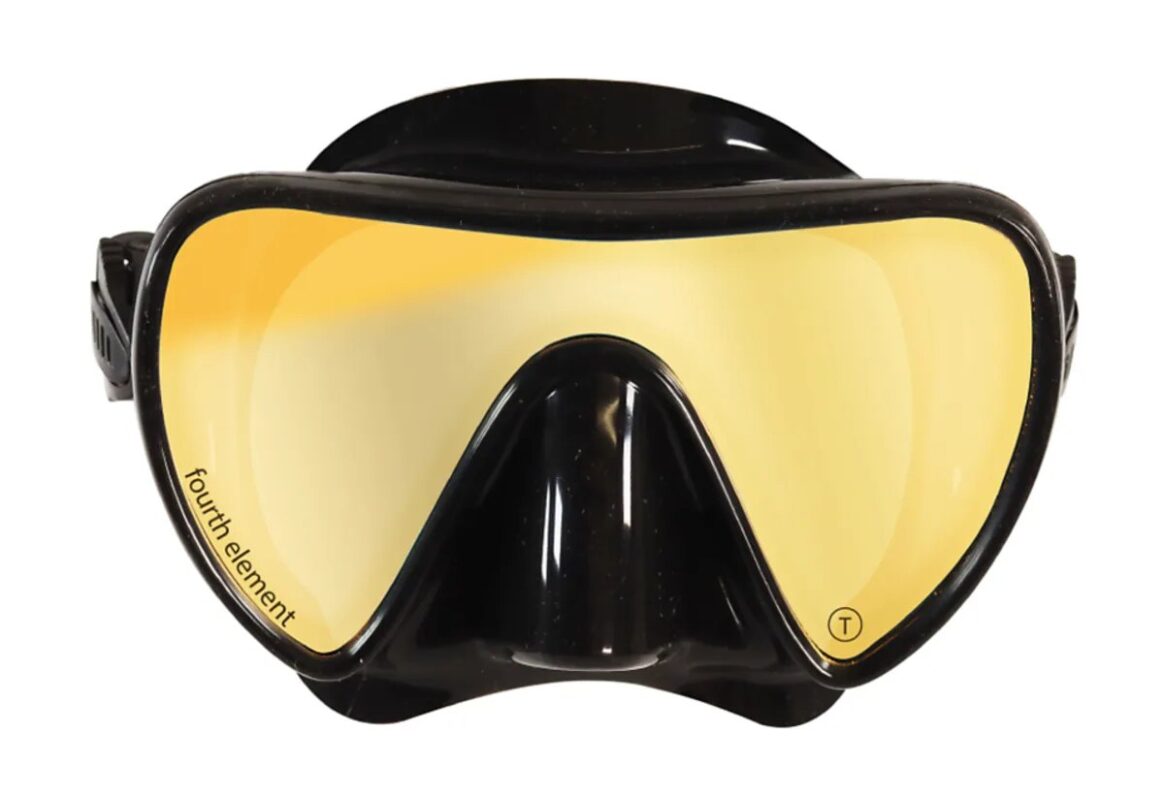
Here is the counter-intuitive part. Lens tint is not decoration — it changes what you actually see down there, and the right choice depends on the water you dive. A clear lens passes the most light and lets buddies see each other’s eyes, which is why it is ideal for night dives, for photography, and for training. A mirrored or shielded lens cuts glare and UV, perfect for bright tropical shallows.
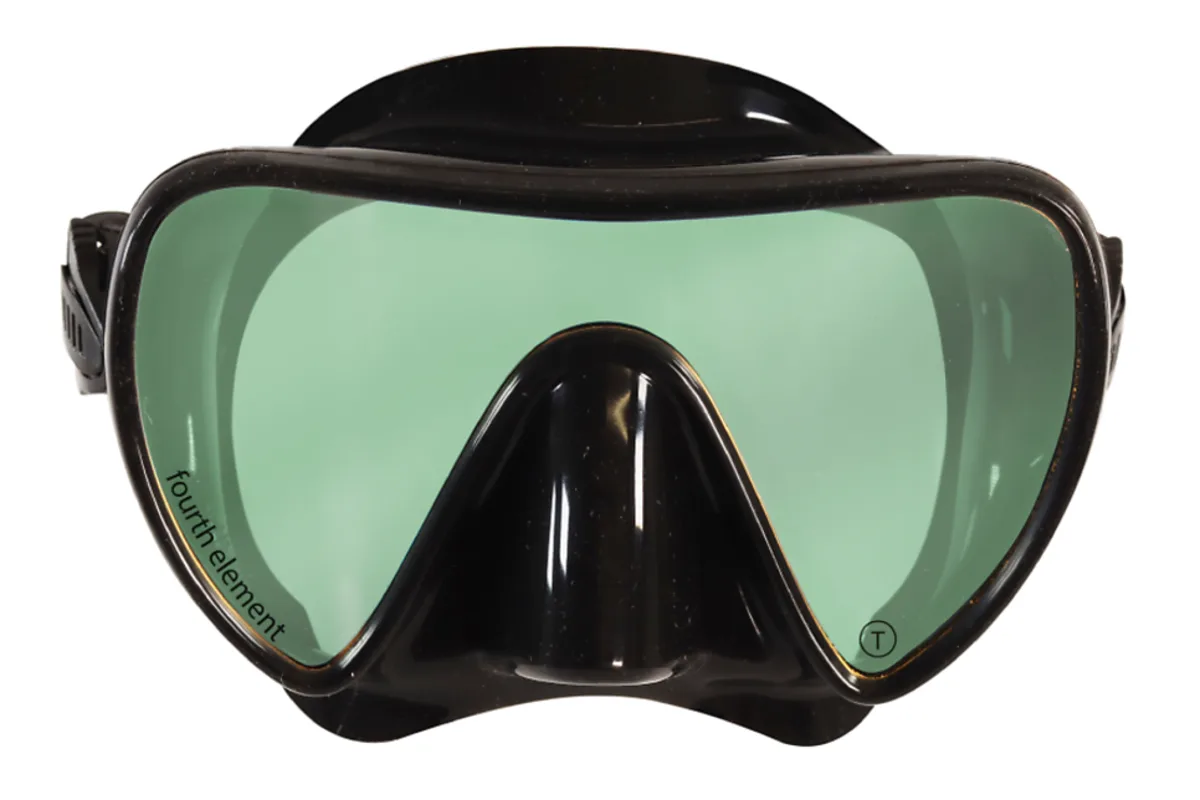
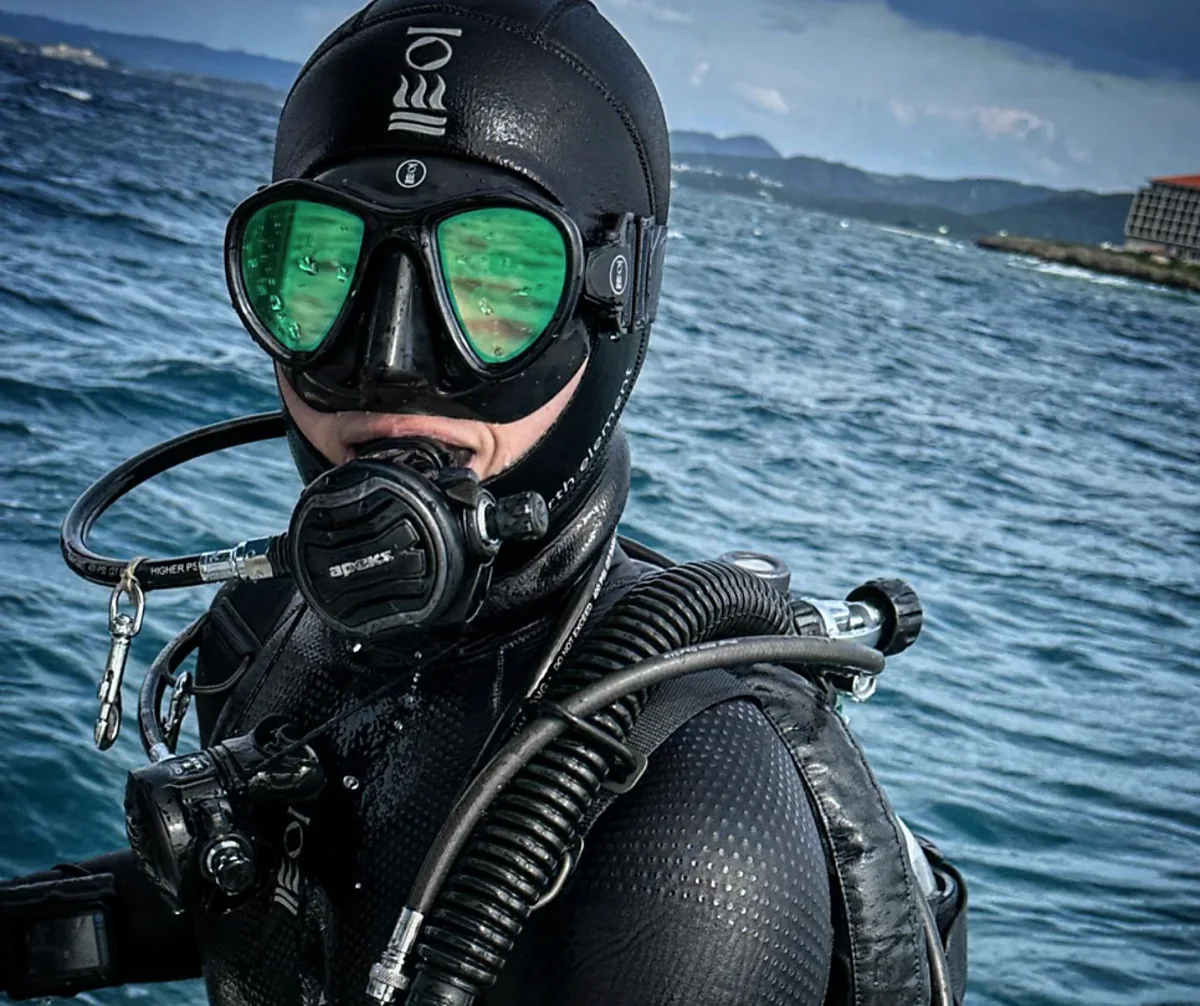
And then the one that surprises people: a contrast lens, recognisable by its green outer surface. It filters out a band of mid-wavelength light and lifts the difference between light and dark, so shapes sharpen instead of blurring into the background. Korea’s seas are blue, but on many days the visibility carries a green cast — and that is exactly the water a contrast lens was made for. A green lens for a green sea. It sounds wrong, right up until the moment the reef snaps into focus.
the small things that matter
The Nose Pocket, And The
Film You Have To Scrub Off
The fourth check is the one people forget, and it is the one that ruins dives: the nose pocket. You pinch your nose through it to equalise every few metres on the way down. Some imported masks are cut with a pocket so large that fingers cannot get a proper grip on the nose — and a diver who cannot equalise cannot descend comfortably. If you have a smaller nose bridge, check that the pocket is sized for you before anything else about the mask matters.
One more thing every brand-new mask needs before its first dive. The inside of the lens carries a thin film left over from manufacturing, and if you skip it the mask fogs for the entire dive, no matter how much defog you spit in. Rub a pea-sized dab of non-whitening toothpaste over the inner lens for about fifteen minutes, then rinse. Important exception: coated lenses, including contrast lenses, must never be cleaned with a flame — toothpaste or a dedicated lens scrub only.
After that, care is simple, and it decides how long the mask lasts:
- Rinse in clean fresh water after every dive and dry it out of direct sunlight
- Store it where the silicone skirt won’t be crushed or folded against a hard edge
- Replace it when the skirt hardens or the lens picks up deep scratches — a perished seal will always leak
- Try before you commit: the same mask can feel completely different on two different faces
the nb divers way
Learn Right,
Enjoy Forever
A spec sheet cannot tell you how a mask feels sealed to your face at ten metres. So we let you find out first. As Fourth Element Korea, we keep the full range of masks — every skirt shape and every lens tint, clear, shield, contrast and enhance — and you can wear all of them underwater in our pool before you decide. We have taught divers this way for 26 years, in small groups, because diving is our culture and not a product to push through. We are not for everyone, only for you: the diver who wants gear that actually fits, chosen once, kept for good.
26Years training divers in Seoul
5,874Divers certified & counting
1:3Instructor-to-student ratio
Our dive professionals communicate in English, as well as Korean and Japanese — so if you are an expat in Seoul, you can ask every question about fit, equalising and lenses without a language gap in the way. While you train with us, gear is available to rent, drysuit included, so you can try the right setup before buying. When you are ready, start diving with us, or see where it leads on our Dive Korea page.
A mask that fits stops being something you think about. That is the point — once your gear disappears, your attention goes where it belongs, which is the diving itself. The same is true of buoyancy, of air consumption, of everything you build slowly. When you are ready to go further than your first certification, the next courses build on exactly this. Divers who want to see what that looks like in open water usually start with our dive trips, and the questions we get asked most are answered before you ever have to email us.
Try Every Mask Before You Buy One
Tell us your face, your budget and when you’re free. We’ll put the full Fourth Element range in your hands, in the water, and help you find the one that fits — then teach you to use it properly.
good to know
Questions About Choosing A Scuba Diving Mask
How do I know if a scuba diving mask fits me?
Hold the mask to your face without the strap, inhale gently through your nose, and let go. If it stays sealed on its own suction and holds when you tip your chin down, the skirt matches your face. If air sneaks in at the edges, that model isn’t for you — regardless of how good it looks or what it costs.
Single lens or dual lens — which is better?
Neither is universally better. A single-lens mask gives the widest, most open field of view. A dual-lens mask splits over the nose bridge, sits closer, and often seals better on narrower faces. Choose based on whether you value a bigger view or a closer seal.
What lens tint is best for diving in Korea?
A contrast lens — the kind with a green outer surface — suits Korean water well. It filters mid-wavelength light and boosts the difference between light and dark, so shapes sharpen in the green-tinged visibility common here. Clear lenses are best for night dives, photography and training; mirrored lenses suit bright tropical shallows.
Why does a green lens work in green water?
It sounds backwards, but the green-faced contrast lens filters out a band of mid-wavelength light and raises contrast, so edges and shapes stand out instead of blending into a hazy background. In water with a green cast — which Korea has on many days — that is exactly what sharpens your view.
Why does my new mask keep fogging up?
Brand-new lenses carry a thin manufacturing film that causes fog no matter how much defog you use. Rub a pea-sized dab of non-whitening toothpaste over the inner lens for about fifteen minutes, then rinse. One caution: coated lenses, including contrast lenses, must never be treated with a flame — use toothpaste or a dedicated lens scrub only.
Why can’t I equalise with some masks?
Some imported masks have a nose pocket cut too large, so your fingers can’t get a proper grip to pinch your nose and equalise. If you have a smaller nose bridge, check the pocket size before anything else — a mask you can’t equalise in is a mask you can’t descend in comfortably.
Do I need to buy my own mask to learn to dive?
No. We rent scuba gear, drysuit included. That lets you try different masks in real water before deciding whether to buy one at all.
Can I try masks before buying at NB Divers?
Yes. As Fourth Element Korea, we keep the full range of masks — every skirt shape and every lens tint — and you can wear all of them underwater in our pool before you choose. A spec sheet can’t tell you how a mask feels sealed to your face; the water can.
I’m an expat in Seoul. Can you help in English?
Yes. Our dive professionals communicate in English, as well as Korean and Japanese, so choosing gear, learning to equalise and every safety briefing happen clearly, with nothing lost in translation.
When should I replace my scuba diving mask?
Replace it when the silicone skirt hardens or the lens develops deep scratches. A perished skirt will leak no matter how well the mask once fit. Rinsing in fresh water and drying out of direct sunlight after every dive keeps it sealing for years.
← PreviousScuba Diving for Busy Moms: A Diver Mom’s StoryNext →Scuba Diving Buoyancy Control: The Skill Behind Every Good Diver
