
장바구니에 상품이 없습니다.
미분류
The Curse of Knowledge: Why Great Divers Aren’t Always Great Teachers
23
6월
6월
Diving Education · How We Teach
The Curse Of
Knowledge
The most experienced diver in the room is not always the best teacher. There is a real reason a skilled instructor can still leave a beginner lost, and it has a name. Once you understand it, you will know what to look for when you choose where to learn.
a familiar first lesson
The Words That
Freeze A Beginner
Think back to your first time at the edge of the pool. The gear is heavy and unfamiliar, your heart is already going, and the instructor smiles and says: “Just inflate your BCD, get positive at the surface, then pop your reg in and hit the purge to clear it.”
You nod. You do not move. You did not catch half of those words, and now you are quietly wondering whether diving is simply too complicated for someone like you. The instructor was not unkind. They were, in fact, very good at diving. That is the problem.

“Once you know something well, it becomes almost impossible to imagine not knowing it.”
There is a name for what just happened. Psychologists call it the curse of knowledge. Once you know a subject well enough, you forget what it was like not to know it. So you skip steps, lean on shorthand, and assume the person in front of you already has the same picture in their head. When the gap opens up, it does not mean you are a slow learner. It means the lesson was built for the teacher instead of the student.
when expertise gets in the way
A Great Diver Is Not
Always A Clear Teacher
An instructor under this curse rarely notices it. The lesson feels complete to them, because their own twenty years in the water quietly fill every gap. To a new diver, the same lesson can feel like drinking from a fire hose. After years of training instructors, we keep seeing the same few patterns come up.
Jargon And Overload
Technical terms get used as if everyone already knows them, and too much gets packed into too little time. By the tenth skill of the session, the student can no longer remember the first one. The information was all correct. None of it stuck.
Skipped Steps, No Pictures
A complex skill gets shown once, smoothly, then treated as obvious. Things a beginner has never seen, like a dive boat or how a giant stride actually feels, get explained in words alone. The diver nods, then struggles in the water, because words were never going to be enough.
The Most Dangerous One: Certainty
The worst version of the curse is overconfidence. “I have dived for twenty years, so what I say goes.” It shuts down questions and turns a lesson into a list of orders. Diving depends on staying calm and trusting your buddy, and that tone teaches the opposite of both.
how we teach
Teaching It Clearly
Is The Real Skill
At NB Divers our approach comes down to one line: “Learn Right, Enjoy Forever.” Getting past the curse of knowledge is not about going easy on people. It is a method, and we build it into every professional who trains with us. This is what it looks like in a real lesson.
Teach The Person, Not The Syllabus
A strong swimmer, a nervous first-timer, someone who feels the cold, someone who only learns by doing. These are not the same student, so they do not get the same lesson. We fit the course to the person in front of us: solid basics for a beginner, harder problem-solving for an experienced diver. The course bends to the diver, not the other way around.
Drop The Jargon
“BCD” becomes “the jacket that helps you float or sink.” “Equalizing” becomes “an easy way to stop your ears hurting on the way down.” We bring terms in slowly, explain them properly, and never use them just to sound expert. Being clear is the hardest thing a teacher does, and the most useful.
Break It Down, Show It, Let Them Try
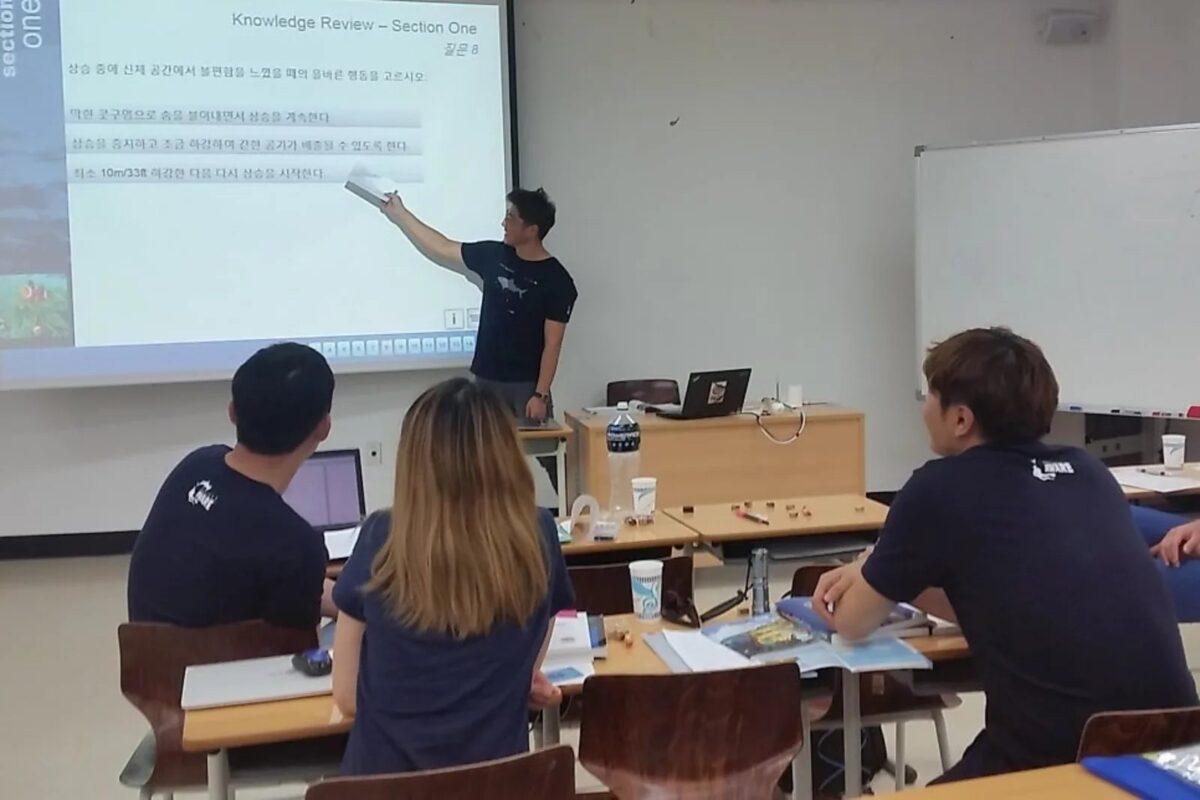
Every skill gets split into small, named steps and shown with photos, video, and slow demonstrations. Nothing flashy, just easy to copy without nerves. Then comes the part a lot of schools cut short: real practice time, with feedback for each person, until the diver actually feels ready. We want the mistakes to happen here, in calm shallow water, because that is where people learn.
Stay Humble, Keep Learning
Gear, technique, and safety standards keep changing, so a good instructor keeps studying and keeps listening. The confidence in the room should belong to the student, and it should grow on every dive. Our job is to make room for it.
26Years teaching divers in Korea, accident-free
5,880Divers certified the right way, step by step
1:3Instructor-to-student ratio, so no one is left behind
learning in korea
How To Choose An
Instructor Who Teaches
For You
If you are an expat or visiting and deciding where to learn, the curse of knowledge is the most useful idea to keep in mind. The “best” diver, the one with the most logged dives or the wildest stories, is not automatically the best teacher. What you want is someone who can make the first hour feel simple.

In Korea that comes down to a few practical things. You want dive professionals who explain clearly in English (as well as Korean and Japanese), small groups where questions are welcome, and a course that starts in a warm indoor pool near Seoul before you head to open water. The cooler water of the East Sea and the boat sites around Jeju reward exactly the calm, well-explained basics a good instructor gives you from day one.
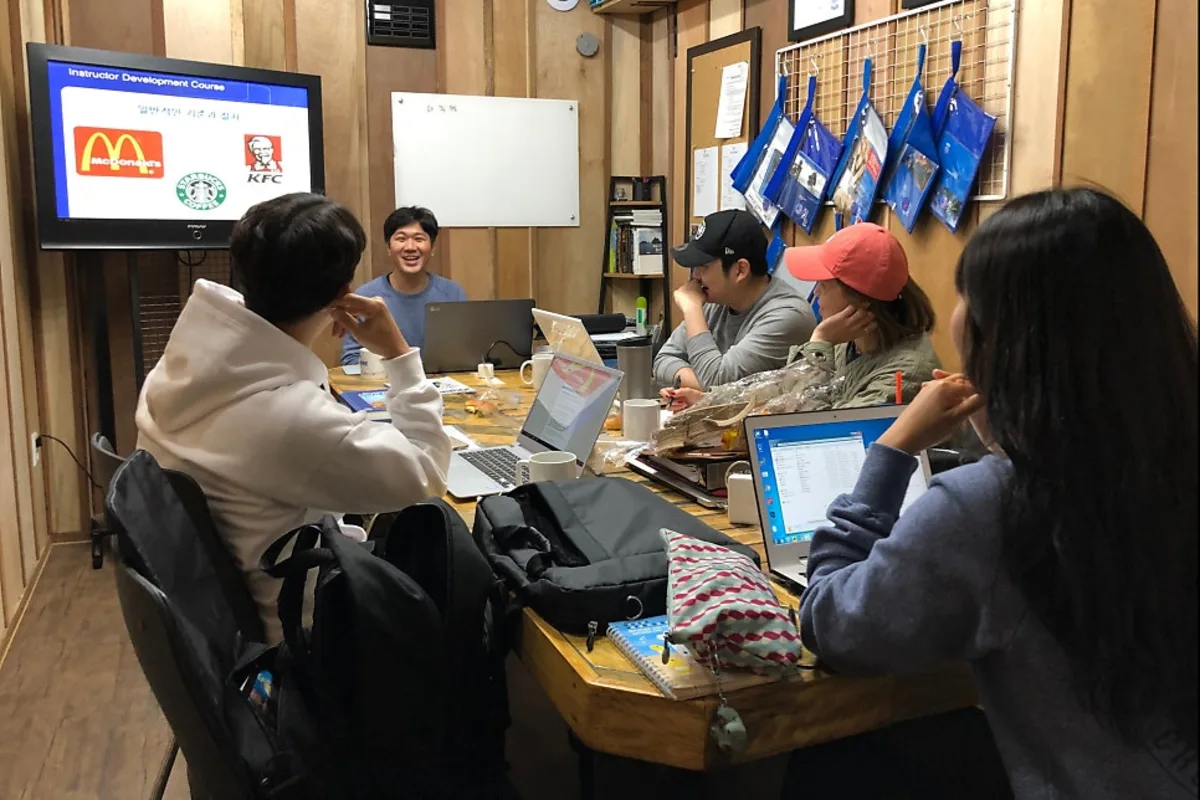
It also shapes how we train the next group of teachers. Our instructor development path is built to break the curse of knowledge, so future professionals learn to see a lesson through a beginner’s eyes. The goal is simple: we want “they made it so easy” to be the thing their students say most. When you are ready to begin, you can start here and look into diving in Korea with someone who teaches for you.
why nb divers
Anyone Can Pass.
We Train For
Excellent.
Becoming a competent instructor is not that hard. Becoming an excellent one, the kind who never forgets what being new feels like, takes more work and is worth far more. That is the difference between a beginner walking out saying “I can do this” and walking out saying “maybe diving isn’t for me.”
At NB Divers, diving is our culture, not just something we sell. We are not for everyone. We are for the person who wants to learn it properly, once, and keep it for life. If that is you, we have already made the first step an easy one.
Learn It The Right Way
Talk to a PADI professional at NB Divers and take a clear, calm first step into diving, right here in Korea.
questions & answers
Frequently Asked
Questions
What is the “curse of knowledge” in scuba diving?
It is when an experienced diver knows a subject so well they can no longer imagine not knowing it. They use jargon, skip steps, and assume beginners share their background. That makes lessons confusing for new divers, even when the instructor is genuinely skilled.
Does the most experienced instructor give the best lessons?
Not always. Experience and the ability to teach beginners are two different skills. The best instructor for a new diver is the one who explains clearly, breaks skills into simple steps, gives enough practice time, and answers questions patiently, not just the one with the most logged dives.
How can I tell if a scuba instructor is a good teacher?
Look for plain language instead of jargon, skills broken into small steps with demonstrations, generous practice time with individual feedback, small group sizes, and a welcoming attitude toward questions. A good teacher makes the first lesson feel simple rather than overwhelming.
Why did I feel lost during my first diving lesson?
It is usually not because you are a slow learner. More often the teaching was built for the teacher, not for you: too much jargon, too many skills at once, or not enough practice. With clear, step-by-step instruction, most people find diving far more approachable than it first seems.
Can I learn to dive in Korea in English?
Yes. NB Divers welcomes expats and visitors, with dive professionals who communicate in English as well as Korean and Japanese. Our PADI courses follow international standards, and you can start here or reach us on live chat to plan the right first step.
Is it normal to feel nervous before learning to scuba dive?
Completely normal. Good instruction expects it and works with it, starting in a calm warm pool, moving at your pace, and building confidence one small skill at a time. The right teacher usually turns nerves into curiosity within the first session.
How does NB Divers train its instructors differently?
Our instructor development path is built specifically to break the curse of knowledge. Future professionals learn to teach to each student’s level, replace jargon with plain language, demonstrate clearly, and create space for questions, so their students genuinely understand rather than just follow along. You can explore it on our level-up page.
Where do beginners start diving near Seoul?
Most beginners start in a warm, deep indoor training pool near Seoul, where you can practise breathing and buoyancy calmly before the open sea. From there the course moves to the clear waters of the East Sea and boat diving around Jeju. You can begin on your first course here.
What does a course at NB Divers cost?
It depends on the course and the pace that suit you. We focus on teaching it right rather than fastest, so you carry the skill for life. You can see current options on our pricing page, or message us on live chat and we will recommend the best starting point for your goals in Korea.
← PreviousDo You Need to Buy Scuba Gear? (Probably Not)Next →Do You Need More Scuba Certifications? (How to Keep Diving at Your Own Pace)
