
장바구니에 상품이 없습니다.
미분류
Do You Need to Buy Scuba Gear? (Probably Not)
21
6월
6월
NB Divers Seoul · PADI 5-Star CDC
Do You Need to Buy Scuba Gear? Not Yet.
A full set of dive gear can cost more than the trip itself. Here is what scuba equipment actually is, what it really costs — and why, with us, you can dive your whole course path without buying a single piece.
Make an Enquiry Chat With Us
the expensive question
“So… how much gear do I have to buy first?”
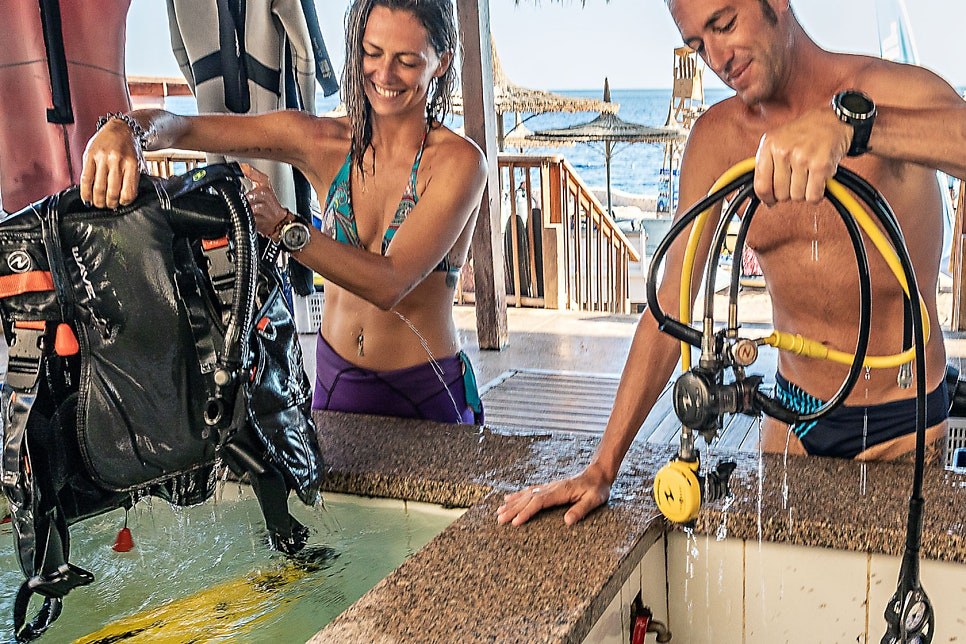
It is almost always the first question. Someone signs up for their first course, then quietly worries they need to walk in carrying a mask, fins, a wetsuit, a regulator and a small fortune in hardware. The mental price tag climbs before they have even touched the water.
Here is the honest answer: if you are not yet sure scuba diving will become a regular part of your life, you do not need to buy anything. Not the mask, not the fins, and certainly not the costly machines that keep you breathing and balanced below the surface.
Buying gear you have never used in real water is how good money ends up in a second-hand listing three months later. The smarter path is simple: learn first, feel what fits, then decide.
the nb divers way
Rent The Full Kit
Before You Buy
If you learn to dive with NB Divers, you do not need to buy anything up front. Throughout your training — from your very first Discover Scuba Diving try-dive all the way to professional and Instructor (PADI IDC) courses — you rent the complete set of gear you need at our standard rental rate, so you can feel what truly fits before you ever commit to buying.
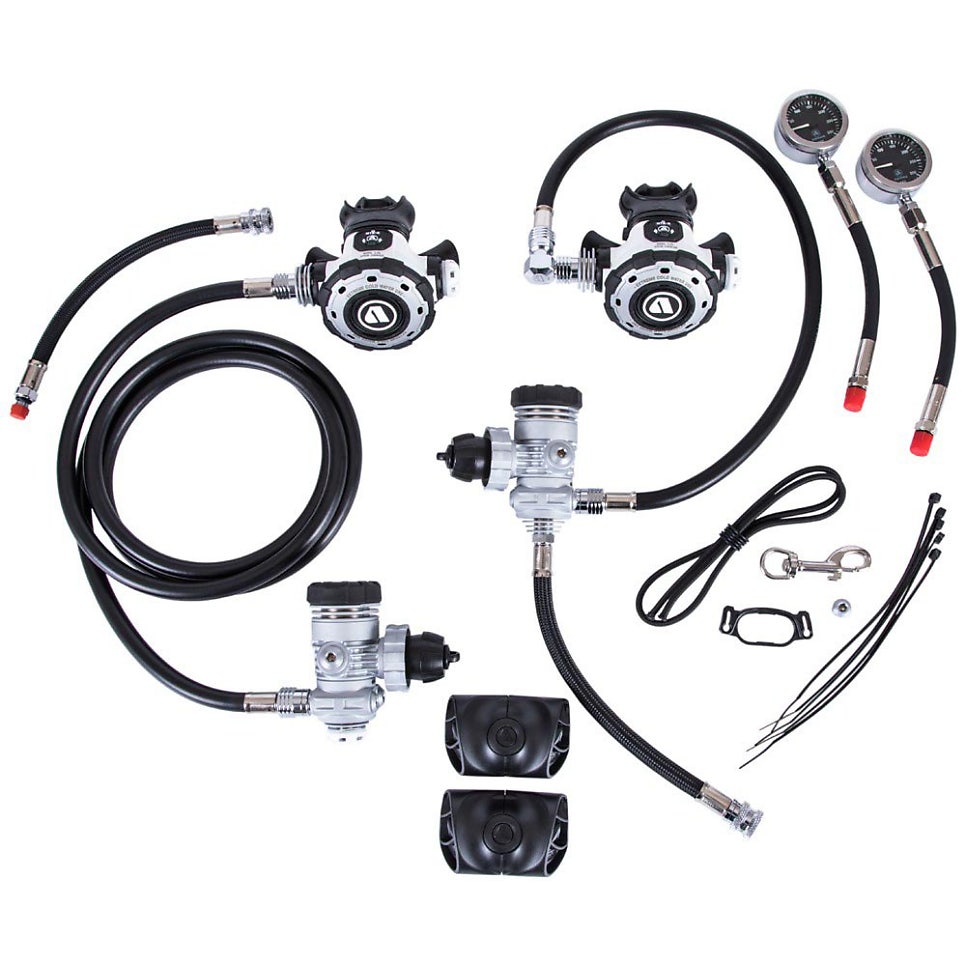
That covers the full kit, not just the small items: a complete regulator set (first stage, primary and alternate second stages, pressure gauge, low-pressure inflator hose), a BCD, fins, mask, snorkel, hood, wetsuit or drysuit, boots, gloves and a dive computer. You arrive, you learn, you dive. We handle the hardware.
Outside of lessons, the same gear is available for affordable rental — so even after you are certified, there is no pressure to spend before you are ready.
what you are actually wearing
The gear, in plain language

Two pieces do the heavy lifting. The regulator is the device that turns the high-pressure air in your tank into easy, natural breaths — expect anywhere from roughly ₩500,000 to ₩3,000,000 depending on performance and cold-water features. The BCD (buoyancy control device) keeps you floating at the surface and perfectly weightless underwater, usually ₩300,000 to ₩2,000,000.
Then come the pieces that touch your skin and shape your comfort: the exposure suit (a wetsuit, or a drysuit for Korea’s cooler seas), plus hood, gloves and boots. A mask becomes your eyes, fins become your engine, and a snorkel lets you breathe at the surface without lifting your head. Suits range widely — from around ₩100,000 to well over ₩700,000 — while masks, fins and snorkels are far gentler on the wallet.
None of this has to be bought to begin. It simply helps to know what each item is doing for you when the time comes to choose.
the safety pieces
The quiet gear that keeps you safe
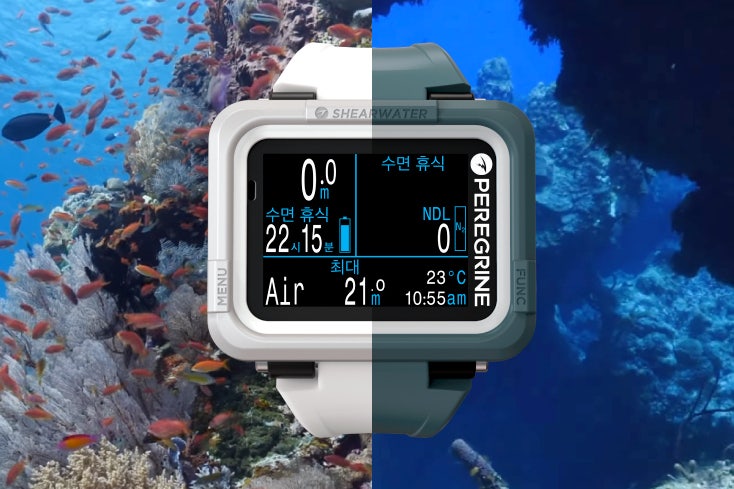
A few items earn their place not by looking impressive, but by quietly protecting you. A dive computer tracks your depth, your time and your safe ascent, and is fast becoming essential rather than optional (around ₩300,000 to ₩2,000,000). An SMB — the bright surface marker buoy you send up before surfacing — tells boats exactly where you are, and costs very little for how much it matters.
A dive light brings colour back to deeper, darker water and helps you signal your buddy. And two heavy essentials — the air tank and the weights — are almost always rented on location rather than carried, because lugging them across the world makes little sense.
This is exactly why beginning with rental gear is not a compromise. It is the sensible way to understand what each piece does before you ever commit to owning it.
why learn with us
A quarter-century of getting people in the water
Gear matters, but the people guiding you matter more. NB Divers has spent over two decades building divers carefully, in small groups, with the same standards on every single course.
26Years training divers in Seoul
5,872Divers certified & counting
1:3Instructor-to-student ratio
Two resident PADI Course Directors, dive professionals who communicate in English, Japanese and Korean, and a maximum of three students per instructor — no exceptions. That is the room where trying gear, asking questions and learning slowly actually works.
before you spend a won
Six smart rules for buying gear later
1. Try it in the water first. Gear that feels perfect in a shop can feel wrong at depth. You will use it underwater, so test it underwater — something every NB Divers student can do before deciding.
2. Think about upkeep. Dive gear is life-support equipment. If servicing and rinsing after every dive is not your style, renting is genuinely the wiser choice.
3. Buy for comfort, not for looks. The right piece is the one that disappears once you are wearing it.
4. Sample widely. Try cheaper and premium options; the active second-hand market makes it easy to trade your way toward what truly fits.
5. Buy where repairs are easy. Saltwater is hard on equipment. Gear bought through NB Divers is serviced on the spot by our instructors — no shipping it away and waiting.
6. Mind the weight. You have to carry it. If you cannot move it comfortably through an airport, you will resent it on every trip.

good to know
Questions divers in Seoul ask us
How does gear work during the course?
During your training you rent the full set of equipment you need at our standard rental rate, from your first try-dive to professional courses — so there is no need to buy anything up front. Outside of lessons you can rent the same gear at the standard price.
I’m an expat in Seoul — can I pay by foreign card?
Yes. We accept credit cards, including most international cards, so there is no need to carry large amounts of cash. If you have any payment question, just message us first and we will confirm.
Where are you, and how do I reach you?
Our dive centre is in Songpa-gu, Seoul, easy to reach by subway, bus or a quick Kakao Taxi ride. You can contact us in English on WhatsApp, or by email at mail@nbdivers.com — we answer questions before, during and long after your course.
Do I need to bring anything of my own?
Just swimwear and yourself. Some divers like to bring a personal mask for fit and hygiene, but it is entirely optional — we provide everything required to dive safely.
So when should I actually buy gear?
When diving has become a steady part of your life and you know what suits your body and your style. Until then, rent, try, and let experience guide the purchase. Our instructors will help you choose when the moment is right.
Learn first. Buy later. Dive forever.
Start with everything provided — expert guidance, a full set of gear, and the time to discover what truly fits. Learn it slow, keep it Forever.
← PreviousBecome a PADI Instructor in Seoul: 30 Days You’ll Remember ForeverNext →The Curse of Knowledge: Why Great Divers Aren’t Always Great Teachers
