
장바구니에 상품이 없습니다.
미분류
9 Stunning Reasons to Love Scuba Diving in Korea
18
6월
6월
Scuba Diving in Korea · For Seoul Expats
Don’t Dive
Korea’s Seas
(You’ll Be Hooked)
Cold, murky, empty — that is the reputation of scuba diving in Korea. In fact, it is completely wrong. Here is why the divers who slow down here never want to leave.
Start Diving Chat With Us
The Myth
“There Is Nothing
To See Down There”
If you live in Seoul and have ever thought about scuba diving in Korea, you have probably heard the warning already. The water is cold. Visibility is short. There are no fish, no colour, nothing like the photos your friends bring back from Thailand or the Philippines. Therefore, save it for a holiday abroad — that is the advice most newcomers are given.
It is easy to believe, because at first glance it looks true. For example, drop into the East Sea with no guide, no preparation and no idea what to look for, and you will likely surface cold and underwhelmed. Indeed, plenty of people do exactly that, then write the reviews that quietly scare everyone else away.
Here is the part nobody mentions: the divers who go back to Korean water every single weekend are not settling for less. They have found something most visitors swim straight past.
The Reframe
A Tropical Reef
Is A Market.
Korea Is A Gallery.
Diving a warm tropical reef is like walking into a busy traditional market, and scuba diving in Korea could not be more different. Colour everywhere, motion everywhere, more to see than you could take in if you stayed all day. It is wonderful, and it asks almost nothing of you. You simply float in and enjoy the noise. The instructor’s role is a guide: someone who leads you through the crowd and points at the highlights.
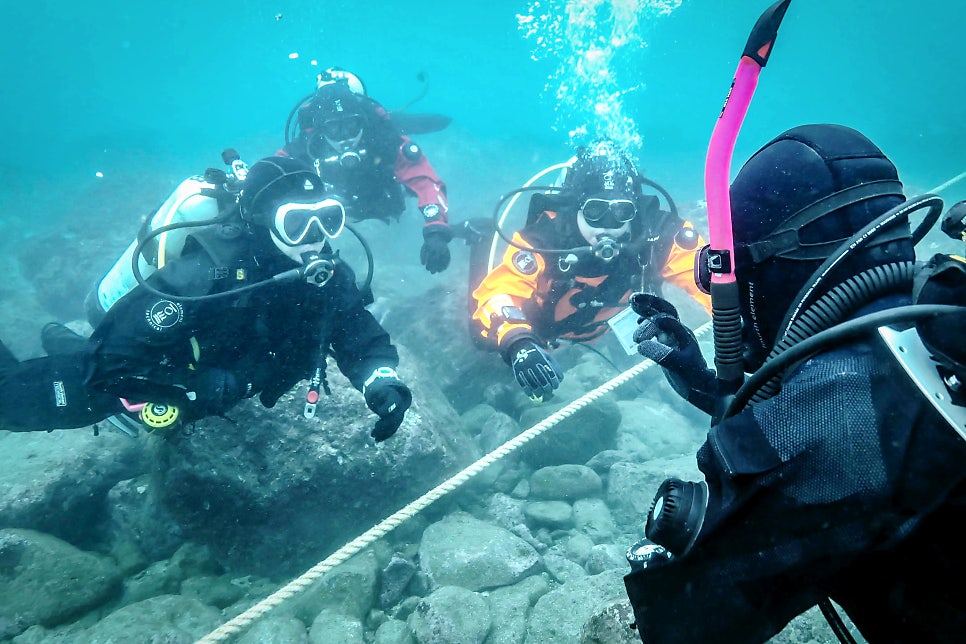
Scuba diving in Korea, by contrast, is a different kind of place altogether. It is, in essence, an art gallery. Quiet, considered, easy to underestimate from the doorway. The rewards do not shout at you; instead, they wait for you to slow down and look properly. And just as a great exhibition makes far more sense with a docent beside you, Korean water reveals itself only when someone who knows it is there to translate.
That, above all, is the missing piece in every disappointing review. Cold water and short visibility are not flaws to endure — rather, they are simply the gallery’s lighting. Without a docent, you wander past the masterpieces. With one, however, the same dive becomes unforgettable.
The Experience
What Scuba Diving In Korea
Hides In Plain Sight
Ask a Korean diving instructor what they want to show you, and they will not point at a big fish. They will point at something the size of a grain of rice. For example, a baby lumpfish, smaller than your little fingernail, hovers like a confused marble. A nudibranch the colour of a flame that you would have mistaken for a flower. A pair of tiny cowries, tucked deep inside red coral, that you genuinely cannot see until the moment you suddenly can. This, in short, is what our Underwater Naturalist course is built around.
This is the gift of scuba diving in Korea: slow, cold-water diving teaches your eyes to work. For instance, a good instructor names what you are looking at, tells you how it lives, even where its scientific name came from. As a result, you surface an hour later feeling like you read a chapter rather than skimmed a postcard. Come back next weekend and the exhibition has changed. Come back next season, meanwhile, and you watch the same creatures grow up.
This is also why we never rush. Learn it slow, keep it forever — the diver who is taught to truly see is the diver who is still diving ten years from now.

Why NB Divers
Why Scuba Diving In Korea
Is Taught Right
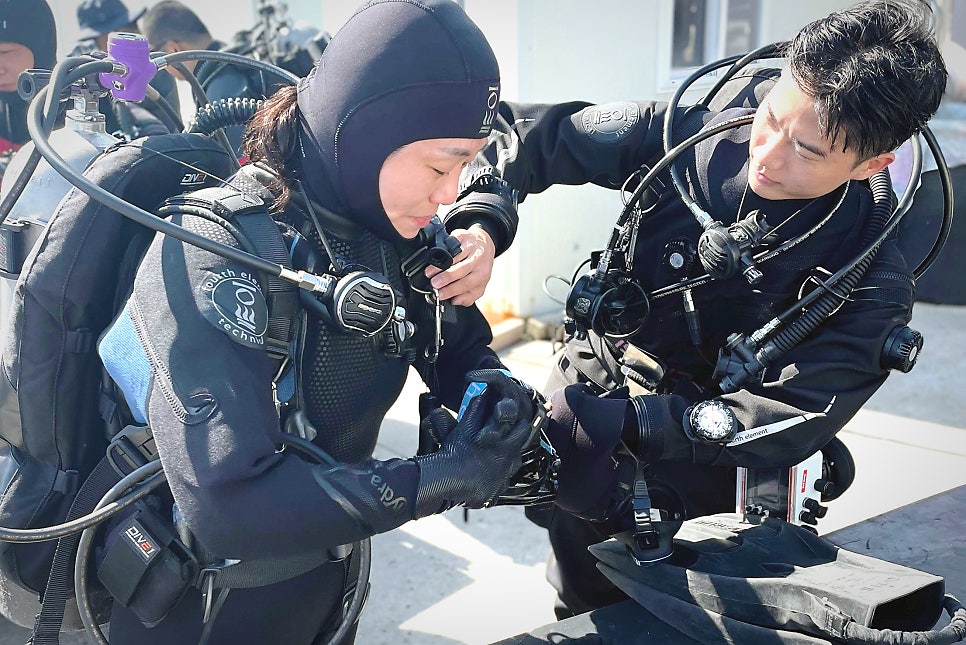
A gallery is only as good as its docent, and that, of course, is exactly where we have spent the last quarter-century. NB Divers is a PADI 5-Star Career Development Center — the highest tier PADI awards — with two resident Course Directors, each with more than twenty years in the water. Moreover, our ratio never exceeds three students per instructor, every instructor holds Emergency First Response credentials, and we have dive professionals who communicate in English, Japanese and Korean.
26Years teaching, zero accidents
5,872Divers certified and counting
1:3Instructor-to-student ratio, always
Those numbers are not marketing. Rather, they are, above all, the reason a beginner can relax enough to notice the small things, and the reason expats keep choosing scuba diving in Korea with us long after their first course is over.
Practical Notes For Expats
Everything Else
You Are Wondering
Scuba Diving In Korea: Getting To The Sea
Our dive center sits in Songpa-gu in southeast Seoul, an easy walk from the Jamsil and Seokchon station area and simple to reach by subway, bus or a quick Kakao T taxi. Better still, the dive sites themselves are closer than you think: the East Sea is roughly a two-hour drive, so it is genuinely possible to leave Seoul in the morning and be home for dinner. Jeju, meanwhile, draws those who want soft coral, and Ulleungdo offers underwater scenery that looks like another planet.
Water & Seasons For Scuba Diving In Korea
Korean water is cool, and that, in fact, is a feature, not a warning. Because scuba diving in Korea is slow and observational rather than high-energy, we recommend a drysuit so you stay warm enough to actually concentrate. Visibility also opens up beautifully in the cooler, clearer months — indeed, many local divers consider late autumn through winter the finest viewing season of all. We will guide you on exactly what to wear for the day you book.
Payment, Chat & Food
You do not need a wallet full of cash — Korean and most foreign Visa and Mastercard payments are accepted, and you can reach us any time through the live chat button on this page rather than hunting for a Korean messaging app. If you are vegetarian, vegan or eat halal, just tell us in advance; we are happy to point you to dining options near the center and the dive sites so food is one less thing to plan.
서울 송파구 백제고분로 7길 6-19 2층 — Near Jamsil / Seokchon Station
Before You Ask
Honest Answers
Do I need to speak Korean?
No. In fact, we have dive professionals who communicate in English, so your course, your briefings and your questions after class are all handled in English. Of course, Japanese and Korean are available too.
Do I need to be a strong swimmer?
You need to be comfortable, not competitive. In short, basic water confidence is enough to begin, and as a result, our maximum of three students per instructor means you are never left to figure things out alone.
Is the water really that cold?
It is cooler than the tropics, yes — which is why we put beginners in proper exposure suits, usually a drysuit. As a result, stay warm and the cold stops being a problem; instead, it simply becomes part of the calm, slow style of diving Korea is loved for.
How do I reach the dive sites from Seoul?
Our center is in Songpa-gu, near Jamsil. From there, the East Sea is about a two-hour drive, easily done as a day trip. Of course, we coordinate transport and logistics with you when you book.
Can I pay with a foreign card?
Most foreign Visa and Mastercard payments are accepted, alongside Korean cards. Therefore, you will not need a pocket full of cash.
I have dietary restrictions — is that a problem?
Not at all. For example, tell us in advance if you are vegetarian, vegan or eat halal, and afterwards we will help you find good options near the center and the dive sites.

Come See What Everyone Else Swims Past
Korea’s sea is not empty. On the contrary, scuba diving in Korea is simply waiting for someone to show it to you properly.
Begin with NB Divers Seoul — in English, at your own pace.
Every Saturday · English / Japanese / Korean · Max 3 per instructor · PADI 5-Star CDC Seoul
Learn it slow, keep it Forever.
#ScubaDivingKorea #PADISeoul #ScubaDivingKoreaExpats #NBDivers #LearnItSlowKeepItForever
← PreviousDive Travel for Introverts: Enjoy the Ocean Your Own WayNext →Become a PADI Instructor in Seoul: 30 Days You’ll Remember Forever
