
장바구니에 상품이 없습니다.
미분류
PADI ReActivate: Get Your Diving Confidence Back
03
7월
7월
Diving Skills · PADI ReActivate
Six Months Away?
Start With PADI ReActivate
Your certification never expired. Your confidence just took a break. Here is the course built specifically to bring it back before your next dive.
the six-month gap
Suddenly, You’re Not
Sure You Remember
One message we hear often reads something like this: “I learned to dive in the Philippines last winter and loved it. I want to start diving in Korea this summer, but I’ve heard our water is harder than what I trained in, and I’m not confident with my buoyancy. I’m worried I’ll slow everyone else down.”
Another version comes from divers a decade further along: “I first learned scuba diving as an elective in university. I never had the chance to dive again after that. Now I’m in my thirties, working, finally stable enough to get back into it — but I honestly don’t remember what I was taught. I don’t know if I can even start again.”
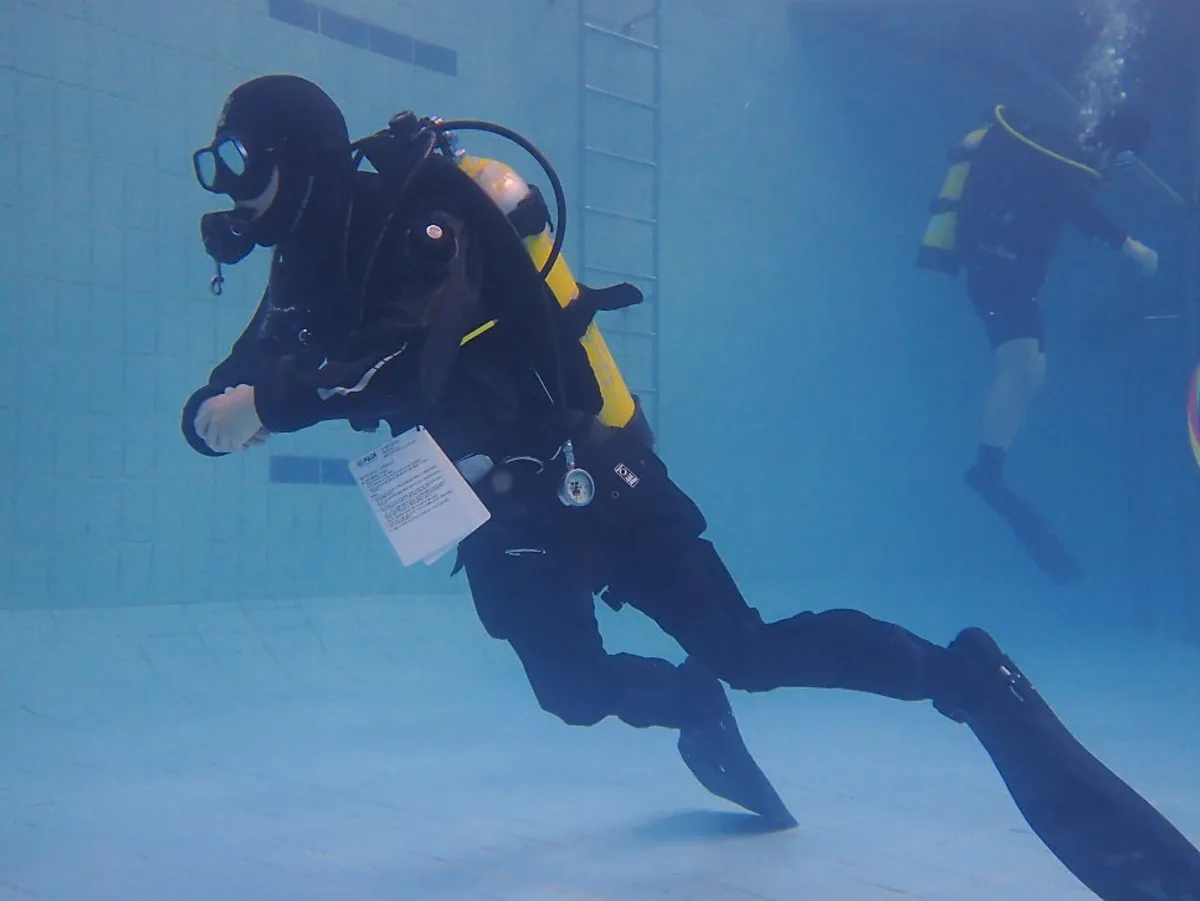
Neither of these divers has done anything wrong. A certification does not expire. But skill, like any physical habit, softens without use — and buoyancy control is the most perishable skill of all, because it depends on constant small adjustments that only come back with practice. The honest answer to “can I still dive?” is almost always yes. The honest answer to “should I just jump back in cold?” is almost always no.
the driving-lesson analogy
Think Of It Like
A Refresher Lesson
Anyone who has held a driver’s licence for years without driving knows the feeling of getting back behind the wheel — and knows that most people, sensibly, take a refresher lesson before merging onto a real highway again. Scuba diving has the same idea, built by PADI, called ReActivate.
ReActivate used to be known as “Scuba Review,” and the substance hasn’t changed: it revisits the 24 core skills you learned during your Open Water course, with particular attention on neutral buoyancy, because that is the skill divers lose fastest and feel least confident rebuilding on their own.
It is not a test you can fail, and it is not a full recertification. It is simply the fastest, most structured way back to feeling like yourself underwater — before your first open-water dive back, not during it.
before we even get wet
We Ask Before
We Ever Get In The Water
Every ReActivate course at NB Divers begins with a short interview, not a form to rush through. We want to understand exactly where you left off before we decide where to start again.
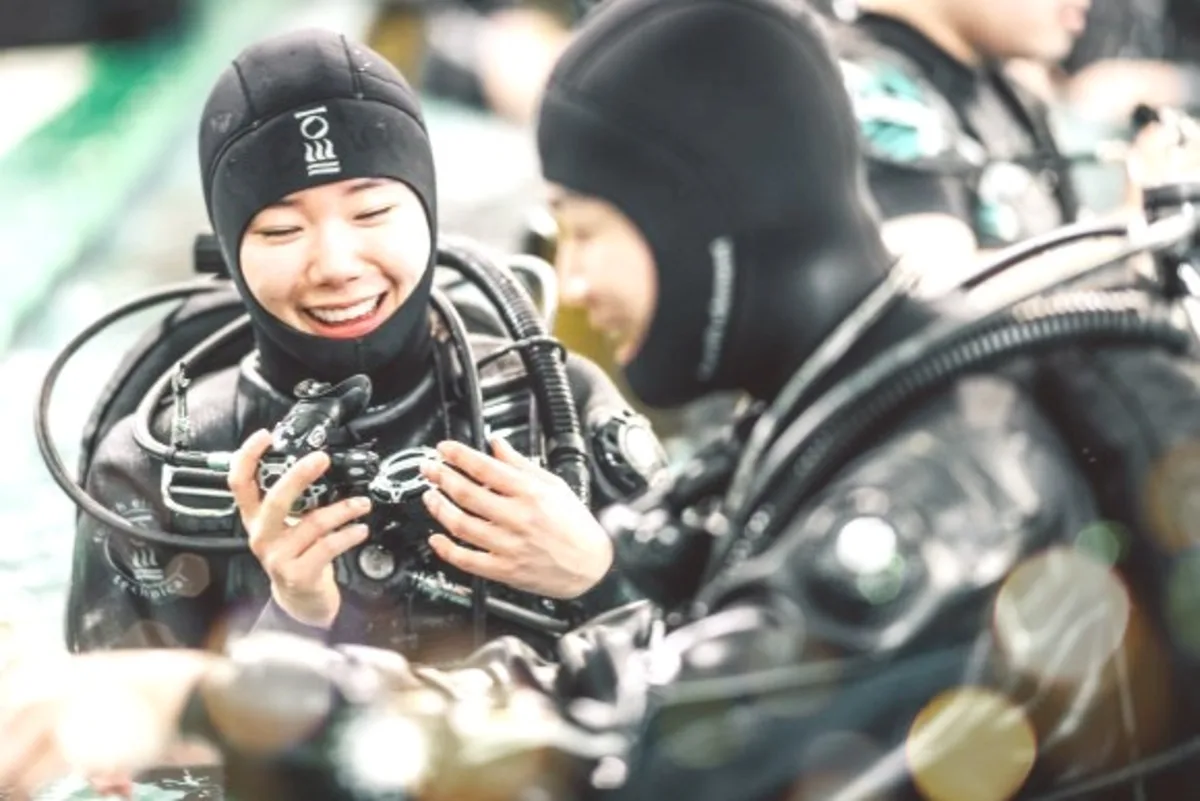
We talk through your last dive — date, depth and location — and how many dives you have logged in total. We ask whether you have ever dived in a drysuit, and whether you still have your original course materials. Most importantly, we ask which of the 24 core skills you feel unsure about, and how you would honestly rate your own buoyancy control today. There is no wrong answer here; the more candid you are, the better we can tailor the session.
This interview alone tends to relieve most of the anxiety. Once someone says out loud exactly what they are worried about, it usually turns out to be smaller, and more fixable, than it felt in their head.
what you actually relearn
Two Hours Of Theory.
Five Skills In The Pool.
ReActivate has two parts, and neither one asks more of your schedule than a single afternoon.
1. Theory, on your own time. Through PADI’s eLearning, you watch short videos on your phone or computer — wherever is convenient — reviewing core skills and reviewing your dive planning and safety procedures. Most divers finish it in two to three hours.
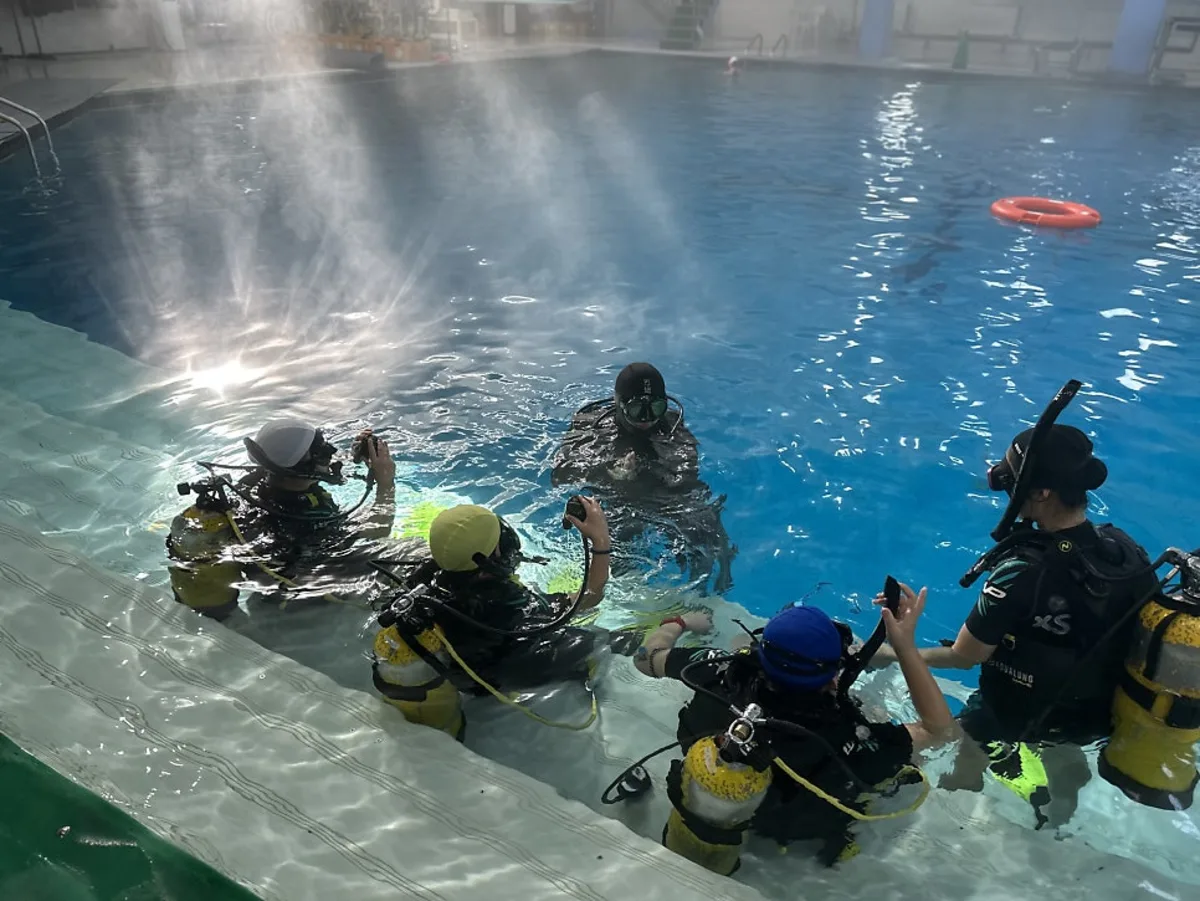
2. Confined water, in our pool. This is where it actually clicks back into place. Just as you did on day one of your Open Water course, you work through:
- Removing, replacing and clearing your mask
- Establishing neutral buoyancy and hovering in place
- Releasing your weights at the surface using the quick-release
- Ascending on an alternate air source and re-establishing positive buoyancy at the surface
- A controlled emergency swimming ascent (CESA)
None of this is designed to catch you out. It is designed to let your body remember, in a shallow, controlled space, everything your mind was worried it had forgotten.
the nb divers way
Learn Right,
Enjoy Forever
NB Divers has spent twenty-six years building divers carefully, in small groups, on the belief that diving is our culture — not a one-time transaction. We are not for everyone, only for you: the diver who would rather rebuild a skill properly in a pool than discover the gap forty metres down on a boat trip.
Our ReActivate sessions are led by our team of specialty instructors — including Jung-hoon Kim, a PADI Open Water Scuba Instructor with six years of teaching experience and certifications across deep diving, drysuit, nitrox, underwater photography, emergency oxygen provider, DSMB, underwater naturalist and ice diving. He built his own approach to ReActivate around one idea: buoyancy is not confidence you either have or don’t — it is a skill you rebuild, one controlled breath at a time.
26Years training divers in Seoul
5,887+Divers certified & counting
1:3Instructor-to-student ratio
Our dive professionals communicate in English, as well as Korean and Japanese — so if you are an expat living in Seoul, or a visitor unsure whether your training abroad will translate to Korea’s cooler, lower-visibility water, you can ask every question in plain English. Once you are confident again, Korea’s East Sea coast is exactly where to put it to use, and when you are ready for the next certification, we will help you level up properly.
Get Your Confidence Back
You don’t need to relearn everything. You need one afternoon, one pool, and an instructor who has done this before. Tell us when you last dived, and we’ll tell you exactly what your ReActivate session looks like.
good to know
Questions About PADI ReActivate
What is PADI ReActivate, exactly?
PADI ReActivate is an official refresher programme for certified divers who have been away from the water for a while. It reviews the 24 core skills from your Open Water course, with a strong focus on neutral buoyancy, through a short eLearning theory review and a confined-water (pool) session with an instructor. It is not a retest and it does not affect your existing certification.
How long since my last dive means I actually need this?
PADI generally recommends ReActivate for divers who haven’t been in the water in six months or more, though the real test is confidence, not the calendar. If you find yourself unsure about your buoyancy, your gear, or the 24 core skills, ReActivate is worth doing regardless of exactly how long it has been.
I don’t have my old course materials or logbook — is that a problem?
Not at all. Many divers who come to us for ReActivate no longer have their original textbook or logbook. We ask about your dive history during the pre-course interview and build the session around what you tell us, without requiring any paperwork from your original course.
What happens in the pre-course interview?
We ask about your last dive (date, depth, location), your total number of logged dives, whether you have drysuit experience, which of the 24 core skills you feel unsure about, and how you would rate your own buoyancy control. It is a conversation, not an exam, and it takes about ten minutes.
How long does the theory part take?
The PADI eLearning review typically takes two to three hours, completed on your own schedule from a phone, tablet or computer. It covers core skills, dive planning and safety procedures, so you arrive at the pool session already warmed up mentally.
What exactly happens in the pool session?
In confined water you work through mask removal, replacement and clearing, establishing neutral buoyancy and hovering, releasing your weights at the surface, ascending on an alternate air source while re-establishing positive buoyancy, and a controlled emergency swimming ascent (CESA). It is the same shallow, supervised environment you first learned in.
I’m an expat living in Seoul — can I take ReActivate in English?
Yes. Our dive professionals communicate in English, as well as Korean and Japanese, so you can ask every question about your dive history, your gear, or Korea’s diving conditions without any language gap.
I don’t own any gear anymore — is it provided?
Yes. The full set of equipment — regulator, BCD, exposure suit, mask, fins and computer — is available to rent for your ReActivate session, so there is nothing you need to buy or borrow before starting.
What should I do after finishing ReActivate?
Most divers move straight into open-water dives on Korea’s East Sea coast to put their refreshed skills to use right away. If you are also thinking about your next certification — Advanced Open Water, Rescue Diver or beyond — ReActivate is a natural, confident starting point.
How do I book a ReActivate session?
Message us through live chat or email mail@nbdivers.com with roughly when you last dived, and we’ll schedule your interview and session. Our centre is in Songpa-gu, Seoul, a short trip from Jamsil station.
