
장바구니에 상품이 없습니다.
미분류
What Causes Scuba Ear Pain During a Dive?
03
9월
9월
Dive Physiology · Equalisation
What Causes Scuba Ear Pain
During a Dive, and How to Stop It
The sharp pressure behind one ear is not a test of toughness. It is your body reporting, early, that something needs to change.
the first two metres
Ear Pain Is a Signal,
Not a Weakness
Almost every case of scuba ear pain is a pressure problem, and pressure problems are solvable with technique. The reason is that the pain comes from a fixed piece of anatomy meeting a predictable change in the water, not from anything wrong with the diver. A new diver feels the pressure build at three metres, assumes it means they are not built for this, and either forces the descent to keep up or quietly decides diving is not for them. Neither response is necessary, and both are common.
Once you understand what causes scuba ear pain, the fix is mostly timing and patience. A skilled diver listens to the first hint of fullness, responds gently, and never forces a descent to keep pace with a group. That habit, more than any physical gift, is what separates a diver whose ears trouble them from one whose ears never come up at all.
the air-filled space behind the eardrum
Unequal Pressure Is the
Cause Nearly Every Time
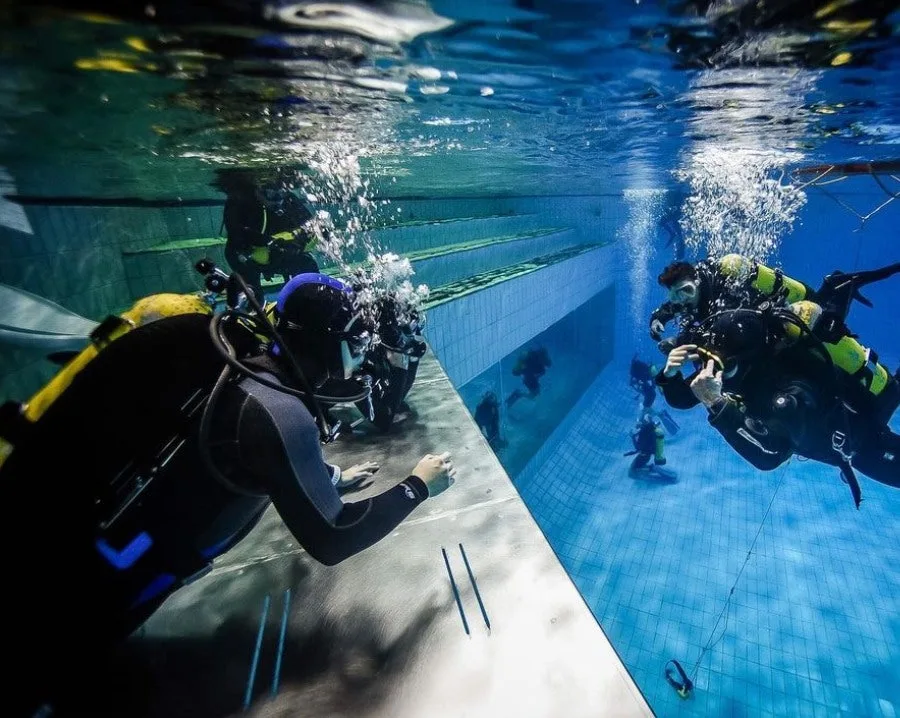
The middle ear is a small pocket of air behind the eardrum, and that air must match the water pressure around you or the eardrum gets pulled inward. The reason is that water pressure rises quickly as you descend while the air trapped behind the eardrum stays at surface pressure until you do something about it. The Eustachian tubes, two narrow passages that connect the middle ears to the back of the nose and throat, are the only route for fresh air to get in. When they open, the pressure balances and the ear feels normal. When they stay shut, the eardrum stretches, and stretching is what you feel as fullness, then pressure, then pain.
This is why the pain almost always starts in the first few metres rather than at depth. The proportional pressure change is greatest right at the surface, so the first three metres of a dive ask more of your ears than the next ten. Divers who equalise carefully at the start and then relax about it once they are deeper have understood the physics correctly.
Left unattended, that stretching becomes an ear barotrauma, an injury to the eardrum or middle ear from pressure, which is the outcome all the technique below is designed to prevent.
waiting for pain is the mistake
Equalise Early,
Gently, and Often
The most common technique error is waiting until you feel discomfort before you try to equalise. The reason is that by the time an ear hurts, the pressure difference has already squeezed the Eustachian tube shut, and a closed tube is far harder to open than one that was never allowed to close. So the first equalisation happens at the surface, before your head goes under, and the next ones follow every metre or so on the way down, whether or not anything feels wrong.
If one ear does not clear, the response is the same every time: stop, signal your buddy or instructor, ascend half a metre, and try again. That small ascent reduces the pressure difference enough for the tube to open in most cases. If it still refuses, the dive ends there. There is always another day to dive; there is not always another eardrum.
Forcing it makes everything worse. Blowing hard against a pinched nose can injure the inner ear and bring on sudden dizziness underwater, which is a more serious problem than the one you were trying to solve. The aim is not to overpower your body but to give it time and a controlled technique, and the calm to use both.
why we teach descents this slowly
Learn It Slow,
Keep It Forever
Equalisation is the first skill where a rushed course does lasting harm, so it is the first place our pace shows. Diving is our culture rather than a product, which is why an open water course here is built around how long a habit takes to become automatic instead of how quickly a card can be issued. Not for everyone, only for you: a diver whose ears need an extra ten minutes at the surface gets those ten minutes, and nobody in the group is waiting on a timetable.
26Years accident-free since 2000
5,910Divers certified & counting
976Dive pros trained
For divers who are not Korean, the practical part matters most: our dive professionals communicate in English, as well as Korean and Japanese, so the explanation of what your ear is doing and the correction of your technique both happen in a language you can ask precise questions in. We are a PADI 5-Star Career Development Centre with our own centre in Songpa, Seoul, we teach in small groups of one to three, our staff instructors each carry ten years or more of teaching, and much of our teaching and consulting team is women-led. On a skill as individual as equalisation, an instructor who can watch only you is not a luxury; it is the method.
when the tube will not open
Congestion, Anatomy, and
Ears That Were Already Hurting
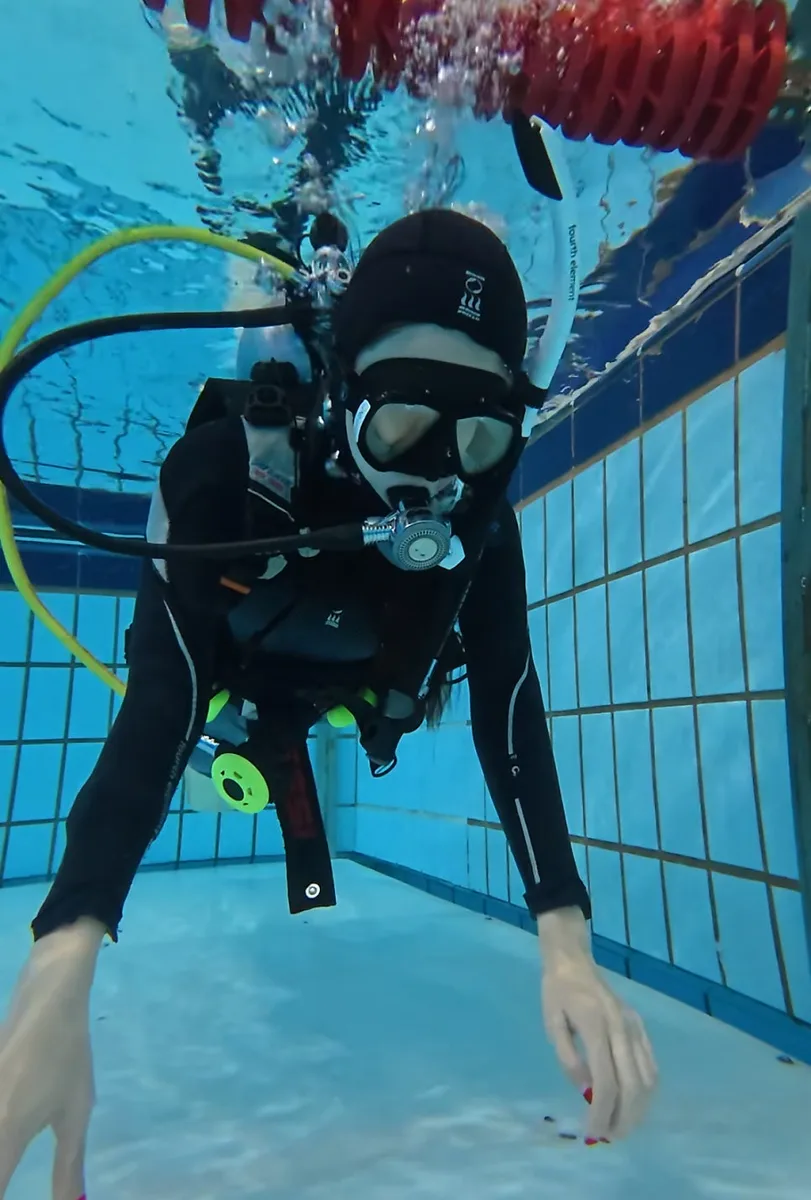
Good technique can still fail when the passage itself is blocked, and the usual blocker is congestion. The reason is that even mild swelling from a cold, seasonal allergies or leftover sinus irritation narrows the Eustachian tube enough to stop air moving, while feeling perfectly manageable on land. This matters more in Korea than in the tropics, because cold water and sharp seasonal weather changes make nasal congestion a routine companion. If your ears feel blocked before you enter the water, do not expect the sea to clear them. It almost never does.
Some people are simply built with Eustachian tubes that open less readily than average. That does not rule them out of diving; it means they need a slower descent, more time at the surface, a different gentle method, and, if the trouble keeps returning, a conversation with an ear, nose and throat physician who understands diving. Difficult ears are a scheduling problem, not a verdict.
Ears that were already unwell before the dive are a different category again. Earwax build-up, an outer-ear infection, fluid in the middle ear, a recent infection or a damaged eardrum can all hurt under pressure, and water trapped in the outer canal produces its own painful squeeze. Never put cotton, tissue or improvised plugs in your ears to dive: ordinary earplugs trap air in the canal and stop it equalising. Vented plugs designed for diving suit some people, but they do not replace healthy ears and correct technique, and persistent ear trouble belongs with a clinician who knows diving medicine, not with a forum.
pain on the way up
Ascent Pain Works
the Other Way Round
Pain on the way up has the opposite cause and needs the opposite response. The reason is that on ascent the air in the middle ear expands and has to escape, and if congestion, inflammation or a fading medication has narrowed the tube, that expanding air has nowhere to go. Divers call this a reverse block. You feel building pressure, sometimes sharper than anything on the descent, at exactly the moment you were expecting relief.
The correct response is to slow down, stop if you need to, and give the ear time to clear on its own. Do not pinch and blow: that adds air to a space that already has too much. Reverse blocks are one reason relying on a decongestant to get through a dive is a poor bargain, because a tablet that opens the tube for the descent can wear off before the ascent, and any medication decision belongs with a clinician who knows your health and your dive plan.
the line you do not cross
When Ear Pain Means
the Dive Is Over
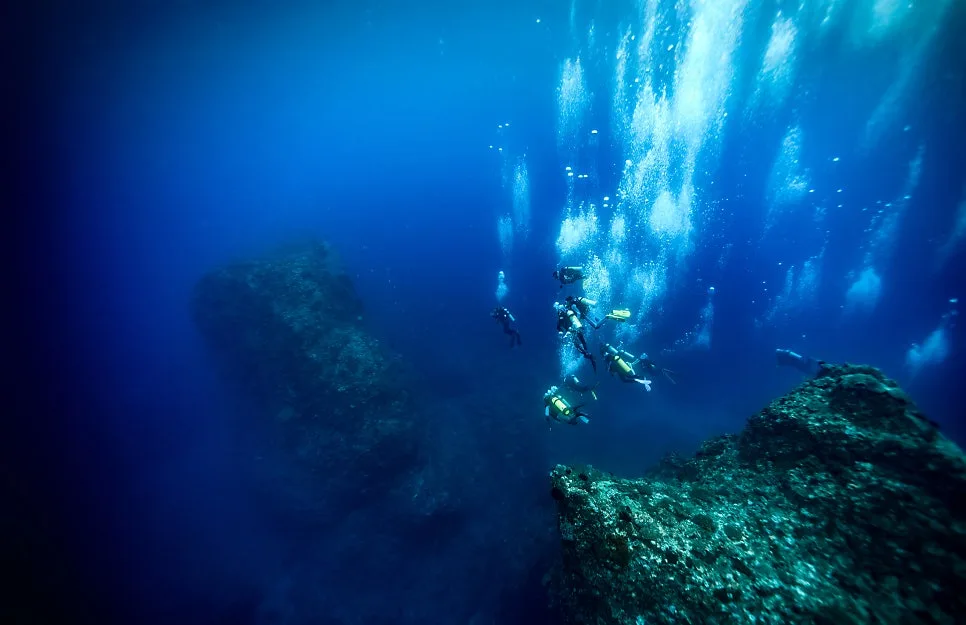
Mild pressure that clears promptly is a normal part of learning, but persistent pain is never something to train through. The reason is that the injuries behind it, a stretched or torn eardrum, fluid in the middle ear, damage to the inner ear, get worse with every metre and heal slowly. End the dive and see a doctor before diving again if you notice severe or worsening pain, bleeding or fluid from the ear, hearing loss, ringing, spinning dizziness, nausea, or a feeling that the world is moving when it is not.
Vertigo underwater needs immediate, calm control. Stop, hold a stable position if it is safe to, focus on your breathing, and make contact with your buddy. Then ascend slowly according to your training and the conditions. A dive does not continue when your sense of up and down cannot be trusted.
A perforated eardrum announces itself with sudden pain, cold water entering the ear, a change in hearing or vertigo. It needs medical attention and time, and diving on it too soon turns a short interruption into a long one. Missing one dive protects many future dives.
before the boat leaves
How to Prevent Scuba Ear Pain
Before It Starts
Prevention begins on land with an honest self-check. The reason is that congestion, fatigue and a recovering ear are all invisible to your buddy and obvious to you, so you are the only person who can make the call. If you are sick, blocked up, unusually tired or not long past an ear problem, postponing is the skilled decision, not the timid one.
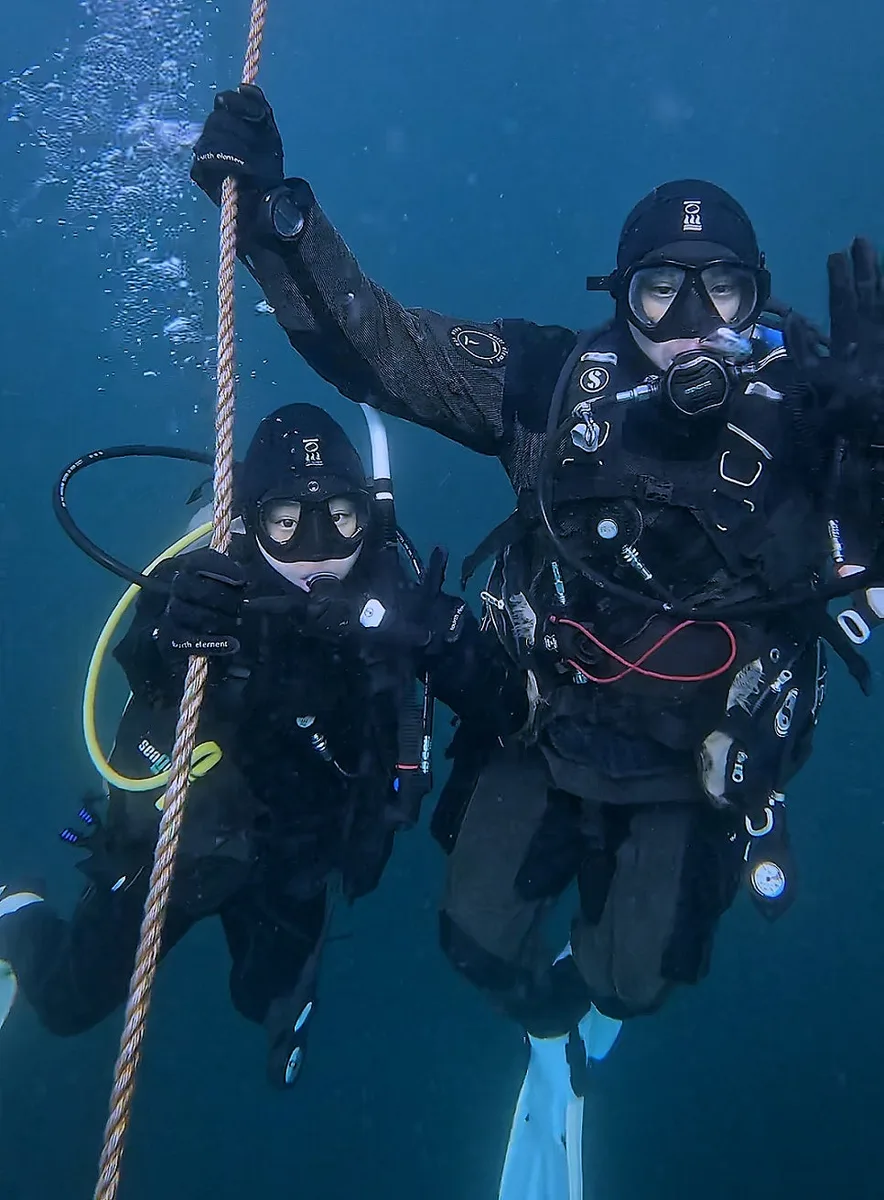
In the water, descend feet-first when you can, because air moves upward into the middle ear more easily in that position. Use a descent line where one is available, go down slowly, and equalise before the first sign of pressure and often thereafter. Your instructor will help you find which method works for your ears: swallowing, moving the jaw, blowing gently against a pinched nose, or a combination. The right one is whichever works comfortably and repeatably. A method that needs straining is not a reliable method.
Buoyancy is the quiet half of the answer. A diver who can pause calmly at any depth has time to solve a small equalisation problem before it becomes a painful one, which is why the skills practised patiently in the pool pay off long after the course ends. Stable trim, relaxed breathing and controlled descents are how the sea comes to feel manageable, and they are the foundation everything on our level up path is built on.
Conditions on the coast reward the same discipline. Korean water is cold below the thermocline for much of the year and visibility shifts with the season, so a slow, deliberate descent is both good ear technique and good local practice. The sites and seasons are laid out on our dive Korea page, and training gear is available to rent, drysuit included, so a cold head is one variable you can remove from the equation.
the ears learn too
Confidence Comes From
Repetition, Not Toughness
Difficulty equalising early on almost never means a person is unsuited to diving; it means they are still learning how their own body answers pressure. The reason is that the timing, the head position and the gentleness of the technique are all personal, and none of them can be learned from a page. They are learned in confined water with an instructor beside you, repeated until the sequence runs without thought, which is what an open water course done properly is for. If you have not started yet, the whole process from first pool session to first sea dive is described on our start diving page.
The way the course is priced supports that patience rather than fighting it. An instructor’s day is the unit, divided by the small number of people sharing it, plus certification and materials; stop partway through and you are billed only for what you actually did, with the rest refunded. The combinations are on our pricing page, and the answers to most first questions are on our FAQ.
Confidence has one boundary, though: it is never permission to ignore pain. Respect the signal, slow down, and ask for help the moment you need it. The sea will still be there when your ears are ready.
Tell Us What Your Ears Do
Whether you are certified and dreading the next descent or have never been under, describe what happens in the first few metres and we will tell you honestly whether it is a technique fix, a timing fix, or something to check with a doctor first. A consultation is free, needs no registration to ask, and comes with no pressure and no upselling.
good to know
Scuba Ear Pain — Common Questions
Why does my ear hurt in the first few metres but not deeper down?
Because the proportional pressure change is greatest near the surface. Going from the surface to ten metres doubles the pressure on your ear; the next ten metres adds only half as much again. Equalise early and often in those first metres and the rest of the descent usually looks after itself.
How often should I equalise on a descent?
Once at the surface before your head goes under, then roughly every metre on the way down, whether or not you feel anything. The habit is to equalise before the ear asks, not after. If it will not clear, stop, come up half a metre, and try again.
Can I dive with a cold if I take a decongestant?
We would postpone. A decongestant can open the tube for the descent and wear off before the ascent, producing a reverse block at the worst moment. Any medication decision for diving belongs with a clinician who knows your health and your dive plan.
Can I wear earplugs for scuba diving?
Not ordinary earplugs. They trap air in the ear canal and stop it equalising, which creates a squeeze of its own. Vented plugs designed specifically for diving suit some people, but they are not a substitute for healthy ears and correct technique.
What is a reverse block?
Pain on ascent caused by expanding air that cannot escape the middle ear, usually because of congestion or a medication wearing off. Slow the ascent, stop if you need to, and let the ear clear naturally. Do not pinch and blow, which adds air to a space that already has too much.
My ears are always hard to clear. Can I still learn to dive?
Almost always, yes. Some people have Eustachian tubes that open less readily, and they need a slower descent, more surface time and a different gentle method. In a group of one to three the pace follows your ears rather than a timetable. If problems keep returning, an ear, nose and throat physician who understands diving is the right next stop.
Is scuba ear pain worse in Korean water?
Not because of the water itself, but cold conditions and sharp seasonal weather make nasal congestion more common, and a cold head can make ears feel less cooperative. A well-fitted hood, a slow descent and an honest self-check before the dive handle most of it. Training gear is available to rent, drysuit included.
What symptoms mean I should see a doctor before diving again?
Severe or worsening pain, bleeding or fluid from the ear, hearing loss, ringing, spinning dizziness, nausea, or a sense that the room is moving. Any of these after a dive means medical assessment first, water second.
Can I take the course in English?
Yes. Our dive professionals communicate in English, as well as Korean and Japanese. Equalisation is taught through small, specific corrections, so being able to ask exactly what you mean matters more here than almost anywhere else in the course.
Do I need to be able to swim well to start?
You need to complete a 200-metre swim, or 300 metres with mask, fins and snorkel, and a ten-minute float, which can be on your back with the instructor right beside you. We assess performance, not time, so slower swimmers get as long as they need.
