
Do I Need to Know How to Swim to Scuba Dive?
PADI standards explained without the marketing spin – and what they actually mean if you’ve ever doubted whether the ocean is for you.
The Question That Stops Most Adults From Ever Diving
It usually happens late at night. A trip is coming up – Bali, Cebu, Jeju – and someone in the group has mentioned a dive. You open Google, type the question that has been quietly bothering you for years, and start scrolling.
One blog says “swimming skills are not required.” The next one warns that you must complete a 200-meter swim and ten-minute float, no exceptions. A forum thread argues both. A YouTube comment says the test was “the easiest thing in my life.” Another says it took two attempts and made the writer cry.
You close the tab. You decide diving “isn’t for you.” You snorkel on the next holiday, watch a family of strangers descend slowly into deeper blue, and feel that small, half-disappointed relief of having stayed safe.
That decision – made on a phone, at 2 a.m., based on conflicting blog posts written by people who were trying to sell you something – has steered countless adults away from the single experience that could have changed how they feel about water for the rest of their lives.
You’re reading this for a reason. Let us give you the actual answer – the one we give every student who walks through our door in Seoul.
Why the Wrong Answer Costs More Than You Think
The internet hands you two extreme answers, and both are dangerous in different ways.
The first comes from half-day try-dive operators on tropical beaches. “No swimming required!” they say, because they want you to book a one-hour bubble blow under the watch of an instructor who is also watching five other tourists. That experience is real, and for some people it’s a beautiful first taste. But it is not a certification. It does not prepare you. And if you bring that confidence to a real open-water dive afterwards, you can find yourself at six meters with a flooded mask, no idea how to clear it, and a regulator hose pulling on your jaw.
The second answer comes from gym-style instructors who treat the swim test like a military entrance exam. They yell across the pool deck. They time everyone. They pass the strong swimmers and quietly fail the rest, then call them back six months later. The students who do pass often leave certified but never comfortable in the water – and they rarely dive again.
Both approaches share the same blind spot: they treat the swim requirement as a hurdle, not as information about you. The PADI watermanship standards don’t exist to filter people out. They exist because, in the rare event your gear becomes a problem at the surface, you need to be able to keep yourself calm and floating long enough for help to reach you. That’s the whole reason.
The honest answer about swimming and scuba diving sits between the two extremes – and it’s almost certainly more generous than you’ve been led to believe.
Here is what PADI actually requires, why it matters, and how a real Career Development Center in Seoul handles students who arrive nervous about their swimming. No marketing. No yelling. Just the standard, in plain English.
What PADI Actually Says – Word for Word
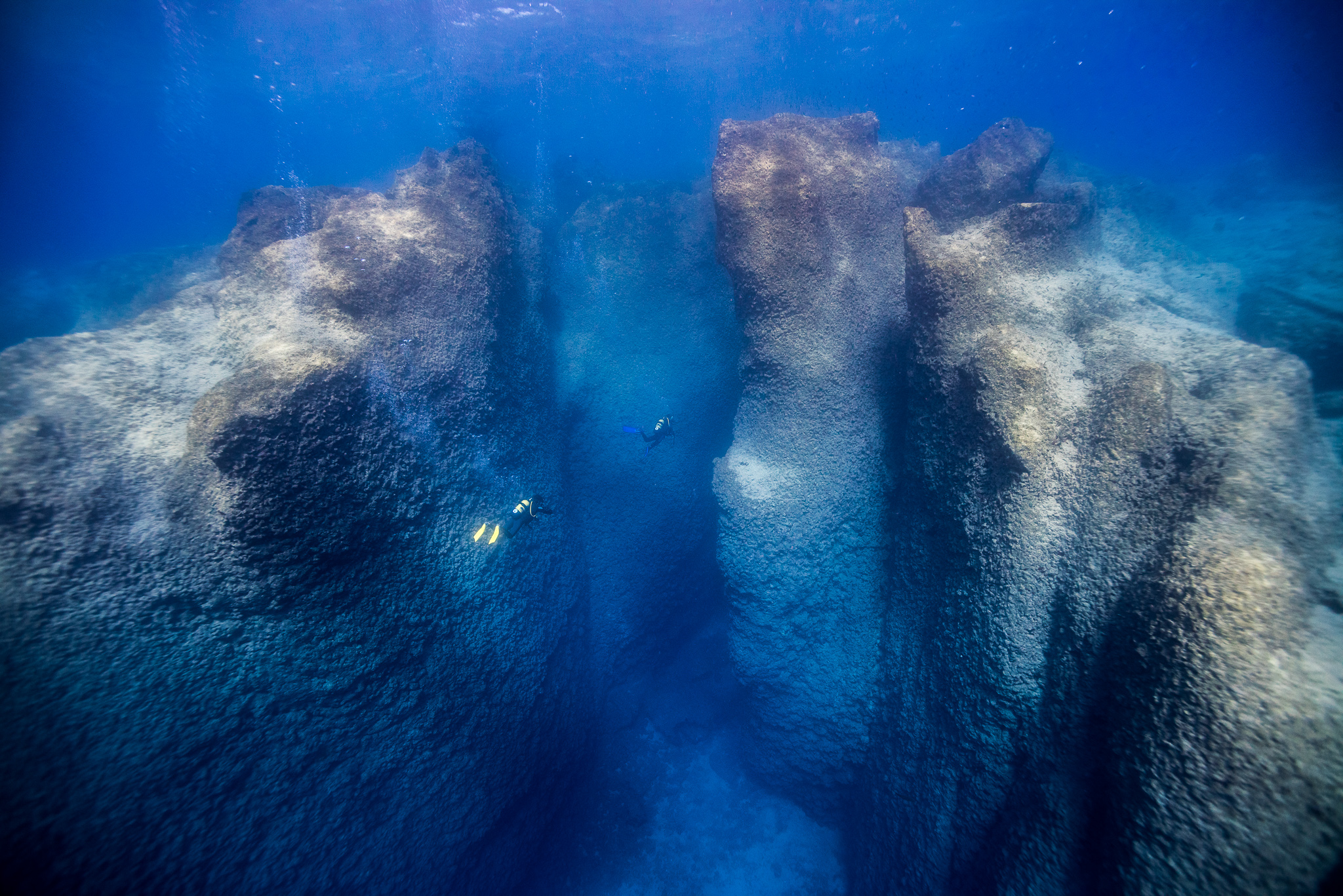
To earn a PADI Open Water Diver certification, the global standard has only two watermanship items. There is no third. There is no fitness benchmark beyond what these two items demonstrate.
Breaststroke, freestyle,
backstroke, or sidestroke
Most adults float naturally
on their back
Read the first line again carefully. No time limit. If you take fifteen minutes to swim 200 meters using a slow breaststroke, you pass. If you switch from freestyle to backstroke halfway because your shoulders tire, you pass. If you stop kicking and pull yourself along with a relaxed sidestroke, you pass.
The float is even more forgiving. Lying flat on your back, sculling gently with your hands, costs almost no energy. Most people who think they “can’t tread water” can absolutely float on their back once someone shows them how to relax their hips and stop kicking against gravity.
The standard tests comfort and endurance, not technique. It exists so we know that if your gear is removed at the surface – a boat sinks, a strap snaps, anything – you can keep yourself afloat and breathing until help arrives.
Three Honest Profiles
Ready to certify
Build up across course
Start with try-dive
PROFILE A
“I can swim a few laps. I could probably do 200 meters if I had to.”
You’re already qualified. You will pass the swim test on the first afternoon and probably wonder what you were so worried about. Most people in this group spend more time stressing about the requirement than they will ever spend completing it.
PROFILE B
“I can swim, but slowly. 200 meters sounds long.”
This is the largest group of adult students we see. The good news: by the end of confined-water training, you will have spent four to six hours moving comfortably through water – and 200 meters at your own pace will feel ordinary. We don’t test you on day one. We test you when you’re ready, which is usually after you’ve already been doing equivalent distances without thinking about it.
PROFILE C
“I can’t swim at all.”
We will tell you the truth: PADI Open Water Diver is not your starting point this month. The standard exists for your safety, and we will not work around it. But that does not mean diving is closed to you.
Discover Scuba Diving – a guided, instructor-led experience to a maximum of six meters – is open to non-swimmers. Many of our students who started here came back six to twelve months later as basic swimmers and earned full certification. We say this directly because we would rather see you certified next year than disappointed today.
Discover Scuba Diving vs. PADI Open Water Diver
max depth
certified limit
maximum
Guided Try-Dive
✓ Instructor-led every minute
✓ Maximum 6 meters depth
✓ One day, no exam
✗ No certification card
✗ Cannot dive independently after
PADI Open Water Diver
✓ Lifetime certification
✓ Dive to 18 meters worldwide
✓ 3 to 4 days at NB Divers
✓ Recognized in every country
✓ Foundation for all further training
If you are unsure which one fits you, write to us. We will tell you honestly – including when the answer is “wait three months and learn to swim first.”
Where You Will Actually Be Practicing

Confined-water training in Seoul takes place in a heated indoor pool. Water temperature is comfortable year-round, the bottom is visible, there is no current, and the deep end is not deeper than what you’ll need to comfortably perform skills. You will not be thrown into cold open water on day one. That is not how anyone learns to dive well.
Sessions move progressively. The first half-hour is in shallow water you can stand in. We add equipment piece by piece. You breathe through a regulator while kneeling in waist-deep water before we ever ask you to be neutrally buoyant. By the time you are practicing skills in the deeper section, the breathing apparatus already feels normal.
Open-water dives – the four required dives that complete certification – happen on Korea’s east coast (Gangneung or Donghae, roughly one hour from Seoul by KTX or three hours by bus). Water temperature ranges from around 14°C in winter to 26°C in late summer. We supply thermal-protection wetsuits or drysuits as appropriate. Visibility on a good day exceeds ten meters; you will see kelp forests, rockfish, sea slugs, and on occasion small rays. For students who want warmer water and better visibility for their first open-water experience, we also run trips to Jeju Island and overseas destinations.
Why Nervous Swimmers Choose NB Divers
PADI Career Development Center
PADI’s highest dive-center rating, with two resident PADI Course Directors – the only credential that trains other instructors.
1:3 Instructor-to-Student Ratio
Always. No exceptions, no peak-season dilution. You are never one of eight in a pool. The instructor sees you.
EFR Emergency Response Certified
Every NB Divers instructor holds Emergency First Response training credentials. Your safety is not delegated.
Multilingual Dive Professionals
Dive professionals who communicate in English, Japanese, and Korean. Briefings, debriefs, and questions handled in your language.
26 Years in Seoul
Founded March 2000. Two and a half decades of refining how we teach adults who arrive nervous about water.
Support After Class Ends
KakaoTalk and WhatsApp for instructor questions long after certification. The relationship doesn’t end at graduation.
since 2000
certified
student ratio
spoken
How a Real First Pool Day Unfolds
Briefing & Equipment Orientation
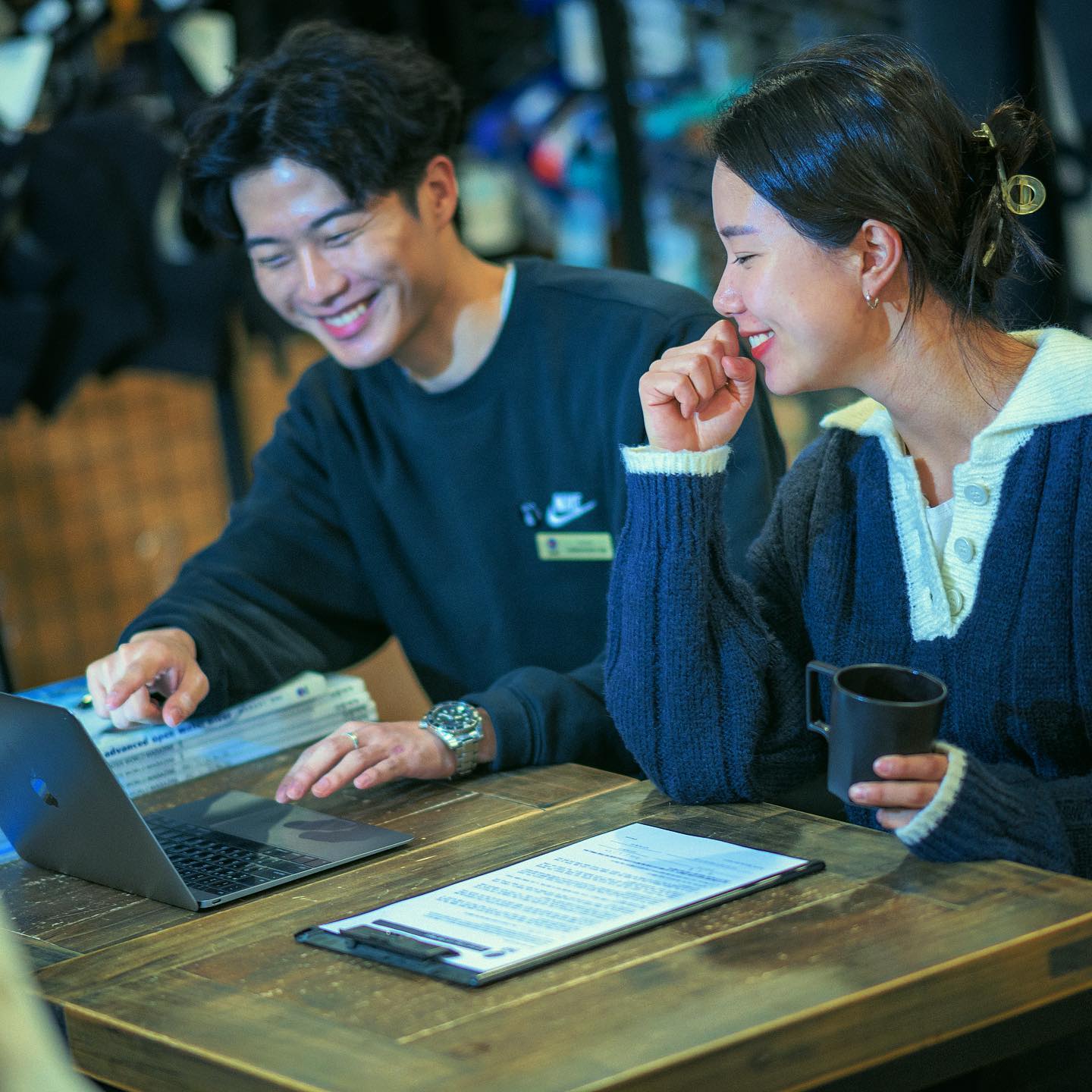
You meet your instructor. We walk through every piece of gear in your hand: mask, fins, regulator, BCD, weights. We answer the questions you came in with. You haven’t been near the water yet, and most of your nerves have already settled.
First Breaths Underwater
Standing in chest-deep water. Mask on. Regulator in. The first lungful of compressed air is the strangest, most ordinary thing in the world. By the end of this session you have already done the skill that scares most beginners – and you did it without ever leaving water you could stand up in.
Lunch & Debrief
Vegetarian, vegan, halal, and other dietary needs are not a problem in the surrounding neighborhood – let us know in advance and we’ll point you to options. Bring questions to lunch. We’ll answer them properly.
Skills & Watermanship
Now we move into the deeper section. We work on buoyancy, mask clearing, regulator recovery – all the foundational skills. The 200-meter swim and 10-minute float happen here, when you’ve already been moving comfortably for several hours. The test is no longer a test. It’s something you do because you can.
Debrief & Next Steps
We sit down. We talk through what worked, what felt hard, and what comes next. You leave with a plan – not just for the rest of the course, but for the dive trip you’re already starting to imagine.
The Questions Students Ask Most
I can’t swim freestyle. Will I fail the swim test?
No. PADI accepts any stroke. Breaststroke, backstroke, sidestroke, or a slow combination of all three. Most adult students complete the test using a relaxed breaststroke because it lets them keep their head above water and breathe freely.
How fast do I have to swim 200 meters?
There is no time limit. The standard cares only that you swim the distance without stopping. Take fifteen minutes if you need to. The instructor is watching for sustained, calm movement – not speed.
What if I panic during the 10-minute float?
Your instructor is in the water with you. We coach the float position before we ever ask you to hold it for ten minutes. The vast majority of students who fear they “cannot tread water” can in fact float comfortably on their back once we show them how to relax their hips and stop fighting buoyancy.
Can I use a snorkel during the swim test?
Yes – under the alternate option. PADI permits a 300-meter swim using mask, fins, and snorkel as an equivalent to the 200-meter unaided swim. Many less-confident swimmers find this version dramatically easier because the snorkel removes the breathing rhythm problem entirely.
I have a fear of deep water. Should I still book?
Many of our most successful students started exactly there. Fear of deep water is normal, and it is something we have helped hundreds of adults work through. Tell us at booking. We will plan your sessions accordingly. We never push, and we never pretend the fear is silly.
How long does the full Open Water course take at NB Divers?
Typically three to four days spread across two weekends – eLearning theory at home, two pool days in Seoul, and four open-water dives on the east coast or Jeju. Pace flexes with comfort. We don’t compress confident students, and we don’t rush nervous ones.
Is gear included? What about the eLearning fee?
All rental gear, pool fees, eLearning, instructor time, certification card, and east-coast logistics are itemized clearly when you inquire. We do not bury fees. Credit cards (Korean and most international issuers) are accepted; cash is not required.
How do I book? What’s the next step?
Email mail@nbdivers.com, message us on WhatsApp (preferred for non-Korean numbers) or KakaoTalk. Include your swimming background – even one sentence is enough – and the dates you’re considering. We’ll write back with a clear, honest plan within one business day.
Finding Us, Paying, Eating, Staying Warm
Getting to the dive center. NB Divers is a short walk from Jamsil Sports Complex Station (잠실종합운동장역, Line 2 & 9). The easiest fallback is KakaoTaxi – install the English app before you arrive. When you book, we send a Korean-language address card you can show any taxi driver, plus the precise WhatsApp pin-drop.
Payment. We accept Korean credit cards and most international Visa, Mastercard, and Amex cards. Cash is not required. If your card has been flagged for foreign-merchant blocks, let us know in advance and we’ll send a payment link that handles 3-D Secure cleanly.
Messaging us. KakaoTalk is the dominant chat app in Korea and we use it actively, but for international numbers WhatsApp is usually faster and easier. Both are checked daily, and the support continues long after your final dive – questions about gear, future trips, or your next certification level are always welcome.
Food during course days. Vegetarian, vegan, halal, gluten-free, and other dietary needs are easily accommodated in the area surrounding the dive center. Tell us in advance and we’ll point you to specific restaurants – including Muslim-friendly options near the pool. Pool training is physical work; eating well between sessions matters more than students expect.
What to bring on pool day. A swimsuit, a towel, and an open mind. Everything else – mask, fins, regulator, BCD, weights – is provided. Bring a light snack and a water bottle. Hair tie if you have long hair. Contact lenses are fine (we’ll talk you through the mask-clear technique safely). Glasses can be addressed with a prescription mask insert; mention it at booking if you wear strong correction.
For open-water trips on the east coast. Korea’s east-coast diving runs year-round. Spring and autumn give the cleanest visibility; mid-summer brings warmer surface water but more boat traffic. Winter is colder but the marine life is often more active. We supply thermal exposure gear matched to the season – a 5mm wetsuit in summer, a drysuit in winter – and you’ll travel with the group from Seoul. No separate logistics required from your end.
“I came in convinced I would fail the swim test. The instructor never made me feel like I was being assessed – by the time we did the 200 meters, it just felt like another part of the day. I left certified, and I left actually comfortable in the water for the first time in my adult life.”
– Eric / 에릭, certified 2026, Seoul
Stop wondering. Ask the question.
Tell us where your swimming sits today. We’ll tell you honestly which course fits – including when the answer is “not yet.”
📩 Email NB Divers – mail@nbdivers.comOr message us on WhatsApp / KakaoTalk – we reply in English, Japanese, or Korean.
Every Saturday · English / Japanese / Korean · Max 3 students per instructor · PADI CDC Seoul
Learn Right, Enjoy Forever.
#PADISeoul #ScubaCertificationSeoul #NonSwimmerScuba #ScubaDivingKorea #PADICDC #LearnRightEnjoyForever #NBDivers #ExpatDiversSeoul #DivingKorea #PADIOpenWater
